
Category: Accountancy
-

AI-Powered Data Security for Accountancy Firms Handling Sensitive Legal Trust Accounts: Ensuring Compliance and Protecting Client Assets
Understanding AI-Powered Data Security in Accountancy Firms Accountancy firms now use AI-driven tools to protect sensitive information, especially when handling legal trust accounts. These tools detect threats, manage data risks, and improve security. Legal data presents unique challenges that require targeted AI technologies. Traditional methods often fall short in these situations. Unique Security Challenges for…
-

Common Mistakes Students Make in Accounting and How to Avoid Them for Better Academic Success
Misunderstanding Core Accounting Principles Many students struggle with key concepts like how debits and credits work and the accounting equation. They also find it hard to tell the differences between assets, liabilities, and equity. These ideas form the foundation of accounting. If students misunderstand them, they can make mistakes in financial records. Confusing Debits and…
-

AI-Driven Tax Planning for Accountancy Firms Serving Crypto Startups: Enhancing Accuracy and Compliance
Fundamentals of AI-Driven Tax Planning AI-driven tax planning uses technology to analyze complex data and automate calculations. It helps accountancy firms manage compliance efficiently and handle evolving tax rules. Firms can reduce errors and better serve clients with unique needs, such as crypto startups. This approach combines automation, data insights, and machine learning to improve…
-

Automating Compliance Checks with AI in Accountancy Firms Serving Cannabis Businesses for Enhanced Accuracy and Efficiency
Understanding Regulatory Compliance in Cannabis Accountancy Compliance in cannabis accountancy involves detailed rules that vary by location and business type. Accountants must navigate strict laws that differ from other industries. Staying current with these requirements helps accountants avoid penalties and support clients. Unique Compliance Challenges for Cannabis Businesses Cannabis businesses deal with complex rules that…
-

Leveraging AI for Payroll Automation in Accountancy Firms with Remote Teams to Boost Efficiency and Accuracy
Core Benefits of AI-Driven Payroll Automation AI-driven payroll automation gives firms precise control over payroll tasks. It reduces time spent on manual work and lowers the chance of costly mistakes. These systems handle complex rules, speed up processing, and create reliable audit trails. Enhanced Accuracy and Compliance AI ensures exact payroll calculations by applying current…
-

AI-Driven Grant Auditing for Accountancy Firms Serving Educational Institutions: Enhancing Accuracy and Compliance
AI in Grant Auditing for Accountancy Firms AI tools have changed how audit firms handle grant auditing, especially for educational institutions. These tools improve accuracy, reduce errors, and help manage complex data sets. AI supports audit teams in finding risks and ensuring compliance with grant rules. Overview of AI Technology in Auditing Auditors use AI…
-

Leveraging AI for Asset Management in Accountancy Firms with Family Office Clients: Enhancing Efficiency and Precision
Foundations of AI in Asset Management for Accountancy Firms AI and machine learning offer new tools to manage assets more efficiently. These technologies analyze large amounts of data quickly and spot trends that humans may miss. For family office clients, AI provides tailored insights that support complex wealth management needs. Understanding Artificial Intelligence and Machine…
-

AI-Driven Cash Flow Management for Accountancy Firms Serving Franchise Businesses Enhancing Financial Efficiency and Growth Strategies
AI-Driven Cash Flow Management Fundamentals AI technologies in cash flow management use data and analytics to improve how money moves in and out of a business. These tools predict future cash needs, schedule payments, and create accurate forecasts. Accountancy firms that support franchise businesses gain significant advantages by adopting AI solutions designed for their unique…
-

Implementing AI-Powered Audit Tools in Mid-Sized Manufacturing Accountancy Practices for Enhanced Accuracy and Efficiency
Understanding AI-Powered Audit Tools AI-powered audit tools use advanced algorithms to analyze data quickly and spot patterns that humans might miss. These tools improve accuracy, help manage risks, and create more efficient workflows. You need to know their main capabilities, the advantages for manufacturing firms, and their limits. Key Features and Capabilities AI audit tools…
-
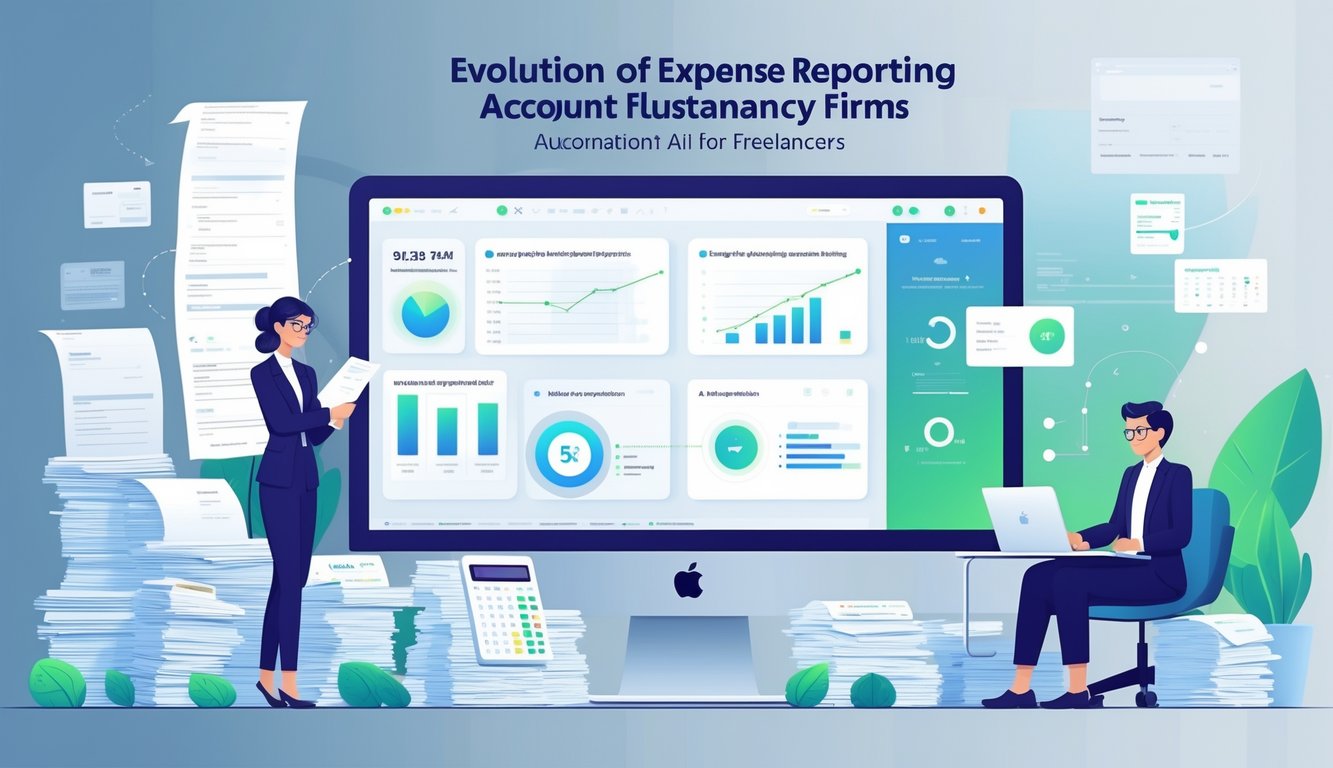
Automating Expense Reporting with AI in Accountancy Firms for Freelancers: Enhancing Efficiency and Accuracy
The Evolution of Expense Reporting in Accountancy Firms Expense reporting in accountancy has changed drastically. Firms have moved from slow, error-prone manual methods to faster digital tools. This shift reduces mistakes and improves how accountants track and manage expenses. Historical Pain Points of Manual Expense Reporting Accountants used to enter data by hand, often working…
-

Your Roadmap to Becoming a CPA: Essential Steps for Aspiring Accounting Professionals
Understanding the Accounting Profession The accounting field offers a variety of career options with specialized roles in business, public service, and consulting. Certified Public Accountants (CPAs) are widely respected for their professionalism, expertise, and ethical standards in handling financial information. What Is a Certified Public Accountant A Certified Public Accountant (CPA) is a licensed professional…
-

Implementing AI for Regulatory Reporting in Accountancy Firms in Asia-Pacific: Enhancing Compliance and Efficiency
Understanding Regulatory Reporting in Asia-Pacific Accountancy Firms Asia-Pacific regulatory reporting requires firms to follow diverse rules that differ by country and sector. Firms handle large amounts of data and frequent regulatory updates. Compliance means balancing local regulations with global standards as requirements change. Regulatory Requirements and Standards Financial authorities in each country set complex regulatory…
-

AI in Payroll Tax Optimization for Accountancy Firms in the Gig Economy: Enhancing Accuracy and Efficiency
Overview of AI in Payroll Tax Optimization AI improves payroll tax processes by making tax filings more accurate and timely. It helps accountancy firms manage complex tax rules across different regions. AI reduces errors and compliance risks. It also lowers costs and speeds up processing. Key Concepts and Terminology Artificial intelligence in payroll tax optimization…
-

AI for Managing Donor Funds in Accountancy Firms Serving Charitable Foundations: Enhancing Accuracy and Transparency
The Role of Artificial Intelligence in Donor Fund Management Artificial intelligence is changing how accountancy firms manage donor funds for charitable foundations. It improves donation tracking, enhances data analysis, and helps allocate funds more effectively. These changes support better decision-making and efficient use of resources. Transforming Accountancy Firms Serving Charitable Foundations AI automates routine tasks…
-

Tax Implications of Crypto Transactions: Key Compliance Strategies for Accountants in 2025
Understanding the Evolving Tax Landscape for Crypto Transactions in 2025 In 2025, the IRS has introduced new rules for tracking and reporting digital assets. Accountants must know these details to guide clients, prevent compliance mistakes, and handle IRS audits. Recent IRS Regulations and Legislative Updates The IRS is putting more focus on cryptocurrency taxation in…
-

AI-Enhanced Internal Controls for Accountancy Firms in the Pharmaceutical Industry Driving Accuracy and Compliance in Financial Reporting
Overview of AI-Enhanced Internal Controls AI-enhanced internal controls use artificial intelligence to strengthen how organizations protect their data and ensure financial accuracy. These controls help reduce risks, improve compliance, and detect errors or fraud faster, especially in complex industries like pharmaceuticals. Definition and Scope AI-enhanced internal controls combine traditional frameworks with AI technologies like machine…
-

AI-Powered Wealth Management Reporting in Boutique Accountancy Firms Enhancing Precision and Efficiency
Understanding AI-Powered Wealth Management AI in wealth management has changed how firms handle data, make decisions, and serve clients. It gives firms new tools that automate routine tasks, improve risk analysis, and offer personalized strategies. These technologies help boutique accountancy firms deliver faster, more accurate reporting and better investment insights. Evolution of AI in Wealth…
-

AI-Based Financial Analytics for Accountancy Firms with Agribusiness Clients Enhancing Precision and Efficiency in Agribusiness Accounting
Understanding AI-Based Financial Analytics AI-based financial analytics leverages machine learning (ML) and other artificial intelligence (AI) tools to analyze vast amounts of financial data, identify patterns, and generate accurate predictions. For accountancy firms serving agribusiness clients, these technologies streamline processes like financial forecasting, automate routine tasks, and provide data-driven insights that support better decision-making. Core…
-

AI-Driven Accounts Payable Automation for Accountancy Firms Serving Logistics Providers Enhances Efficiency and Accuracy
Understanding AI-Driven Accounts Payable Automation AI-driven accounts payable automation uses advanced technologies to improve how firms handle invoices and payments. It adapts to complex and changing data, helping accountancy firms and logistics providers reduce errors, speed up processes, and manage large transaction volumes with more accuracy. Defining AI and Machine Learning in Accounts Payable AI…
-

How AI Is Transforming Forensic Accounting in Small Law Firms: Enhancing Accuracy and Efficiency
AI Technologies Revolutionizing Forensic Accounting AI tools help forensic accountants analyze large amounts of data quickly. These tools find hidden patterns and review documents with greater accuracy. This reduces the time spent on manual work. It also improves fraud detection. Machine Learning and Pattern Recognition Machine learning (ML) helps forensic accountants detect unusual patterns that…