
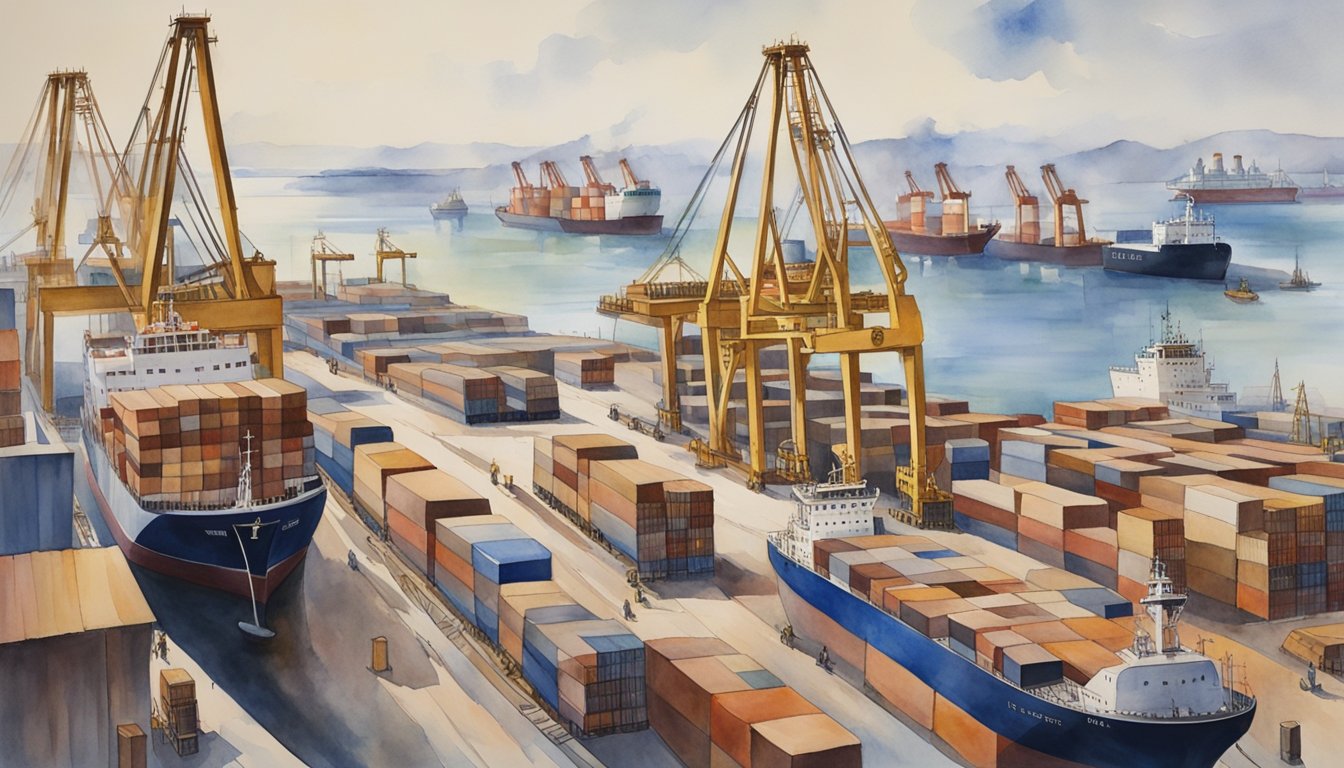
Overview of Maritime Insurance Types
Maritime insurance safeguards against financial loss associated with maritime activities. The insurance industry offers various products, with Hull and Machinery and Protection and Indemnity (P&I) being two critical forms of coverage.
Hull and Machinery
Hull and Machinery (H&M) insurance is a staple in maritime protection. It covers physical damage to the ship itself, including its machinery. This insurance is essential for shipowners, as it provides financial security against perils such as collision, grounding, fire, and malfunction. The policy encompasses all risks that could potentially damage the ship’s structure or machinery. In the event of an incident, the insurer compensates for the repair or replacement costs, thereby ensuring the vessel is restored to its operational state.
Protection and Indemnity (P&I)
Protection and Indemnity (P&I) insurance is another fundamental component of maritime insurance. Unlike H&M which is concerned with the vessel’s physical integrity, P&I insurance provides liability coverage for shipowners. This includes third-party liabilities such as damage to cargo, injury to crew, passengers, or third parties, and environmental damage caused by pollution. Members of P&I Clubs, which are mutual insurance associations, gain access to a wide range of covers. They share risks and premiums with other insured members, allowing for a collective approach to managing maritime liabilities.
Risk Management in Maritime Insurance
Effective risk management in maritime insurance involves a thorough understanding of potential risks and the implementation of robust mitigation strategies. This discipline is critical to safeguard the financial stability and operational continuity in the maritime sector.
Identifying Risks
In maritime insurance, identifying risks is paramount. The risk advisory team undertakes a detailed analysis to recognize various challenges that may confront a vessel or its operators. Key risks include:
- Physical Damage: Refers to loss or damages to the vessel’s structure due to accidents or natural disasters.
- Liability Claims: Covers legal liabilities towards third parties, which include collision damages, pollution, and environmental impact.
- Cargo Risks: Pertains to loss or damage to the cargo being transported, which can arise from a multitude of events like theft, spoilage, or mishandling.
- Operational Interruptions: Relate to financial loss due to operational downtime caused by machinery breakdowns or other unforeseen events.
This assessment is conducted using data on past incidents, industry reports, and predictive modelling, ensuring that maritime carriers and shipowners are aware of potential threats.
Mitigation Techniques
Once risks are identified, the implementation of mitigation techniques is designed to prevent or minimize their impact. Strategies utilized within the maritime insurance industry typically include:
- Regular Inspections and Maintenance: To prevent potential equipment failures that could lead to significant losses.
- Crew Training: Ensuring that all crew members are well-trained in safety procedures and emergency response skills.
- Proper Cargo Handling: Implementing procedures for managing cargo to avoid losses during transportation.
- Insurance Coverage Customization: Tailor-fitting insurance policies to address specific risks identified for a vessel or operation.
These techniques, alongside the purchasing of suitable insurance coverage such as hull and machinery or Protection and Indemnity (P&I), play a crucial role in the overall risk management framework in the maritime industry. Each tactic aims to either prevent risks or reduce financial impact post-occurrence, signifying a proactive approach to risk management in maritime operations.
Regulatory Compliance and Legislation
In the maritime insurance sector, stringent adherence to international mandates and the development of robust compliance frameworks are paramount for minimizing legal ramifications and preserving industry reputation.
International Regulations
The maritime industry faces a complex web of international regulations that govern various insurance types, such as hull and machinery or protection and indemnity (P&I) insurance. Key regulatory frameworks include SOLAS (Safety of Life at Sea), MARPOL (International Convention for the Prevention of Pollution from Ships), and Solvency II, which applies particularly to insurance firms operating within the European Union. These regulations stipulate minimum standards for the construction, equipment, and operation of ships, alongside requirements for the financial robustness of insurers.
Entities like the International Maritime Organization (IMO) play a pivotal role in the enforcement of maritime laws. Insurers must ensure full compliance with these standards to avoid severe fines and reputational damage that can arise from non-compliance. Regulatory bodies possess the authority to conduct inspections and impel corrective actions, which may include financial penalties.
Compliance Strategies
To manage regulatory compliance effectively, maritime insurers must employ several strategies. They must:
- Regularly Monitor Legislation: Staying current with both international and national legislation is essential. Continuous updates and training programs are critical for all levels of staff within the organization.
- Risk Management: Implementing a comprehensive risk management framework aids in identifying areas of potential non-compliance.
- Audit and Reporting: Regular audits ensure ongoing adherence to regulatory standards. Transparent reporting mechanisms serve to demonstrate compliance to regulators.
- Legal Expertise: Retaining legal counsel with expertise in maritime law and financial regulation can help navigate the intricate legal landscape and respond appropriately to legislative changes.
- Technology Integration: Utilizing advanced data management and analysis tools can streamline the process of tracking regulatory changes and assessing their impact on insurance offerings.
By embracing these strategies, maritime insurers work towards fortifying their compliance posture, thereby mitigating risks associated with non-compliance and ensuring their operations align with both current and emerging regulations.
Accounting and Financial Reporting
Efficient accounting and financial reporting are critical for the management of various types of insurance within the maritime industry. These processes ensure accurate tracking and representation of financial data, which is essential for decision-making and compliance.
Periodic Financial Statements
Maritime insurance entities are required to produce financial statements at regular intervals, often quarterly and annually. These statements must encompass a comprehensive depiction of the company’s financial health, including assets, liabilities, equity, revenues, and expenses. Hull and machinery insurance policies, as well as Protection and Indemnity (P&I), must be accounted for with precision.
- Assets may include:
- Premiums receivable
- Investments
- Reinsurance recoverable
- Liabilities typically cover:
- Unearned premiums
- Outstanding claims
- Revenues and expenses are associated with:
- Earned premiums
- Claims incurred
- Operational costs
Ensuring that financial reporting reflects the true economic substance of transactions, given the complex nature of maritime insurance contracts, is critical. There is often a focus on recognizing premiums and claims over the period they pertain to, requiring robust accounting systems.
Revenue and Investment Reporting
The recognition of revenue from insurance contracts must reflect the earnings pattern of the services provided. For maritime insurance, this means that revenue is typically recognized over the period of the contract using methods like the earned premium method.
- The earned premium method allows insurers to recognize premiums on a pro-rata basis over the coverage period.
- Investment income can include:
- Interest
- Dividends
- Realized and unrealized gains
P&I Clubs, which are mutual insurance associations, often follow a similar pattern. They must also report contributions from their members and track their funds to ensure adequate coverage for liabilities. The reporting of investments within the maritime insurance sector necessitates the careful differentiation of income generated by corporate funds compared to those held to cover outstanding or potential claims. This distinction is vital for presenting an accurate view of the company’s investment performance and financial stability.
Impact of Technology on Maritime Insurance
Technological advancements have revolutionized data handling and spurned innovative solutions that are reshaping the maritime insurance landscape.
Data Management and Analytics
The successful integration of data management tools and analytics is paramount in transforming the marine insurance sector. Insurers now rely on extensive datasets for risk assessment, where machine learning algorithms analyze historical data to predict future trends and risks. Major tech-driven enhancements enable the refinement of underwriting processes and the swift handling of claims. For instance, real-time data sourced from satellite and IoT-enabled devices on ships, not only provides vessel location but also monitors ship performance and condition, offering insurers an unprecedented level of detail into the risks they cover.
- Applications of Advanced Analytics:
- Risk Modeling: Leveraging past incident data to predict future claims.
- Price Optimization: Setting premiums accurately based on the risk profile.
- Loss Prevention: Identifying patterns that lead to accidents and taking proactive measures.
Insurtech and Innovation
Emerging insurtech companies are injecting innovation into maritime insurance, often through the deployment of core system upgrades that include artificial intelligence and blockchain. These innovations streamline claims management and operations, reducing manual workloads and the potential for human error. Through the implementation of smart contracts powered by blockchain, transparency and trust in transactions increase, while the risk of fraud decreases. AI, on the other hand, personalizes consumer experiences and enhances decision-making processes. Artificial Intelligence also facilitates improved customer service and efficient policy administration, which ultimately benefits both insurers and clients.
- Key Insurtech Contributions:
- Enhancement of Customer Experience: AI-driven chatbots and automated services.
- Operational Efficiency: Blockchain for secure and efficient policy lifecycle management.
- Agility in the Market: Quick adaptation to changing risks and policyholder needs.
Insurance Company Operations
Effective operations within insurance companies hinge on rigorous capital management and strategic talent acquisition and retention. Both elements are pivotal in steering these companies towards operating efficiency and cost control.
Capital Management
Insurance companies must navigate the complex landscape of capital management to ensure financial stability and regulatory compliance. Capital is the bedrock of an insurer’s ability to underwrite risks, settle claims, and invest in growth opportunities. Capital adequacy is assessed through metrics such as the Solvency Capital Requirement (SCR) and Minimum Capital Requirement (MCR), which serve as regulatory safeguards.
- Solvency II framework: In the European Union, companies adhere to the Solvency II framework, which mandates maintaining a certain level of capital.
- Risk Management: Insurers often employ sophisticated risk management models to forecast potential losses and allocate capital efficiently.
- Investment Strategy: Prudent investment strategies are designed to maximize returns while maintaining the liquidity needed to respond to claims.
Talent Acquisition and Retention
The success of insurance companies equally depends on the prowess of their workforce. Talent acquisition is essential in bringing in new skills, especially in a market that is rapidly evolving due to technological disruptions. Retention strategies, on the other hand, ensure continuity and the preservation of institutional knowledge.
- Competitive Compensation: Attracting top talent requires competitive compensation packages that often include performance incentives.
- Training and Development: Companies invest in training and development programs to enhance employees’ skill sets and career trajectories.
- Corporate Culture: An inclusive corporate culture that promotes employee engagement helps in reducing turnover rates.
Insurance companies must persistently work on these aspects to maintain an edge in a competitive market where operational efficiencies and operation costs have significant impacts on their bottom line.
Challenges in the Insurance Market
The maritime insurance industry is witnessing significant shifts influenced by competitive dynamics and the restructuring of market players.
Competition and Market Dynamics
In the maritime insurance sector, competition has intensified with the arrival of new entrants, including startups leveraging cutting-edge technology to innovate traditional practices. The race to offer cost-effective and efficient solutions for complex insurance products like hull and machinery or protection and indemnity (P&I) has led to a crowded marketplace. Market dynamics are influenced by the following factors:
- Pricing Pressure: The influx of competitors puts downward pressure on premiums, impacting profitability.
- Customer Expectations: Insured entities anticipate more tailored services and rapid claims processing, pushing insurers to evolve.
- Technology Adoption: Companies that proactively utilize technology can gain a competitive advantage, while others may struggle to keep pace.
Industry consolidation is an ongoing trend, with larger, established companies acquiring smaller or niche firms to expand their market share and capabilities.
Mergers and Acquisitions
Mergers and acquisitions (M&A) have reshaped the maritime insurance landscape. The consolidation movement presents both opportunities and challenges:
- Synergy and Efficiency: M&As can lead to increased efficiency and economies of scale.
- Cultural and Operational Integration: The challenge lies in merging disparate company cultures and operations without disrupting service or performance.
- Regulatory Hurdles: Companies face complex regulatory environments in different jurisdictions, which can complicate the consolidation process.
M&A activities often result in the consolidation of market players, leading to fewer, larger entities that can wield considerable influence over the market. However, achieving a successful integration that realizes the full potential of consolidation is a complex process that requires strategic planning and execution.
Insurance Product Development
In the maritime industry, developing insurance products that cater to specific risks and ensuring their financial viability is a multi-faceted challenge. This includes creating innovative coverages and balancing the pricing to maintain profitability.
Innovative Coverage Solutions
The maritime industry demands insurance products that are as dynamic as the risks it faces. Hull and machinery insurance, for instance, must evolve to cover advanced technology and newer classes of vessels. It’s essential for insurers to assess the particular needs of their clientele, which includes shipowners, shipping companies, and other maritime stakeholders. Policies like Protection and Indemnity (P&I) need to address liabilities such as environmental damage and crew-related incidents, which have gained more attention in recent years.
To stay ahead, insurers are modernizing their product development lifecycle. They integrate customer-centricity with speed and flexibility, much like technology companies set the standard in consumer markets. Examples of innovation include:
- Tailored Coverage: Customizing products for niche markets, like ice-class vessels operating in polar regions.
- Integration of Technology: Implementing telematics and IoT devices to monitor ship conditions and automate risk assessment processes.
- Comprehensive Packages: Offering bundled products that combine Hull and P&I coverages for simpler policy management.
Product Development Process:
- Market research and analysis.
- Risk assessment and modeling.
- Policy design and coverage determination.
- Legal and regulatory compliance review.
Pricing and Profitability
Pricing Strategy:
To determine the premiums for such nuanced coverage, insurers must carefully analyze historical data, assess risk factors, and consider market conditions. They employ actuarial science to predict potential payouts and set premiums that cover these costs while allowing for a margin of profit.
- Claim Statistics: Study past claims to estimate future risk.
- Cost of Capital: Calculate the capital needed to underwrite policies.
- Competitive Analysis: Evaluate pricing structures of competitor products.
Profitability Measures:
Maintaining profitability in insurance product development hinges on precise revenue recognition practices and effective management of margins. Insurers constantly reevaluate their products to ensure they are competitive but still profitable.
- Revenue Recognition: Recognize premiums over the period of risk and align with incurred claims.
- Margin Management: Regularly assess the margin of safety for each product line, considering claims volatility and capital requirements.
- Product Performance: Monitor metrics such as loss ratios and customer satisfaction.
Profitability is not only a measure of financial success but also a crucial factor for ongoing innovation and adaptation of insurance products in the maritime industry.
External Factors Influencing Maritime Insurance
Maritime insurance is shaped by a complex interplay of market dynamics and environmental factors, which bear significant influence on the risk assessment and policy pricing.
Economic and Market Trends
Economic growth and global trade volumes directly affect maritime insurance. An uptick in trade typically leads to an increase in insurance premiums due to the higher volume of goods transported. Interest rates also play a role; they influence the cost of capital for insurers, affecting how insurance products are priced. The COVID-19 pandemic has left its mark on the industry, causing volatility and emphasizing the necessity for insurers to adapt quickly to changing economic conditions. This operating environment requires constant vigilance and the ability to forecast economic impacts on maritime activities.
- Global Trade Volumes: An increase can boost premium levels.
- Interest Rates: Affect the insurers’ investment income and pricing strategies.
Environmental and Climate Risks
Changes in the environment, particularly due to climate change, present a host of challenges for marine insurers. Severe weather events and changing sea levels can increase the risk of accidents at sea, which in turn may lead to more claims and higher premiums. Insurers must now consider long-term environmental trends when assessing risk, potentially leading to a reevaluation of risk models that traditionally did not account for these factors.
- Severe Weather Events: Higher frequency can lead to increased claims.
- Physical Climate Changes: Require updates to risk assessment models.
Insurance Governance and Controls
Insurance governance and controls are vital mechanisms ensuring that the maritime insurance industry operates within a robust framework, which aids in safeguarding stakeholders’ interests and promotes sound decision-making processes.
Corporate Governance
Corporate governance within the maritime insurance sector focuses on establishing a hierarchical structure for decision-making that aligns with stakeholders’ interests. The board of directors is at the apex, setting strategic goals and overseeing high-level policy design. They implement governance frameworks that ensure adherence to regulations and ethical standards.
Key Elements:
- Board Composition: A balanced mix of skills, experience, and independence.
- Policies and Procedures: Clear documentation that reflects the governance framework, including risk management and ethical guidelines.
- Effective Date Compliance: Adherence to start dates for new regulations and accounting standards, for instance, US GAAP’s Long-Duration Targeted Improvements.
- Stakeholder Engagement: Regular communication with policyholders, investors, and regulators.
A transparent corporate governance structure upholds fiduciary responsibilities and embeds a culture of accountability and ethical conduct, which is critical in risk management and control processes.
Internal Controls and Auditing
Internal controls serve as the defensive lines within maritime insurance companies, overseeing the integrity of financial reporting and compliance with standards and regulations. These controls involve well-defined policies and procedures that employee actions must adhere to, which help in preventing, detecting, and addressing financial misstatements or fraud.
Key Features:
- Regular Audits: Internal and external auditing functions verify the effectiveness of internal controls.
- Control Activities: Ranging from authorizations and verifications to reconciliations and reviews of operating performance.
- Information and Communication Systems: Ensure pertinent information flows through an organization, facilitating informed decision-making.
- Monitoring Activities: Occur continuously to assess the quality of internal control performances over time.
These aspects of internal auditing and control are essential for maintaining the financial integrity of insurance entities in the maritime industry. They contribute to an environment where risks are managed appropriately, and accounting for complex insurances like hull and machinery or protection and indemnity (P&I) is accurate and compliant with relevant standards.
Modern Challenges in Maritime Insurance
The maritime industry faces evolving risks, especially in the realm of digital operations which brings about unique challenges in cybersecurity and shifts the competitive landscape with the advent of digital insurers.
Cybersecurity in Maritime Sector
The maritime industry is increasingly dependent on technology, which exposes it to significant cybersecurity threats. Cyberattacks on shipping companies, ports, and logistics firms can result in substantial financial losses and operational disruptions. For instance, data security breaches can compromise sensitive information related to cargo, crew, and vessel movements. This heightens the need for robust cyber insurance policies to mitigate potential damages. Insurance products are being developed to address these concerns but ensuring comprehensive cover while managing premiums remains challenging.
Recent Cyber Attacks:
- High-profile cyber-attacks have paralyzed corporate operations.
- Attacks on port infrastructures leading to significant economic losses.
With the maritime sector’s growth into digital spaces, the industry’s exposure to cyber risks such as data theft, ransomware, and system hacking has escalated. These risks necessitate the creation of cyber risk assessment models and the integration of stringent cybersecurity protocols to protect against and respond to cyber incidents.
Competition from Digital Insurers
The rapid digital transformation of the insurance industry presents both opportunities and challenges for traditional maritime insurers. Digital insurers are redefining the competitive environment by offering innovative insurance products with streamlined underwriting processes and claim handling, often at a lower cost.
Adaptations by Traditional Insurers:
- Introduction of new digital platforms for policy management.
- Investments in data analytics to improve risk assessment and pricing.
Traditional maritime insurers must adapt by embracing digital tools to enhance their service offerings and increase efficiency. The integration of advanced technologies such as big data analytics enables insurers to better understand and price the risks associated with maritime operations. Despite the competitive pressure, this shift to digital also presents opportunities for insurers to innovate and provide more tailored insurance solutions for the maritime industry.
Insurance in Property and Casualty
Property and casualty (P&C) insurance encompasses a range of coverages providing financial protection against various risks. These coverages are essential for the maritime industry, dealing with unique claims and the interplay with reinsurance strategies.
Coverage and Claims Management
Efficient claims management is pivotal for P&C insurance companies. They must accurately assess coverage for complex maritime risks, which includes liability for damage to ships (hull and machinery insurance) and third-party claims (protection and indemnity, P&I). These insurers use detailed policy language to determine the extent of coverage, considering factors like the nature of goods transported and the environmental risks involved.
- Key Entities:
- Legal Entity: Insurers must work within the legal frameworks governing maritime operations.
- Financial Institutions: These entities often require robust insurance coverage for maritime assets.
Claims in the maritime P&C sector are subject to intricate investigation and adjustment processes due to the sector’s inherent complexities and the high value of maritime assets. The industry must adapt to evolving risks, such as piracy and environmental regulations, that directly impact claims frequency and severity.
Reinsurance Dynamics
Reinsurance plays a critical role in the P&C insurance market, providing a safeguard for insurers against large-scale claims. This is particularly important in the maritime industry where claims can be substantial.
- Types of Reinsurance:
- Proportional Reinsurance: The reinsurer shares a portion of the premiums and losses.
- Non-proportional Reinsurance: The reinsurer is liable only when losses exceed a predetermined threshold.
Property and casualty insurers often rely on reinsurance to help mitigate risks associated with large and volatile claims, such as those arising from major maritime disasters. They must carefully structure their reinsurance programs to maintain solvency and manage their capital efficiently.
- Key Entities:
- Investments: Insurers invest premiums, and reinsurance can protect their financial stability, ensuring investment capacity.
- Reinsurance: This sector helps distribute risk and provides capital relief to P&C insurers.
Long-Term Viability and Sustainability
In the maritime insurance industry, the management of long-term viability and sustainability hinges on judicious financial investments and the modernization of infrastructural systems. Strategic bonds and capital allocation play a decisive role, while infrastructure updates streamline the industry’s operational efficacy.
Strategic Investments and Bonds
The maritime insurance sector must ensure the strategic deployment of its capital to maintain its competitive edge and long-term viability. The procurement and management of bonds that are tailored to maritime risks is crucial. These financial instruments serve not only as safety nets for unforeseen contingencies but also anchor long-term financial health.
- Investment Diversification: By diversifying investments into varied financial products, companies can mitigate market volatility and ensure stable returns. This may include government securities, blue-chip corporate bonds, or renewable energy bonds, which reflect a commitment to sustainability.
- Risk Assessment and Management: The underpinning of long-term viability is a thorough risk assessment. Accurate evaluations lead to better bond choices that balance risk and return, matching the unique needs of hull and machinery or P&I insurances.
- Liquidity Reserves: Maintaining liquidity reserves is pivotal to safeguard against market fluctuations and claim settlements, ensuring that insurers can meet their obligations without compromising on long-term goals.
Infrastructure Development
Infrastructure plays a central role in the resilience and sustainability of maritime insurance operations. There is a clear impetus to transition from legacy systems towards more advanced, automated solutions. This progression towards modern infrastructure is driven by the need for efficiency, accuracy, and customer satisfaction.
- Integration of Automation: Incorporating automation into claim processing and risk assessment accelerates response times and reduces human error, thereby increasing reliability and trust among stakeholders.
- Replacement of Legacy Systems: Legacy systems are often not equipped to handle the dynamic nature of maritime risks and the increasing demands for data processing. Modern infrastructural upgrades can better support the complex nature of maritime insurance accounting, providing a robust framework for service delivery.
- Sustainable Practices: Infrastructural development also means adopting sustainable practices. This includes leveraging renewable energy sources and implementing energy-efficient technologies, aligning with the broader global mandate for environmental stewardship.
In summary, the long-term sustainability and viability of the maritime insurance industry are closely linked to the strategic allocation of capital and the progression of infrastructure towards more automated and efficient systems.
International Perspective and Challenges
Managing and accounting for various types of insurance in the maritime industry pose a range of international challenges. Language barriers impede clear communication between insurers, clients, and regulatory bodies, potentially affecting the understanding of policy nuances, claims, and settlements. Furthermore, varying regulations across jurisdictions can complicate compliance for hull and machinery (H&M) and protection and indemnity (P&I) insurance. Companies must navigate these differing regulations to ensure global operations remain lawful and claims are valid.
Currency fluctuations can significantly impact premium calculations and claims settlements. Insurers dealing with international clients must develop robust methods to account for and mitigate this financial risk. Additionally, discrepancies in market practices can lead to confusion. For instance, valuation standards for ships might differ, affecting how insurance amounts are determined.
The international market also presents challenges in risk assessment. The maritime industry’s inherently global nature means insurers must consider geopolitical risks, piracy, and changing environmental policies, which vary greatly by region. This requires comprehensive and dynamic risk assessment strategies.
Lastly, managing global teams in different time zones with diverse technology access levels requires efficient coordination to ensure that the insurance management and accounting activities are synchronized across all regions. This is essential for maintaining cohesive operations and upholding service standards.
Frequently Asked Questions
Maritime insurance management involves careful assessment and understanding of the coverage details and claims processes for policies such as hull and machinery or protection and indemnity (P&I).
How is the coverage assessed for hull and machinery insurance in the maritime industry?
For hull and machinery insurance, insurers evaluate the ship’s actual cash value, its age, type, and operational use, as well as the loss record. They also consider the ship’s maintenance and the owner’s management to assess the coverage.
What are the key differences in managing risks for hull insurance versus protection and indemnity coverage?
Hull insurance is primarily concerned with physical damage to the vessel itself, so risk management focuses on the ship’s condition and its operational hazards. In contrast, protection and indemnity coverage includes third-party liabilities, where the emphasis is on legal risks, crew safety, and environmental impacts.
Can you explain the typical claims process for marine insurance, particularly hull and machinery policies?
In the event of a claim under a hull and machinery policy, the insured must promptly notify the insurer. A surveyor is then appointed to assess the extent of the damage. The insured is required to provide documentation proving the loss, after which negotiations for settlement take place.
What are the common exclusions found in marine insurance policies that affect hull and machinery coverage?
Common exclusions in hull and machinery policies include damages due to wear and tear, war and nuclear risks, and willful misconduct by the shipowner. Latent defects and damages from insufficient maintenance are also typically excluded.
How do insurance providers determine liability and settle disputes in P&I insurance cases?
In P&I insurance cases, liability is often determined based on legal responsibility for the incident in question. Dispute resolution may involve negotiations, arbitration, or legal proceedings, with a focus on maritime law and the specifics of the contract.
What strategies do maritime companies use to minimize the financial risks associated with marine insurance?
Maritime companies may use multiple strategies, such as risk retention, loss prevention programs, and thorough contractual risk reviews, to minimize their financial exposure. They also engage in robust safety training and regular maintenance schedules to reduce the likelihood of incidents that could lead to claims.
Leave a Reply