
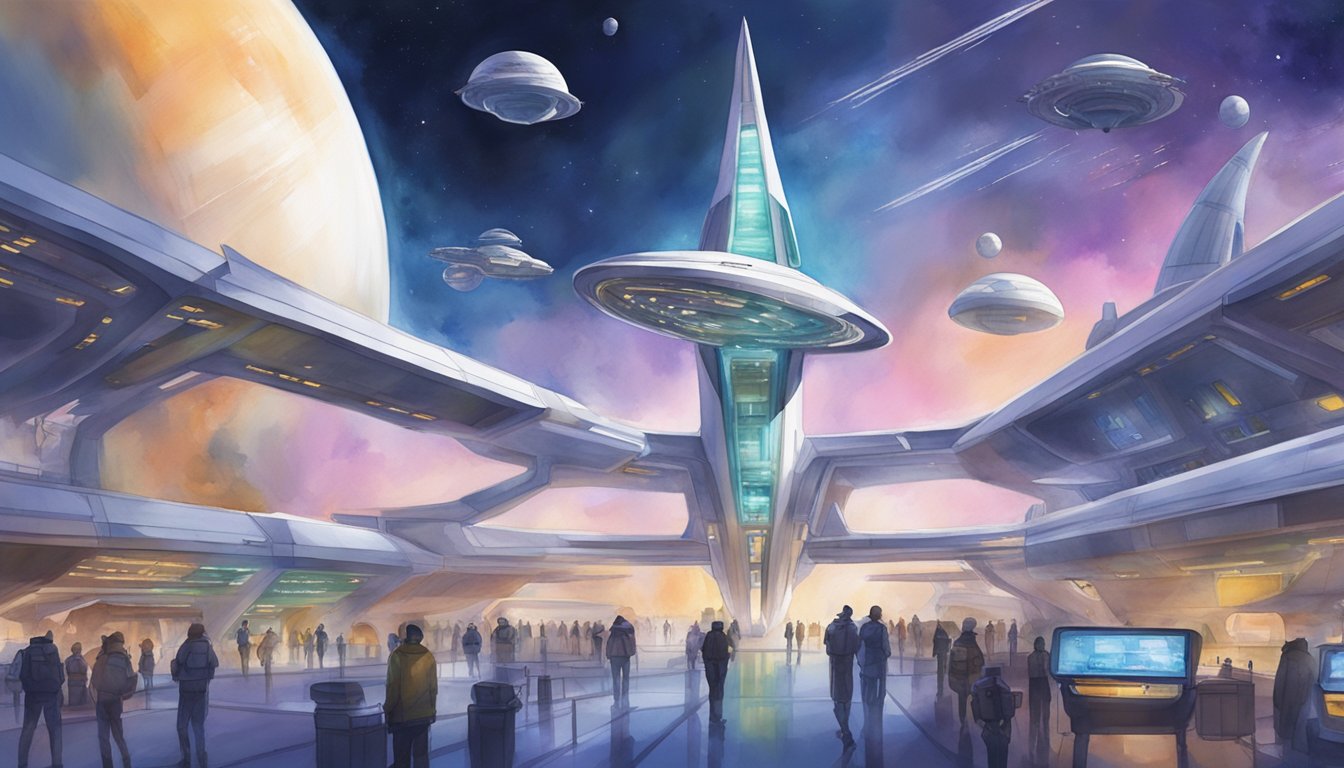
Overview of Space Tourism
The space tourism industry represents a major milestone in human exploration and commercial development.
Space tourism enables individuals to experience space travel, often categorized into suborbital and orbital flights.
Suborbital flights offer a brief journey beyond the Kármán line, providing approximately 5-10 minutes of weightlessness and stunning views of Earth.
Orbital flights involve longer stays in space, often aboard space stations or dedicated space habitats, offering extended experiences of microgravity and life in space.
Several companies have emerged as pioneers in the space tourism industry, driving innovation and market demand.
Companies like Virgin Galactic, Blue Origin, and SpaceX lead the charge by developing advanced spacecraft designed for commercial travel.
The industry has seen significant technological advancements that enhance safety and passenger experiences.
Space tourists are individuals who partake in these journeys, often including wealthy private citizens and, potentially, researchers or educators participating in space missions.
Demand within the space tourism sector is growing as more people express interest in space travel experiences.
Ongoing development aims to make space tourism more accessible and sustainable.
Efforts include reducing costs, improving safety protocols, and addressing environmental concerns related to space travel.
Key Players in the Industry
In the space tourism industry, several key players drive innovation and shape the market. These entities range from commercial spaceflight companies to government agencies and international bodies, each playing a distinct role in the sector.
Commercial Spaceflight Companies
SpaceX, founded by Elon Musk, aims to make space travel more affordable and accessible. The company focuses on reusable rocket technology and has set ambitious goals, including missions to Mars. Their Crew Dragon spacecraft, which carries astronauts to the International Space Station (ISS), marks a significant achievement in commercial spaceflight.
Virgin Galactic, led by Richard Branson, targets suborbital space tourism. Their spaceplane, VSS Unity, provides civilians with the opportunity to experience weightlessness and view Earth from space. They emphasize a high-end, luxurious experience for customers.
Blue Origin, owned by Jeff Bezos, competes in the suborbital tourism market with its New Shepard rocket. Designed for short, high-altitude trips, Blue Origin’s primary mission is to enable people to live and work in space. They also focus on the development of infrastructure for long-term space occupation.
Other notable private companies like Axiom Space and SpaceVoyageVentures.com are contributing to the expanding landscape. Axiom Space plans to build the first commercial space station, while SpaceVoyageVentures.com invests in emerging space tourism ventures.
Government Agencies and International Bodies
NASA, the United States’ space agency, plays a critical role in space tourism by collaborating with commercial companies such as SpaceX and Boeing to transport astronauts to the ISS. NASA’s technological advancements and regulatory support help lower entry barriers for private entities.
ESA (European Space Agency) collaborates with commercial and governmental organizations to promote space exploration and tourism within Europe. Their support in technology sharing and funding is pivotal for new companies.
Roscosmos, Russia’s space agency, has been a pioneer in human spaceflight. Historically, they have facilitated space tourism by offering seats on their Soyuz spacecraft to private individuals, setting a precedent in the industry.
International collaborations, such as those involving the International Space Station (ISS), are essential for the industry’s growth. The ISS serves as a hub for both governmental and private missions, influencing the trajectory of space tourism.
These key players, from innovative startups to established governmental bodies, collectively drive progress in the space tourism industry through unique contributions and strategic partnerships.
Technological Aspects of Expense Tracking
Effective expense tracking in the space tourism industry leverages technological advancements. Key areas include developments in spacecraft design, propulsion systems, and onboard innovations, all of which significantly impact financial management.
Advancements in Spacecraft Design and Propulsion
Spacecraft design has seen significant improvements, with digital modeling and 3D printing playing major roles. 3D printing technology reduces material waste and lowers production costs by creating precise components on-demand. Enhanced propulsion systems, such as ion thrusters and hybrid rockets, offer better fuel efficiency and reduced costs. These innovations help in streamlining expense tracking by providing accurate, real-time data on operational costs associated with launches and flights.
Adoption of Electric and Reusable Rockets
Electric propulsion systems and reusable rockets are transforming the cost dynamics of space travel. Electric propulsion offers greater efficiency and lower fuel costs. Reusable rockets, championed by companies like SpaceX, drastically cut costs by allowing rockets to be launched multiple times. This reusability simplifies expense tracking by reducing the frequency of new rocket purchases and maintenance costs. The adoption of these technologies directly influences the financial planning and expense management processes.
Innovations in Onboard Systems
Onboard systems in spacecraft are becoming more sophisticated, integrating advanced AI and IoT technologies. These systems provide continuous monitoring and analytics, contributing to more precise expense tracking. Modern spacecraft systems can monitor fuel consumption, system health, and operational efficiency in real-time. This data is vital for managing operational expenses efficiently and helps in making informed financial decisions. Additionally, advancements in autonomous technology reduce the human error factor, making expense management more accurate.
Regulatory and Compliance Considerations
Ensuring regulatory compliance in the space tourism industry involves navigating complex frameworks, maintaining stringent safety standards, and addressing legal and insurance considerations. This section focuses on these crucial areas.
Navigating Regulatory Frameworks
Space tourism companies must adhere to a myriad of regulations set by authorities such as the Federal Aviation Administration (FAA). These frameworks guide operational protocols, licensing, and environmental impact. Robust regulatory compliance ensures that companies meet local, national, and international laws, avoiding potential fines and legal actions.
Compliance programs should be continuously updated to reflect new regulations. Monitoring changes in policies and participating in industry advocacy groups can help companies stay ahead. Having a dedicated compliance team or consulting with regulatory experts can greatly facilitate this process.
Safety Regulation and Certification
Safety in space tourism is paramount. Companies must comply with safety protocols established by agencies like the FAA and other international bodies. This involves rigorous testing, certification of spacecraft, and continuous monitoring of safety procedures.
Certification processes include vehicle design approval, crew training standards, and emergency preparedness. Regular audits and inspections ensure adherence to these certifications, thus maintaining high safety standards. Safety protocols must be reviewed and updated regularly to incorporate technological advancements and learnings from past missions.
Liability, Insurance, and Legal Aspects
Navigating liability, insurance, and legal aspects is critical for risk mitigation. Space tourism companies should secure comprehensive insurance coverage that addresses potential liabilities, including passenger injury, vehicle damage, and third-party claims. This coverage safeguards the company from significant financial losses.
Legal frameworks governing space tourism often mandate specific liability waivers from passengers. Additionally, companies should be aware of international treaties and agreements that influence space operations. Collaboration with legal experts ensures that all contractual and legal obligations are met, reducing the risk of litigation.
Financial Management in Space Tourism
Effective financial management is crucial for success in the space tourism industry. Key areas include precise expense tracking and budgeting, understanding diverse investment and funding models, and managing significant economic and financial risks.
Expense Tracking and Budgeting
Expense tracking is fundamental in the space tourism sector, where costs can quickly escalate. Companies should implement comprehensive tracking systems to monitor every expenditure. This includes costs related to spacecraft development, launch operations, and safety infrastructure. Budgeting tools assist in allocating resources effectively and predicting financial needs.
Automated software solutions such as QuickBooks or specialized space industry platforms can streamline these processes. Regular financial audits ensure accuracy and transparency, while real-time reporting aids in making timely adjustments. Clear documentation and categorization of expenses help in identifying areas for cost reduction and efficiency.
Investment and Funding Models
Space tourism requires substantial investment, often necessitating a combination of private and public funding. Venture capital plays a significant role, as startups attract investors with promises of high returns. Crowdfunding has also emerged as a supplementary source of funds, engaging the public in financing projects.
Government grants and subsidies can ease the financial burden, especially for companies conducting research and development in advanced technologies. Equity financing allows businesses to raise capital by selling shares, while debt financing involves borrowing with the commitment to repay. Each model bears distinct implications, requiring careful consideration of ownership dilution and repayment obligations.
Managing Economic and Financial Risks
The economic impact of space tourism is profound, but so are the financial risks. Companies must account for potential launch failures, technological malfunctions, and market volatility. Risk management strategies include securing comprehensive insurance policies to mitigate losses from unforeseen events.
Economic forecasting tools help in predicting market trends and adjusting business strategies accordingly. Contingency planning is vital for handling unexpected financial strains. By diversifying revenue sources, companies can buffer against economic downturns. Engaging in international partnerships can also spread risks and foster growth in the global economy.
To remain viable, space tourism enterprises must continuously address these financial challenges with a forward-thinking approach.
Safety and Training Protocols
Ensuring the safety and preparedness of participants is a critical component in the space tourism industry. This involves rigorous training for astronauts and space tourists, establishing robust safety measures, and developing effective accident prevention and emergency response protocols.
Astronaut and Space Tourist Training
Comprehensive training programs are essential for astronauts and space tourists. These programs often include simulations of space conditions, physical fitness regimes, and detailed briefings on spacecraft operations.
Trainees must also gain experience in handling zero-gravity situations and understanding the physiological effects of space travel. Safety certification is mandatory before any mission, ensuring all participants are well-prepared and knowledgeable about safety protocols.
Developing Robust Safety Measures
Robust safety measures involve the creation and maintenance of stringent safety regulations. These measures should cover all aspects of space travel, from pre-flight preparations to in-flight operations and post-flight procedures.
Implementing these measures requires continuous assessment and updating based on the latest technological advancements and risk analyses. Safety protocols must be clearly defined and strictly enforced to mitigate the risks associated with space travel.
Accident Prevention and Emergency Response
Accident prevention focuses on identifying potential hazards and addressing them before they can cause harm. This includes meticulous safety checks of spacecraft, regular maintenance, and practice drills for emergency situations.
Emergency response protocols are crucial for handling unexpected incidents during space missions. These protocols should include clear instructions for dealing with various emergency scenarios, such as system failures or medical emergencies, ensuring that all personnel can act swiftly and effectively to safeguard their lives.
Marketing and Consumer Relations
Marketing and consumer relations in the space tourism industry require a strategic understanding of target markets, effective pricing strategies, and a strong focus on customer experience and perception.
Understanding Market Demand and Target Audience
Understanding market demand and the target audience is crucial. Companies must analyze demographics, psychographics, and consumer behavior patterns. They need to identify who is interested in space travel and why. For instance, early adopters may include wealthy individuals and celebrities like William Shatner. Additionally, missions like Inspiration4 have drawn public interest, showing potential demand for unique and inspirational experiences. A targeted marketing approach ensures that promotional efforts reach the right audience.
Pricing Strategies and Financial Accessibility
Pricing strategies should consider both exclusivity and accessibility. While initial offerings may command high prices due to the novelty and high costs, strategies to gradually make space tourism more accessible will be crucial. Tiered pricing models could offer different experiences at varied price points. Financial accessibility might also involve partnerships with financial institutions to provide payment plans. A transparent communicate on pricing helps in building trust among potential customers.
Customer Experiences and Public Perception
Customer experiences shape public perception. Offering a seamless, awe-inspiring journey can lead to positive word-of-mouth and increased demand. Activities focusing on the overview effect, a cognitive shift experienced when viewing Earth from space, can be highlighted. Quality service, safety, and comprehensive training programs should be prioritized. Customer relations teams must address feedback promptly to maintain positive public sentiment and unity among space travelers, ensuring a branded experience that resonates well with the target audience.
Operational Challenges and Mitigation
The space tourism industry faces unique and complex operational challenges. Addressing space debris and environmental concerns, dealing with equipment failures, and ensuring global cooperation are critical for smooth operations and risk mitigation.
Addressing Space Debris and Environmental Concerns
Space tourism contributes to the already growing issue of space debris. The accumulation of debris poses risks to both current and future missions. It is essential to implement debris mitigation strategies such as:
- Designing spacecraft to minimize debris creation.
- Planning missions to avoid debris zones.
- Utilizing technologies for debris removal.
Furthermore, environmental concerns extend to the pollution and carbon emissions from spaceflights. Investing in eco-friendly propulsion systems and environmentally sensitive mission planning can mitigate these impacts. Organizations should also adhere to international guidelines to protect the space environment.
Dealing with Equipment Failures and Technical Setbacks
Spacecraft and associated technologies are subject to rigorous operational demands, increasing the likelihood of equipment failures. Technical setbacks can jeopardize missions and passenger safety. Important strategies include:
- Implementing redundant systems for critical components.
- Conducting comprehensive testing and simulations before launch.
- Establishing rapid response protocols for in-flight issues.
Ongoing maintenance schedules and upgrades are vital to ensure equipment reliability. Comprehensive training programs for handling technical failures are essential for crew preparedness.
Global Cooperation and International Coordination
Space tourism necessitates global cooperation and international coordination to manage shared resources and airspace. Important aspects include:
- Harmonizing regulatory frameworks across nations to ensure a cohesive operational environment.
- Establishing clear communication channels for international incident response.
- Coordinating launch schedules to avoid conflicts and ensure safe travel paths.
Collaborative efforts with international space agencies and organizations ensure adherence to global safety standards and promote sustainable space activities. This collaboration also facilitates the sharing of innovations and best practices, further advancing the industry.
These measures aim to address key operational challenges, ensuring safe and efficient tourism operations in space.
Planning for the Future of Space Tourism
Future initiatives in space tourism will be influenced by sustainability, expanding human reach in space, and achieving significant milestones.
Sustainable Practices and Long-Term Viability
The space tourism industry must focus on environmental responsibility. To ensure the longevity of space exploration, companies are investing in sustainable propulsion systems, including electric and green propellants. These technologies aim to minimize pollution and preserve the orbital environment. Space debris management practices are essential for safeguarding Earth’s orbit from the growing number of satellites and space activities. Prioritizing sustainable space tourism ensures the industry’s growth aligns with global efforts to protect outer space.
Expanding the Reach of Space Exploration
The goal of orbital hotels and extended stays in space requires innovation in life support systems and habitat designs. By creating self-sufficient environments, companies can offer longer-duration stays for tourists. Expanding the reach of space exploration also means making it more accessible and affordable. Achievements in reducing costs and increasing safety will broaden the demographic able to experience space. This expansion fosters further human exploration and commercial opportunities far beyond Earth’s orbit.
Projecting Future Milestones and Achievements
The space tourism sector is poised for a series of critical achievements. Upcoming milestones include the establishment of orbital hotels, crewed missions to the Moon, and eventually, Mars. Expected developments also involve enhancing safety protocols and reducing costs per flight. Companies like Space Adventures and newer firms are planning milestones such as launching tourists to lunar orbits. These achievements mark significant progress toward making space tourism a vital component of human exploration.
By addressing sustainability, expanding human presence in space, and aiming for significant milestones, the space tourism industry can look forward to a promising future.
Frequently Asked Questions
Tracking expenses in the space tourism industry involves various methods, tools, and regulations to ensure accuracy and compliance. Space tourists are provided with specific guidelines for budgeting and managing their financial responsibilities.
What methods are employed to accurately document expenditures in the realm of space travel?
Space tourism companies use comprehensive accounting software to automate the tracking of financial transactions. This includes logging and categorizing expenses related to training, equipment, and travel. Digital receipts and centralized documentation systems are also employed to enhance accuracy.
How can space tourists effectively budget for their trips?
Space tourists are encouraged to utilize budgeting apps and planning tools provided by the tour operators. Clear itemized lists of potential costs, such as training fees, equipment rentals, and travel expenses, help travelers plan their finances accordingly. Pre-trip consultations with financial advisors are also recommended.
In what ways are expense reports for space travel audited for accuracy and compliance?
Expense reports are audited through rigorous review processes and automated accounting systems. Independent auditors may verify the records to ensure compliance with industry standards. Detailed scrutiny of each transaction helps in identifying discrepancies and maintaining financial integrity.
What are the best tools and software for managing financial costs in the space tourism sector?
Leading tools include specialized accounting software like QuickBooks, Xero, and custom applications designed for the space tourism industry. These tools offer real-time tracking, expense categorization, and integration with other financial systems. Their user-friendly interfaces simplify the management of complex financial data.
What regulations govern the reporting of financial outlays in commercial spaceflight?
The space tourism industry adheres to regulations set by governmental bodies like the Federal Aviation Administration (FAA) and international space authorities. These regulations mandate transparent reporting and documentation of all financial activities. Compliance ensures ethical financial practices and protects stakeholders’ interests.
How does the T&E policy adapt to the unique needs of space tourism?
Travel and Expense (T&E) policies in space tourism take into account the specificities of extraterrestrial travel. Customized guidelines outline permissible spending, reimbursement processes, and allowable expenses. These policies are crafted to address the unique logistical and financial challenges associated with space travel.
Leave a Reply