
Understanding Cross-Border Transactions
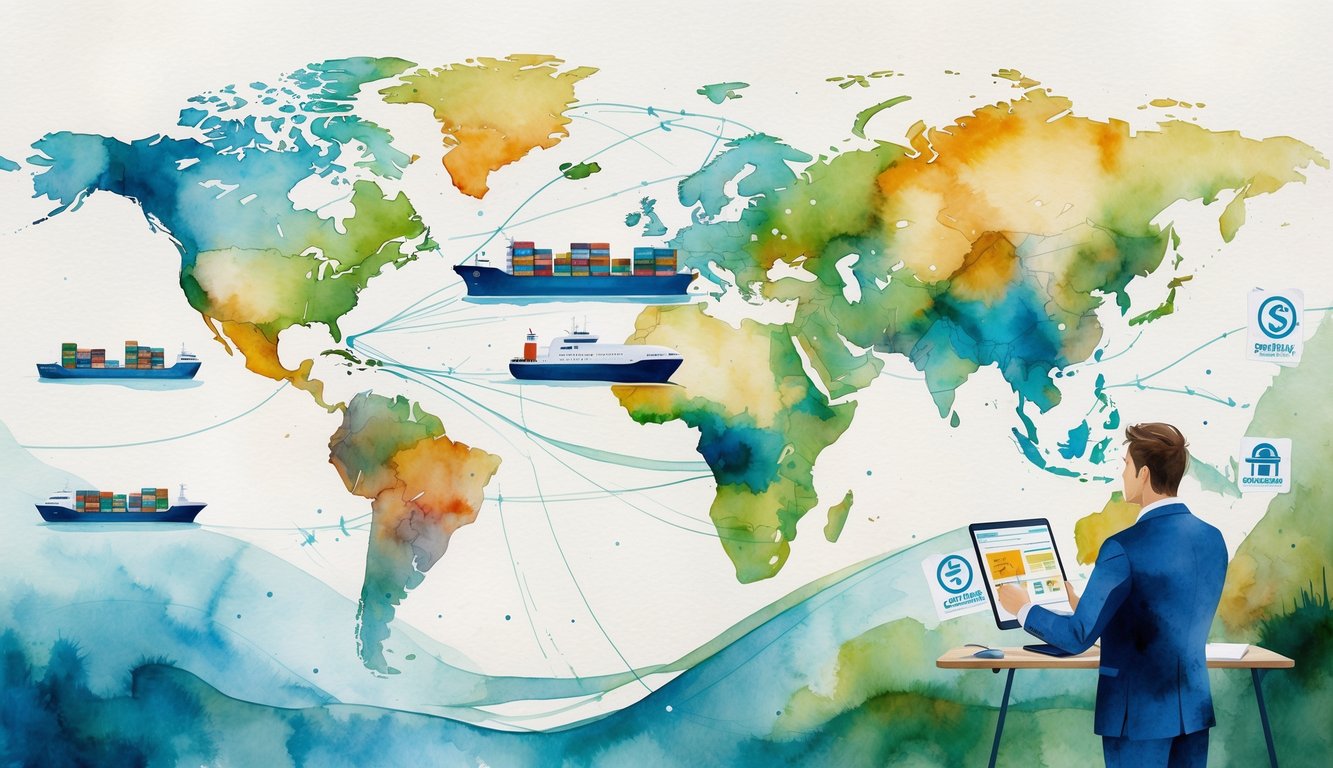
Cross-border transactions involve legal rules, trade practices, and the movement of goods and services between countries. Exporters must manage roles, transaction types, and legal definitions to succeed in international trade.
Definition and Scope
Cross-border transactions mean exchanging goods, services, money, or financial assets between entities in different countries. These activities include imports, exports, investment flows, and financial transfers.
Exporters must also deal with regulatory compliance, customs procedures, and currency exchange. Understanding these areas helps manage risks like tariffs, delays, and legal restrictions.
Key Stakeholders and Roles
Exporters and importers start and receive goods or services. Customs authorities enforce trade rules and collect duties.
Freight forwarders and carriers arrange transportation across borders. Banks and financial institutions process payments and currency exchanges.
Each party must coordinate to keep goods moving and follow international trade laws.
Types of Cross-Border Transactions
There are three main types: goods trade, service trade, and capital transactions.
Goods trade covers moving physical products across borders. Service trade involves providing services internationally, such as consulting or software.
Capital transactions include investments, loans, or financial asset transfers. Exporters mainly focus on goods but should also consider financial and regulatory impacts from the other types.
Legal and Regulatory Frameworks
Exporters need to understand trade laws, compliance standards, and restrictions. They must stay updated on international policies, legal responsibilities, and specific controls to operate legally and avoid penalties.
Relevant Trade Laws and Policies
Countries set their own trade laws, affecting tariffs, duties, and import/export rules. Exporters must know the trade agreements that apply, such as free trade agreements or regional trade blocs.
These agreements often lower tariffs or simplify customs. Key laws may include customs regulations, tax laws, and labor standards.
Exporters should check for updates from regulatory agencies like customs authorities and international trade bodies. They also need to track government policy changes, including new tariffs or shifts in trade strategy.
Compliance and Regulatory Requirements
Exporters must meet all legal requirements in each country involved. This includes submitting accurate documents, reporting shipments, and following quality and safety standards.
They should check for all legal obligations, such as product certifications, licensing, and environmental rules. Many countries require export licenses or permits before goods leave.
A multi-jurisdictional compliance framework helps manage different rules across countries. Exporters can hire legal experts or use compliance software to keep records accurate and up to date.
Export Controls and Economic Sanctions
Governments use export controls to regulate sensitive goods like technology, weapons, and dual-use items. Exporters must identify controlled products and get the right permissions.
Economic sanctions restrict trade with certain countries, entities, or individuals. These sanctions protect foreign policy interests or respond to conflicts.
Exporters need to screen partners and shipments against sanction lists from agencies like the U.S. Treasury’s OFAC or the European Union. Not following export controls and sanctions can result in heavy fines, legal action, or loss of export privileges.
Customs Procedures and Clearance
Exporters must follow strict rules and provide detailed paperwork for cross-border shipments. Companies need to calculate fees accurately and prepare for customs inspections.
Customs Documentation and Classification
Exporters prepare key documents for customs clearance, such as the commercial invoice, packing list, bill of lading, and export license. Each document includes details about the goods, their value, and origin.
Products must be classified correctly using Harmonized System (HS) codes. These codes set duty rates and special rules.
Misclassification can cause delays, fines, or seizures. Customs brokers or trade experts help ensure documents meet legal requirements and speed up border processing.
Customs Duties and Tariffs
Customs duties are taxes on imports and exports. Rates vary by product and destination country.
Tariffs are often a percentage of the item’s value. Exporters should know the tariff rates for their goods before shipping.
Some trade agreements lower or remove tariffs on certain products. Exporters must pay duties before customs releases goods.
Incorrect declarations or underpayment can lead to shipment holds or penalties.
Handling Inspections and Investigations
Customs officials inspect shipments to check compliance. Inspections may be random or triggered by incomplete paperwork or unusual data.
Officials may open and review goods during inspections. Exporters should keep accurate records and respond quickly to requests for information.
If customs suspects wrongdoing, they may start an investigation or audit. Exporters should cooperate and provide clear information to resolve issues quickly.
Export Documentation and Licensing
Exporters gather specific documents and often need licenses to complete cross-border transactions legally. These steps ensure compliance and smooth movement of goods.
Required Export Documents
Exporters prepare a Proforma Invoice to outline sale terms before shipment. The Commercial Invoice details items sold, price, and buyer-seller information.
A Packing List describes contents, weight, and packaging. Purchase Orders confirm the buyer’s order.
Customs forms are required by authorities. Exporters should check what paperwork the destination country needs to avoid delays.
Accurate documents speed up customs clearance. Missing or incorrect paperwork can cause delays or fines.
Obtaining Export Licenses
Exporters need an export license to ship certain goods. Licensing is important for controlled items, such as technology, military goods, or restricted products.
Exporters apply through the government agency in charge of export controls. The application includes product details, end user, and destination.
Approval times vary, so exporters should plan ahead. Without a license, shipments can be stopped and penalties may apply.
Some goods do not need a license, but exporters should confirm this before shipping.
Special Documentation for Sensitive Goods
Sensitive goods include technology, defense items, or materials with military uses. These products usually need extra paperwork and stricter licenses.
Exporters may also need end-user certificates or declarations of use. These documents confirm the buyer’s identity and intended use.
Properly classifying sensitive goods under export control lists is vital. Exporters should stay updated on regulations, as rules can change often.
International Trade Agreements and Treaties
International agreements and treaties shape how goods and services move between countries. These agreements reduce tariffs, set trade rules, and help solve disputes.
World Trade Organization (WTO) Agreements
The World Trade Organization sets global trade rules. Its agreements cover tariffs, subsidies, and trade barriers.
Countries that join the WTO follow these rules for fair and predictable trade. Key WTO agreements include:
- GATT (General Agreement on Tariffs and Trade) for reducing tariffs.
- GATS (General Agreement on Trade in Services) for services like banking and tourism.
- TRIPS (Trade-Related Aspects of Intellectual Property Rights) for protecting patents and copyrights.
These agreements lower taxes on goods and provide a way to resolve disputes. Exporters must follow WTO rules when trading internationally.
Bilateral and Multilateral Treaties
Bilateral treaties are trade agreements between two countries. Multilateral treaties include three or more nations.
These treaties reduce tariffs and set standards for customs and product safety. Key treaty features include tariff reductions, rules of origin, and dispute resolution steps.
Exporters should check how these treaties affect their products. Knowing treaty terms helps companies plan shipments and avoid extra costs.
Regional Trade Agreements
Regional trade agreements (RTAs) cover countries in the same area. RTAs often include cooperation on investment, labor, and environmental rules.
Common RTAs include:
| Agreement | Region | Key Features |
|---|---|---|
| USMCA | North America | Tariff elimination, digital trade |
| European Union Customs Union | Europe | Free movement of goods and services |
| ASEAN Free Trade Area | Southeast Asia | Gradual tariff reduction |
RTAs make it easier to access nearby markets. Exporters benefit from faster customs clearance and less paperwork.
Knowing which RTAs apply to your destinations can make business more efficient.
Logistics and Transportation Management
Exporters need efficient logistics and transportation. Careful planning helps avoid delays, control costs, and follow rules.
Choosing the right transport, working with reliable partners, and handling trade barriers are key.
Selecting Transportation Modes
Exporters choose transportation based on cost, speed, and the type of goods. Common modes are sea freight, air freight, road, and rail.
Sea freight is cheaper for bulky items but slower. Air freight is faster but more expensive, best for urgent or high-value goods.
Exporters consider the destination’s infrastructure and customs rules. Combining modes, like air and road, can save time and money.
Clear documentation and tracking systems help control shipments.
Managing Shipping and Freight Forwarders
Freight forwarders organize shipments and customs clearance. Exporters benefit from experienced forwarders who understand cross-border logistics.
Forwarders handle booking cargo space, paperwork, and transport coordination. Good forwarders offer updates on shipment progress and help avoid delays.
Exporters should review all fees, including handling, storage, and brokerage. Transparent cost breakdowns help prevent surprises.
Dealing With Trade Barriers
Trade barriers like tariffs, import restrictions, and customs procedures affect shipments. Exporters must know the rules for each destination to avoid fines or rejection.
They need accurate customs documentation and must meet product labeling or safety standards. Planning for tariffs and taxes should be part of pricing.
Using trade agreements or special customs programs can reduce fees or speed up clearance. Good communication with customs agents helps resolve issues quickly.
Cross-Border Payments and Currency Issues
Exporters must manage how payments are made and regulated in cross-border transactions. They need to balance payment methods, currency risks, and legal rules to avoid extra costs or delays.
Payment Methods and Terms
Banks, wire transfers, or specialized payment platforms handle most cross-border payments. Exporters negotiate payment terms like letters of credit or advance payments to reduce risk.
Common payment options include:
- Wire transfers: These are direct and fast but may involve high fees.
- Letters of credit: They provide security but can be costly and require strict documentation.
- Open account: This option is flexible but risky if the buyer delays or defaults.
Exporters should define payment terms in contracts, including due dates, currency, and responsibility for fees. Clear terms help prevent misunderstandings and delays.
Currency Risks and Exchange Management
Currency exchange rates change quickly and can affect how much money exporters receive. Unfavorable rate changes increase costs or reduce profit.
Exporters manage this risk using:
- Forward contracts: These lock in exchange rates ahead of time.
- Currency options: These protect against adverse rate moves without losing gains.
- Multi-currency accounts: These accounts hold funds in different currencies to delay conversion.
Exporters monitor currency trends and plan conversions carefully. This helps control exposure and avoid surprises from fluctuating rates.
Handling Cross-Border Payment Regulations
Countries have different regulations for cross-border payments. These rules cover taxes, reporting, anti-money laundering checks, and compliance standards.
Exporters must:
- Understand tax rules and avoid double taxation.
- Comply with anti-money laundering (AML) and know your customer (KYC) requirements.
- Prepare for documentation audits by banks or authorities.
Expert knowledge or professional help helps payments meet regulatory requirements. Exporters should also agree on who pays transfer fees and taxes to prevent disputes.
Jurisdiction and Legal System Challenges
Cross-border transactions require attention to which country’s laws apply and how disputes will be resolved. Exporters need to understand jurisdiction rules, prepare for legal system differences, and plan ways to handle conflicts.
Understanding Jurisdictional Issues
Jurisdiction decides which court or country can hear a legal dispute. Exporters should define jurisdiction in contracts to prevent conflicts.
Some countries allow only a chosen court to decide disputes, while others let multiple courts claim jurisdiction. This can make enforcement harder.
Exporters should use forum selection clauses to specify courts and choice of law clauses to choose the legal system. Without these, exporters might face unfamiliar rules or lawsuits in different countries.
Addressing Dispute Resolution
Disputes in international deals often bring enforcement challenges due to different laws. Exporters should decide on dispute resolution methods before problems occur.
Common methods include:
- Arbitration: Private, faster, and enforceable in many countries.
- Mediation: A non-binding, collaborative way to resolve conflicts.
- Court litigation: Slower and costly, with enforcement depending on local courts.
Contracts should state the dispute resolution method, venue, and language. This reduces risks and costs if disagreements arise.
Working With Foreign Legal Systems
Each country’s legal system has different rules and procedures. Exporters must adapt to these differences to protect their rights.
For example, contract enforcement may be easier in common law countries but harder in civil law systems. Laws on evidence, discovery, and privilege also differ.
Working with local legal counsel helps exporters understand these differences and follow local rules. Counsel assists with tariffs, sanctions, and import/export controls.
Export Operations and Business Practices
Successful export operations depend on managing supply chains, entering new markets, and adapting to business practices abroad. These factors affect manufacturing efficiency and regulatory compliance.
Optimizing Supply Chain and Manufacturing
Efficient supply chains lower costs and improve delivery times. Exporters should work closely with suppliers to ensure quality and timely production.
Using technology like inventory management systems helps track materials and finished goods. Manufacturers must follow international standards and certifications to meet destination country rules.
Planning for risks such as shipping disruptions or raw material shortages is important. Flexible supply networks help companies respond quickly to changes.
Expanding Export Markets
Entering new markets requires research on local demand, competition, and regulations. Companies should target countries with growing economies for long-term sales growth.
Building relationships with local partners or distributors improves market access. Understanding local preferences and offering competitive prices can increase export success.
Exporters must comply with import controls, tariffs, and customs requirements. Knowing these rules helps avoid delays and fines.
Business Operations in Foreign Markets
Operating in foreign markets means adapting to local business laws and economic conditions. Exporters should learn about tax rules, labor laws, and environmental regulations for each country.
Understanding cultural differences and business customs helps build trust with customers and partners. This leads to stronger growth and stability.
Managing operations abroad can create jobs and support innovation. Companies may invest in local facilities or training, helping economic growth.
Country-Specific Considerations
Each country has unique rules, taxes, and customs regulations that exporters must follow. Understanding these requirements helps avoid delays and extra costs. Knowing challenges in major markets like China, India, and Brazil ensures smoother transactions.
Navigating Trade With China
China enforces strict import regulations and uses a complex customs process. Exporters must provide accurate product descriptions and meet China’s technical standards.
The country uses a harmonized tariff system to determine duties based on product type. Exporters must also follow China’s local labeling laws and mandatory certifications, such as CCC (China Compulsory Certification).
Delays can happen if documentation is incomplete or incorrect. Customs clearance times vary by product and port.
A reliable customs broker in China can help manage these details and reduce risks.
Exporting to India
India requires clear compliance with customs, tax, and licensing rules. GST (Goods and Services Tax) applies to imports and affects pricing and invoicing.
Products must meet Indian standards set by organizations like the Bureau of Indian Standards (BIS). Failure to meet these can lead to shipment rejection or fines.
India’s trade policies can change quickly, affecting tariffs or import restrictions. Exporters need to plan for regulatory updates and ensure import documentation is precise, including all permits and certificates.
Brazil’s Cross-Border Trade Environment
Brazil charges some of the highest customs duties among developing countries. Import taxes like IPI, PIS, and COFINS add to costs, so exporters must calculate these carefully.
Brazil uses the Mercosul Common Nomenclature system to classify goods for tariffs. Exporters must match the correct code to avoid extra fees.
The country requires strict sanitary and phytosanitary certificates for many goods, especially food and agricultural products. Customs clearance can take several weeks, so exporters should plan for longer lead times.
Language barriers and paperwork complexity can cause problems, so using experienced local agents is helpful.
Technology and Automation in Cross-Border Trade
Technology and automation make cross-border trade faster and more transparent. Digital tools give exporters better control over shipments, documentation, and compliance.
These tools help reduce errors and speed up processes, making international transactions smoother.
E-Commerce and Digital Trade
E-commerce platforms connect exporters to customers worldwide. These platforms often include tools for currency conversion, tax calculations, and shipping options.
Digital trade speeds up order processing and improves tracking accuracy. Exporters can manage sales, payments, and customer communication in one place.
Many e-commerce websites integrate with customs systems to automate export documents. This speeds up clearance times at borders and lowers the risk of compliance issues.
Automation in Export Processes
Automation tools handle tasks like preparing shipping documents, calculating duties, and scheduling shipments. This reduces human errors and saves time.
Automated systems link parts of the supply chain, enabling real-time updates on freight and inventory. This helps exporters plan better and react faster to disruptions.
Automation also improves visibility. Exporters can track orders throughout shipping and address issues quickly. This transparency builds trust with buyers and partners.
Role of Artificial Intelligence (AI)
Artificial Intelligence analyzes large amounts of data quickly to support decision-making in trade. AI can predict delays, recommend shipping routes, and suggest cost reductions.
AI-powered chatbots provide 24/7 customer service, answering questions and helping track shipments. This reduces the workload on export teams and improves buyer experience.
AI also monitors trade compliance and flags suspicious activities. This helps exporters avoid fines and follow legal rules.
Data Privacy and Security in International Trade
Cross-border transactions expose exporters to risks from handling data in different countries. Protecting sensitive information and following international rules are critical for safe and legal operations.
Protecting Sensitive Data
Exporters must secure customer and business data from theft and misuse. Encryption protects data as it moves between countries.
Access controls limit who can see or change sensitive information. Regular security checks help find weaknesses before hackers do.
Companies should train employees to recognize threats like phishing, which can cause data breaches. Strong data security builds trust with partners and customers in other countries.
Compliance With International Data Regulations
Different countries have their own laws about handling data in trade.
Exporters need to understand rules like the European Union’s GDPR and similar laws in Asia and the Americas.
Non-compliance can lead to fines and block data flow in transactions.
Companies must monitor changing laws and may need to hire experts.
Privacy frameworks and tools help companies demonstrate compliance across borders.
| Key Areas of Compliance | Examples |
|---|---|
| Data Transfer Restrictions | Limitations on moving data abroad |
| Data Minimization | Only collect data needed |
| Consent and Transparency | Inform users how data is used |
| Data Breach Notification | Timely reporting to authorities |
Government and Oversight Agencies
Several government bodies manage export rules and monitor foreign investments.
Exporters need to understand the roles of these agencies and how foreign investments are reviewed.
It is important to verify transaction beneficiaries.
Role of Regulatory Agencies
Several U.S. agencies regulate exports.
The Department of Commerce, through its Bureau of Industry and Security (BIS), controls most exports.
BIS enforces the Export Administration Regulations (EAR), which restrict certain goods and technologies.
The State Department manages exports of defense and military items under the International Traffic in Arms Regulations (ITAR).
The Treasury Department’s Office of Foreign Assets Control (OFAC) enforces sanctions that affect cross-border trade.
Exporters must follow all these regulations to avoid legal penalties.
These agencies work together to keep sensitive technology or goods from unauthorized parties.
Committee on Foreign Investment in the United States (CFIUS)
CFIUS reviews certain foreign investments in U.S. companies for national security risks.
It can block or set conditions on deals that might harm U.S. interests.
Foreign investors must notify CFIUS before completing transactions in sensitive sectors.
The review process checks for risks in technology, critical infrastructure, or data access.
Exporters with foreign partners or investors may need to file with CFIUS to avoid delays or legal problems.
Beneficiary Identification and Verification
Exporters must verify beneficiaries’ identities to comply with U.S. laws and avoid illegal transfers.
Beneficiary identification stops shipments to sanctioned or restricted parties.
Exporters collect names, addresses, and government-issued identification as part of this process.
Screening tools compare information against government watch lists to reduce risk and ensure compliance.
Proper beneficiary verification protects exporters from fines and keeps the supply chain secure.
It is a key part of export documentation and risk management.
Frequently Asked Questions
Exporters face challenges with laws, payments, compliance, taxes, and partner checks.
Understanding these areas helps reduce risks and improve business.
What are the key legal considerations for exporters in cross-border transactions?
Exporters must know the laws in both their country and the buyer’s country.
Contracts should state delivery, payment, and dispute resolution terms.
Export controls and licensing rules may apply depending on the product and destination.
How can exporters manage currency exchange risk in international deals?
Currency values can change quickly and affect profits.
Exporters can use forward contracts or options to lock in exchange rates.
Pricing in a stable currency and working with banks can help manage risk.
What are the common compliance issues faced during cross-border trade?
Exporters often face challenges with export control laws, customs regulations, and sanctions.
Accurate classification of goods and documentation prevent delays and fines.
They must also verify if the buyer can legally receive the products.
What methods are available to ensure payment in cross-border transactions?
Letters of credit and documentary collections are common ways to secure payment.
Advance payments or escrow services can reduce risks.
Exporters should check the buyer’s credit and payment history.
How does VAT/GST apply to international goods and services for exporters?
VAT or GST rules differ by country, but exporters often do not charge VAT on goods shipped abroad.
They may need to document the export to get a tax refund or exemption.
For services, the place of supply rules determine tax obligations.
What are the best practices for due diligence in cross-border transactions?
Due diligence means researching the buyer’s background and financial health. Exporters should also check the buyer’s reputation.
Check for sanctions and political risks. Review the legal standing of the buyer.
Use trusted partners to help with the process. Seek professional advice to avoid problems.
Leave a Reply