
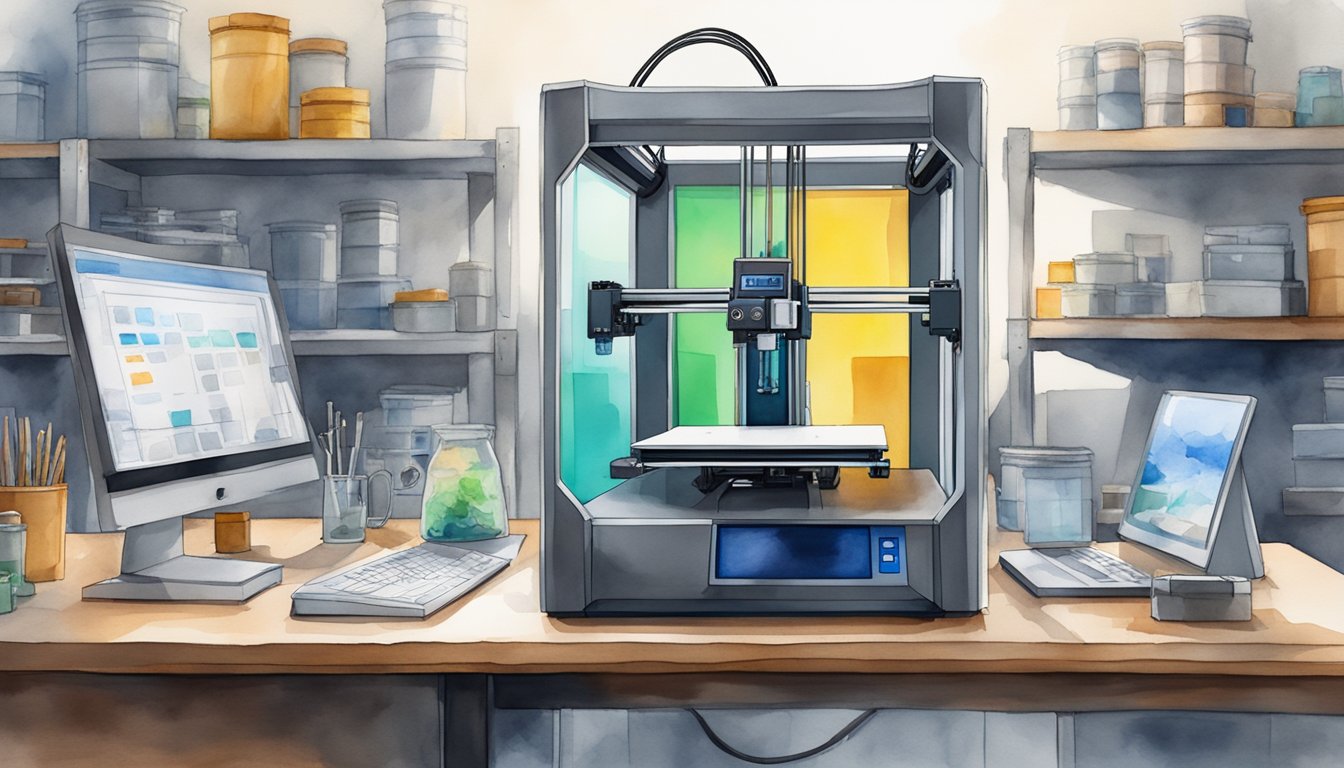
Overview of Additive Manufacturing and 3D Printing
Additive manufacturing and 3D printing involve creating components by adding material layer by layer, driven by precise digital models. These technologies are transforming industries by enabling complex geometries and reducing waste.
Defining Additive Manufacturing and 3D Printing
Additive manufacturing (AM), often synonymous with 3D printing, refers to processes that build objects layer upon layer from materials such as polymers, metals, and resins. Unlike traditional subtractive methods, AM allows for intricate designs and modifications with minimal waste.
3D printing spans various techniques like Stereolithography (SLA), Fused Deposition Modeling (FDM), and Selective Laser Sintering (SLS). These methods collectively enable rapid prototyping, functional part production, and direct digital manufacturing across sectors ranging from aerospace to healthcare.
The Role of Technology in AM
Technological advancements play a pivotal role in the evolution of AM. High-precision lasers, efficient software, and improved material science are key enablers of current 3D printing capabilities.
3D printers now boast higher speeds, better resolution, and the ability to handle diverse materials, which expands their applications. Integration with IoT and AI further enhances process optimization, quality control, and scalability.
These technologies not only streamline production but also facilitate customized manufacturing and on-demand production models, proving crucial for industries like automotive and medical device manufacturing.
Material Considerations in AM
When managing inventory for 3D printing and additive manufacturing, companies must carefully consider the variety of materials used. Polymers, metals, and resins all play a critical role, each with distinct properties and use cases in manufacturing processes.
Types of AM Materials
Additive manufacturing relies on diverse materials, each tailored for specific applications and performance requirements:
- Polymers: Widely used in both prototyping and final product manufacturing. Common types include PLA, ABS, and nylon.
- Metals: Essential for high-strength, durable parts. Often used in aerospace and automotive industries, examples include titanium, stainless steel, and aluminum.
- Resins: Known for their precision and smooth finishes. Utilized in dental, jewelry, and intricate mold-making processes.
Composite materials, combining these types, are also important, offering unique advantages such as enhanced mechanical properties and reduced weight.
Properties of Polymers, Metals, and Resins
Polymers are favored for their flexibility, ease of use, and cost-effectiveness. PLA (polylactic acid) is biodegradable and suitable for eco-friendly applications, while ABS (acrylonitrile butadiene styrene) is known for its strength and durability.
Metals stand out due to their superior mechanical properties. Titanium offers high strength-to-weight ratio and corrosion resistance, making it ideal for aerospace parts. Stainless steel provides excellent durability and resistance to oxidation.
Resins cater to high-resolution and detailed printing needs. Epoxy resins are praised for their strong adhesive properties and chemical resistance. Photopolymer resins cure quickly under UV light, enabling fine details and smooth finishes in printed objects.
Understanding these material properties helps companies better manage costs and optimize their inventory for various manufacturing requirements.
Inventory Management Strategies
Effective inventory management strategies are essential for companies in the 3D printing and additive manufacturing industry to control production costs and ensure a smooth supply chain. Proper accounting for raw materials like polymers, metals, and resins, as well as accurate demand forecasting, play critical roles.
Cost Accounting for AM Materials
Proper cost accounting for raw materials in additive manufacturing requires precision.
Companies should categorize materials by type and quality. Implementing a cost-per-unit approach helps in tracking the financial impact of each material. They should maintain real-time records, adjusting for price fluctuations in the market.
A centralized digital inventory, integrating all facilities, ensures uniformity. Using software tools like ERP systems, companies can automate cost tracking and reduce manual errors. Secure storage procedures prevent material degradation, further preserving value.
Regular audits and cost assessments can highlight waste reduction opportunities, optimizing material usage.
Demand Forecasting and Replenishment
Accurate demand forecasting is vital to avoid overstocking or stockouts.
Historically analyzing sales and production data enables companies to predict future material needs. Collaboration with suppliers ensures timely replenishment, minimizing interruption in the supply chain. A just-in-time inventory model aligns raw material orders with production schedules, reducing holding costs.
Integrating IoT devices and AI analytics can offer real-time insights, refining forecasts based on current trends. Maintaining a balance between safety stock and expected demand ensures material availability without excessive surplus.
By using these strategies, companies can enhance inventory efficiency, control costs, and maintain streamlined production workflows.
Cost Analysis and Reduction Techniques
Effective cost analysis in the 3D printing industry involves optimizing raw material costs and achieving economies of scale. These strategies significantly enhance profitability and operational efficiency.
Optimizing Material Costs
Companies can minimize material costs by sourcing high-quality yet affordable polymers, metals, and resins. Establishing reliable relationships with multiple suppliers ensures competitive pricing and consistent supply.
Implementing material-efficient design practices reduces wastage. For instance, using lattice structures decreases the volume of material needed without compromising strength. Inventory management software can track material usage and forecast demand, allowing for bulk purchasing at lower prices. Additionally, recycling unused materials from previous projects can lead to substantial cost savings.
Achieving Economies of Scale
Scaling production in additive manufacturing directly lowers the total cost of ownership per unit. By increasing throughput, the fixed costs of machinery, labor, and overheads are spread over a larger number of units, reducing the cost per item.
Batch production techniques streamline operations and cut downtime. Companies should also consider investing in more efficient, high-capacity machines that maximize output while reducing energy consumption. Collaborating with other firms to share production facilities or joint procurement of raw materials can further drive down prices.
Strategic cost reduction through economies of scale allows companies to offer competitive pricing, thus strengthening market position. Consistent evaluation and adjustment of production processes ensure ongoing cost efficiency.
Quality Control and Performance Metrics
Ensuring the integrity and efficiency of 3D printed parts involves thorough quality control and continuous performance assessment. These are essential to maintain precision, tolerance, and reproducibility in additive manufacturing.
Assuring Quality in Production
Quality in 3D printing requires rigorous standards. Companies must define strict tolerance levels and continually measure accuracy. It’s crucial to inspect the surface finish of printed parts, as variations can impact performance. Implementing metrology tools to assess layer uniformity and detect defects early helps in maintaining high precision.
Polymers, metals, and resins used as raw materials should be certified for consistency. This involves evaluating batches for reproducibility and ensuring they meet specified mechanical properties. Automation and machine learning algorithms can enhance quality control by predicting potential issues before they arise.
Performance Analysis and Improvement
Analyzing the performance of 3D printed parts involves monitoring their durability and functionality. Performance metrics include stress-strain tests for mechanical properties and thermal cycling tests to ensure material stability.
Continuous improvement in the manufacturing process is driven by data gathered from these tests. This data helps in optimizing the use of raw materials, achieving better tolerance and improved surface finishes. Employing statistical process control (SPC) tools assists in identifying variations and implementing corrective actions promptly.
Regular training for personnel on the latest quality and performance methodologies also plays a significant role in maintaining high standards. Collaboration with material scientists and engineers ensures that the most advanced techniques and insights are applied in production.
Technology Integration in AM
Tech integration in additive manufacturing (AM) enhances efficiency and innovation. Key advancements include CAD software tools and emerging AM technologies driven by AI and IoT.
CAD and Software Tools
Computer-Aided Design (CAD) is pivotal in AM, allowing precise geometries and complex designs. It simplifies prototyping and customization, reducing time and cost. Software tools include SolidWorks and Autodesk Fusion 360.
Digital thread integrates these tools from design to production, creating a seamless workflow. This aids in real-time monitoring and reduces errors. CAD also supports simulation and modeling, predicting performance before actual manufacturing.
AI enhances these tools by optimizing designs for weight, strength, and material usage. Software tools now include machine learning algorithms, which refine designs based on data from previous iterations.
Emerging AM Technologies
Emerging technologies in AM include multi-material printing, which enables the combination of different materials in one process, and 4D printing, where materials change properties over time.
IoT connects machines and systems, enabling predictive maintenance and real-time data analytics. This reduces downtime and improves efficiency. AI further enhances these technologies by improving process controls and adapting workflows dynamically.
Hybrid AM systems combine additive and subtractive methods, optimizing material usage and finishing. Such integrations lead to better surface quality and precision in final products, expanding the capabilities of traditional AM.
Applications and Industry Adoption
Additive manufacturing (AM), also known as 3D printing, has significantly transformed various sectors by optimizing both product design and production processes. Companies are utilizing AM for rapid prototyping and are increasingly adopting it for mass production to meet diverse industry demands.
AM in Prototyping and Product Development
In prototyping, AM has revolutionized how companies approach product design and development. Firms like GE and BMW use 3D printing to quickly create prototypes, allowing for faster iteration and refinement of designs. This technology shortens development cycles by enabling real-time testing and evaluation of product concepts.
The use of AM in prototyping not only reduces material waste but also lowers developmental costs. Custom and complex geometries that were previously expensive and difficult to produce are now feasible with 3D printing. This flexibility supports innovation and customization, making it a preferred choice in various sectors including automotive, aerospace, and consumer goods.
Transitioning AM to Mass Production
AM is evolving from a prototyping tool to a viable option for mass production. Industries are investing in AM technologies to produce end-use parts. For instance, in the manufacturing sector, companies are moving beyond small-scale production to mass manufacturing of complex components. This transition is driven by the maturity and efficiency of AM technologies.
The 3D printing market is expanding as industries adopt AM to meet specific production needs. The ability to produce parts on-demand reduces inventory costs and lead times. Additionally, the scalability of AM helps industries maintain flexibility in production while ensuring high-quality output. Industrial players are thus leveraging AM to create customized, durable products at larger scales.
Business Models and Market Evolution
In the 3D printing and additive manufacturing industry, business models are evolving to accommodate customization, agile production, and the promising future of these technologies. Companies must adapt to these changes to remain competitive and meet customer demands effectively.
Customization and Agile Production
3D printing technology allows companies to offer highly customized products with ease. Businesses can create tailored solutions for individual customer needs, enhancing customer satisfaction and loyalty. This level of customization is possible due to the flexibility of additive manufacturing, which can handle complex geometries and personalized features without significant cost increases.
Agile production processes are another advantage. Companies can quickly iterate designs and bring new products to market faster than traditional manufacturing methods allow. This agility is crucial in industries like aerospace, healthcare, and consumer goods, where rapid prototyping and quick adjustments can lead to significant competitive advantages.
The Future of AM Business Models
As 3D printing technology continues to advance, new business models are emerging. Subscription-based services for 3D printing hardware and software, along with pay-per-print models, are gaining traction. These models lower the entry barrier for companies looking to integrate additive manufacturing into their operations by reducing upfront costs.
Another trend is the integration of 3D printing hubs or service bureaus, which provide on-demand manufacturing services. Companies can outsource production, reducing the need for in-house equipment and expertise while still benefiting from the advantages of additive manufacturing.
In summary, understanding these business models and how they fit into the evolving market landscape is essential for companies in the 3D printing industry. Adaptation and innovation in business strategies will be key drivers for success.
Regulatory and Standardization Issues in AM
The 3D printing and additive manufacturing (AM) industry faces critical regulatory and standardization challenges. Key areas include navigating intellectual property concerns and ensuring compliance with established standards.
Patents and Intellectual Property
Patents play a significant role in protecting innovations in AM. Companies must carefully manage their intellectual property to maintain competitive advantages. Filing patents for new materials, processes, and designs can safeguard proprietary technology.
Intellectual property protection is crucial when collaborating with partners or clients. Clear agreements and robust documentation prevent potential disputes. Innovators need to stay vigilant of existing patents to avoid infringement issues.
Adherence to AM Standards
Compliance with standards is vital for maintaining high quality in AM processes. Organizations such as ISO and ASTM develop frameworks to standardize the industry. These standards cover everything from materials and processes to safety and performance metrics.
Regulatory aspects are another critical concern. Bodies like the FDA require strict adherence to guidelines, particularly for medical devices. Companies need to stay updated on regulatory changes and participate in feedback opportunities to shape future regulations.
Continual education and investment in quality assurance help meet both standards and regulatory requirements effectively.
Sustainability and Environmental Impact
3D printing and additive manufacturing offer significant opportunities to enhance sustainability and minimize environmental impact. This section covers the ways in which these technologies are reducing environmental footprints and making use of sustainable materials.
Reducing Environmental Footprint
Additive manufacturing, often called 3D printing, can substantially reduce the environmental footprint of production processes. Unlike traditional manufacturing, it builds objects layer by layer, which minimizes material waste. The process is also energy-efficient when optimized correctly.
Lower Energy Consumption: Additive manufacturing can consume less energy compared to conventional methods, which often involve extensive machining and material waste. The energy efficiency of 3D printers, when combined with renewable energy sources, further reduces the carbon footprint.
Material Efficiency: The precision of 3D printing ensures that only the material needed for the final product is used, leading to less waste. This is particularly important in industries like aerospace, where traditional manufacturing can produce significant scrap material.
Sustainable Material Use
Sustainable material use in 3D printing involves selecting and utilizing raw materials like polymers, metals, and resins that have minimal environmental impact. Companies are increasingly adopting biodegradable and recyclable materials to promote sustainability.
Biodegradable Polymers: Some 3D printing companies have started using biodegradable polymers made from renewable resources. These can significantly cut down the environmental impact and reduce long-term waste in landfills.
Recyclable Metals: Metals that can be recycled and reused without significant loss of properties are essential in reducing the environmental footprint. Additive manufacturing facilities often set up closed-loop systems to recycle metal powders and reduce waste.
Eco-Friendly Resins: Innovative approaches in developing eco-friendly resins include using bio-based sources. These resins can lower the emissions associated with traditional polymers and ensure a more sustainable production cycle.
Incorporating these practices in the 3D printing industry not only helps protect the environment but also aligns with evolving regulatory standards on sustainability and environmental impact.
Frequently Asked Questions
Effective management of raw materials in the 3D printing industry involves strategic inventory control, understanding cost fluctuations, accurate tracking, demand forecasting, supply chain optimization, and appropriate accounting practices. These points are critical for maintaining profitability and efficiency.
What strategies should companies adopt for effective inventory management of raw materials in 3D printing?
Companies should employ inventory management software tailored to additive manufacturing. This helps in real-time tracking of materials. Implementing Just-In-Time (JIT) inventory systems can also reduce storage costs and waste. Regular audits and establishing strong supplier relationships will ensure material availability and quality.
How do fluctuations in the cost of raw materials impact the pricing strategies for 3D printed products?
Fluctuations in raw material costs can directly influence the pricing of final products. Companies often use cost-plus pricing to adjust for variable raw material expenses. Monitoring market trends and incorporating flexible pricing models help in maintaining competitive pricing while covering costs.
What methods can be used to accurately track and value inventory in the 3D printing industry?
RFID tags and barcode systems are effective for tracking inventory. Valuation methods like First-In-First-Out (FIFO) or Weighted Average Cost can provide accurate material costing. Regular cycle counts and integrating inventory management systems with ERP software can further enhance accuracy.
How do companies in the 3D printing sector forecast demand for raw materials for efficient inventory control?
Demand forecasting in the 3D printing sector can be achieved through historical data analysis, market trend assessments, and predictive analytics. Collaborating with sales and marketing teams for insights on upcoming projects and customer demands also contributes to more accurate forecasts.
In what ways can businesses optimize the supply chain for 3D printing materials to reduce waste and costs?
Optimizing the supply chain involves strategic sourcing of raw materials, negotiating favorable terms with suppliers, and maintaining optimal inventory levels. Utilizing local suppliers can reduce lead times and transportation costs. Implementing recycling programs for unused materials can further minimize waste.
What accounting practices are best suited for costing of polymers, metals, and resins in additive manufacturing?
Activity-Based Costing (ABC) is well-suited for assigning costs to specific products using polymers, metals, and resins. This method accurately allocates overhead costs. Standard Costing can also be used to benchmark and control production and material costs. Regular financial reviews ensure costs are in line with budgets.
Leave a Reply