
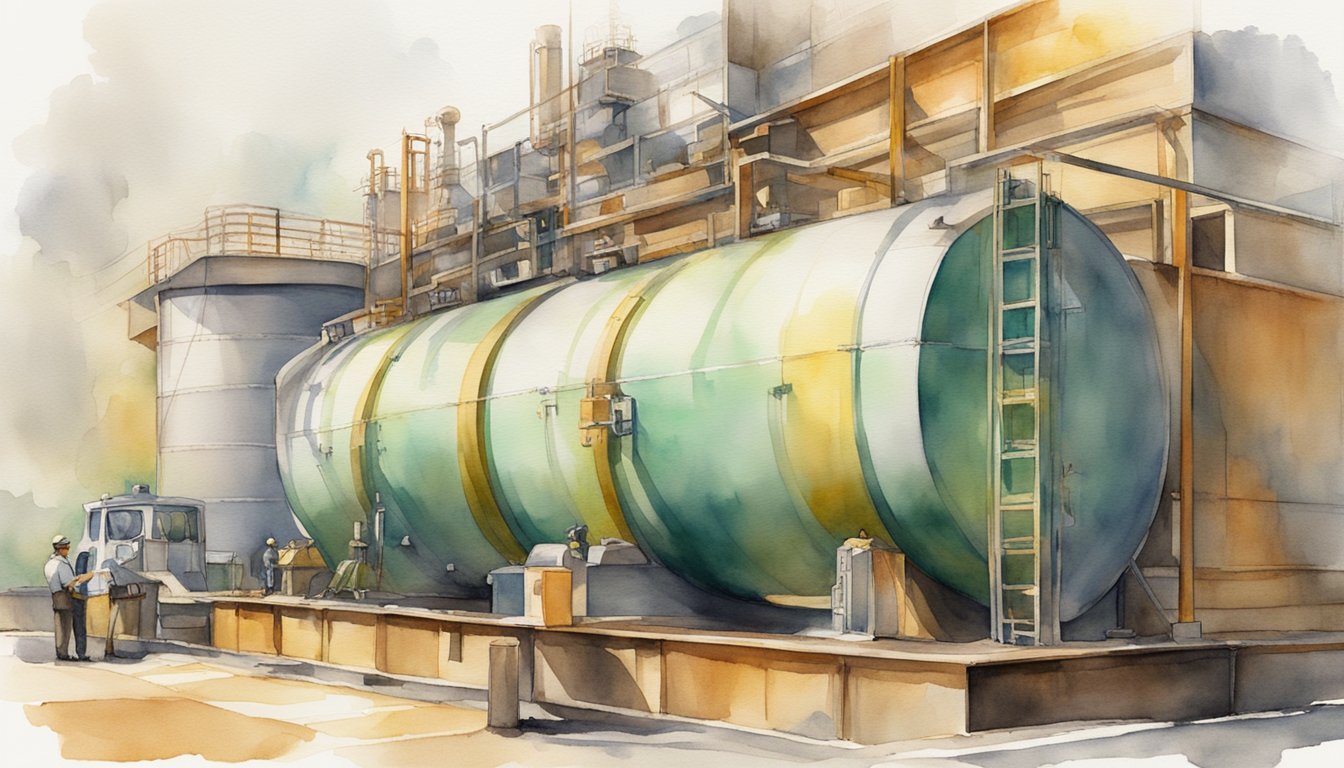
Overview of Maritime Bunker Fuel
Bunker fuel serves as a primary power source for the maritime industry, with various types available that differ in composition. It plays a crucial role in global shipping operations due to its impact on operational costs and efficiency.
Composition and Types of Bunker Fuel
Bunker fuel, conventionally referred to as heavy fuel oil (HFO), is categorized by its viscosity and sulfur content. Marine Gasoil (MGO) and Very Low Sulfur Fuel Oil (VLSFO) are also widely used. In recent years, liquefied natural gas (LNG) has emerged as a cleaner alternative, offering environmental benefits due to lower emissions of sulfur oxides and particulate matter.
- Heavy Fuel Oil: This is a high-viscosity, residual fuel requiring preheating before use. Its sulfur content varies, and regulations mandate reductions in sulfur emissions.
- Marine Gasoil (MGO): Lower in viscosity and sulfur compared to HFO, MGO is a distillate fuel used in ships equipped for this lighter fuel type.
- LNG: Composed predominantly of methane, LNG burns cleaner than traditional bunker fuels, leading to increased adoption for environmental considerations.
Role of Bunker Fuel in Shipping Industry
Bunker fuel is critical for the propulsion of cargo ships and vessels. The cost and availability of bunker fuels significantly influence the shipping industry’s operational decisions. LNG bunkering involves the transfer of liquefied natural gas to the ship for use as fuel, aligning with the industry’s move towards sustainable practices. The demand for cost-effective and compliant marine fuels drives ongoing market dynamics and industry adaptation.
Economic Implications of Bunker Fuel
Bunker fuel costs are a significant expense for shipping companies, influencing the total operating cost and financial planning. The fluctuation in fuel prices poses ongoing economic challenges within the maritime industry.
Analyzing Bunker Fuel Prices
The price of bunker fuel is highly volatile, with fluctuations impacted by global oil prices and geopolitical events. Fuel prices are critical cost drivers in the shipping industry, which necessitates careful analysis by companies to prepare for economic impacts. A primary method of tracking these changes involves the use of data on heavy fuel oil prices, often correlated with commodity prices. As these prices oscillate, shipping companies must quickly adapt their financial strategies to mitigate risks and capitalize on more favorable market conditions.
Monthly Bunker Fuel Price Trend Analysis:
- January: $500/ton
- February: $510/ton
- March: $495/ton
- April: $505/ton
This tabulated data exemplifies how shipping companies might monitor bunker fuel price trends in order to forecast expenditures and adjust their operating budgets accordingly.
Bunker Fuel and Operational Costs
Bunker fuel consumption accounts for a substantial portion of the vessel operating cost. Shipping companies face the challenge of optimizing this cost in light of strict environmental regulations and market-driven needs. Strategies include investment in fuel-efficient ship designs and technologies such as scrubbers or LNG to meet the International Maritime Organization’s (IMO) emissions standards.
Breakdown of Vessel Operational Costs:
- Bunker Fuel: 50%
- Crew Wages: 20%
- Maintenance and Repair: 15%
- Insurance: 10%
- Other: 5%
Shipping capacity and the corresponding fuel consumption must therefore be managed strategically, always weighing the benefits of full capacity against the increased fuel costs. This careful management is imperative to maintain the financial health and competitiveness of shipping entities in a global economy where margins can be thin and cost efficiency is essential.
Regulatory Environment
The maritime industry is shaped by various regulatory measures intended to reduce environmental impact and govern international shipping operations.
International Maritime Organization Regulations
The International Maritime Organization (IMO) presides as a specialized agency of the United Nations, which is tasked with regulating shipping. Its regulations are designed to ensure safety, environmental protection, and security across the global shipping industry. MARPOL Annex VI, a critical regulation of the IMO, sets limits on SOx and NOx emissions from ship exhausts, and prohibits deliberate emissions of ozone-depleting substances.
Sulfur Cap and its Effects
In 2020, the IMO enforced a significant reduction in the sulfur content of ship fuel oil from 3.50% m/m to 0.50% m/m, known as the IMO 2020 sulfur cap. This regulation necessitates that ships operating outside the designated Emission Control Areas (ECAs) comply with this new limit. The limit in ECAs remains at 0.10% m/m. The sulfur cap has far-reaching effects on fuel costs, with many companies grappling with these price fluctuations in their bookkeeping.
Within ECAs:
- Sulfur content limit: 0.10% m/m
Outside ECAs:
- Previous Sulfur content limit: 3.50% m/m
- Current Sulfur content limit: 0.50% m/m
Compliance Strategies for Shipping Companies
Shipping companies must adopt various strategies to remain compliant with the environmental regulations set by the IMO. One common method is the use of scrubbers, which clean the exhaust before it is released into the atmosphere, thus permitting the use of higher sulfur fuel. Other compliance methods include switching to low-sulfur fuel options or alternative fuels entirely to avoid the high sulfur content limitation. Companies must consider these compliance costs and potential fuel price volatility in their financial planning.
Fuel Price Fluctuation and Risk Management
In the maritime industry, addressing fuel price volatility is crucial to financial stability. Companies adopt various strategies and financial instruments to manage the associated risks.
Strategies to Mitigate Price Volatility
Shipping companies often implement a mix of tactical and strategic measures to contend with bunker fuel price changes. They regularly monitor market trends and may use Bunker Adjustment Factors (BAFs) to pass fluctuating costs onto their customers, helping maintain steady margins. These adjustments are reflected in the shipping invoices and are frequently updated to reflect current fuel market conditions.
In addition to BAFs, companies practice bulk buying and long-term contracts to secure more stable pricing, thus avoiding the extremes of market volatility. Others maintain flexibility in their operational maneuvers, such as adjusting routes and speeds to optimize fuel consumption.
Use of Financial Instruments
To hedge against fuel price risk, maritime businesses increasingly leverage a variety of financial instruments. They employ futures contracts, options, swaps, and other derivatives to lock in fuel prices for a defined period, thereby insulating themselves from market ups and downs.
A prevalent strategy supported by empirical research includes using the Monte Carlo simulation to forecast potential fuel costs and the associated risks. By simulating various scenarios, companies can assess their conditional value-at-risk (CVaR) and determine the most effective hedge ratio, which is the proportion of exposure to be hedged.
These financial instruments function as insurance policies, requiring an upfront investment with the expectation of reduced financial risks related to unpredictable fuel expenditures. It’s a calculated approach to offset the inherent uncertainties within the global fuel markets.
Operational Adjustments and Efficiencies
Companies in the maritime industry continually adapt their operations to manage bunker fuel costs and respond to market fluctuations in fuel prices.
Adjusting Sailing Speed
Reducing vessel speed, known as “slow steaming,” significantly decreases fuel consumption. For example:
- Speed Reduction: Going from 24 knots to 20 knots can lead to a 20% reduction in fuel usage.
- Impact: This practice extends delivery times but leads to substantial fuel savings and a reduction in emissions.
Choosing Optimal Shipping Routes
Navigating through the most efficient routes minimizes fuel usage and costs:
- Weather Routing: Utilizing weather patterns to avoid rough seas and reduce fuel burn.
- Sea Traffic Management: Similar to air traffic control, managing sea routes to prevent congestion and enable smoother sails.
Efficiency through Fleet Management
Strategic fleet management ensures operational efficiency:
- Vessel Optimization: Implementing adjustments in real-time for each vessel based on current conditions.
- Performance Monitoring: Continuous collection and analysis of data to drive future decision-making on operations.
Alternative Fuels and Technological Developments
Alternative fuels and advancements in technology are reshaping the maritime industry’s approach to energy use and environmental impact.
Adoption of LNG and Hydrogen
Liquefied Natural Gas (LNG) is gaining traction as a cleaner alternative to traditional bunker fuel. This shift is propelled by its relatively lower greenhouse gas emissions and the establishment of stricter International Maritime Organization (IMO) regulations. Companies are investing in LNG-powered vessels and the necessary bunkering infrastructure to accommodate a transition.
Hydrogen also emerges as a promising marine fuel, offering zero emissions at the point of use. However, its adoption is contingent upon advancements in storage and fuel cell technologies, as well as a comprehensive supply chain capable of supporting wide-scale maritime deployment.
Biofuels as a Sustainable Option
Biofuels, produced from renewable biological sources, are being evaluated for their potential to reduce the maritime sector’s dependence on conventional fuels and to lower associated emissions. Companies consider:
- Cost-effectiveness
- Availability
- Compatibility with existing engine technologies
Advanced biofuels, such as biodiesel, provide a sustainable alternative that can be integrated into the current fuel infrastructure, facilitating a smoother transition towards renewable energy sources within the industry.
Future Fuel Technologies
Continual innovations are crucial for the development of future maritime fuels. Companies monitor advancements in fuel technology to prepare for potential shifts in the industry’s fuel composition. Some potential areas include:
- Synthetic fuels created through carbon capture and electrolysis
- Ammonia, due to its high energy density and production from renewable energy sources
As these technologies progress, companies assess their viability in terms of scalability, economic feasibility, and compatibility with current vessel designs and operations.
Environmental Impact and Shipping Industry
The environmental footprint of the maritime industry is significant, with a focus on reducing emissions and marine pollution as well as addressing health implications stemming from fuel use.
Reducing Emissions and Marine Pollution
Efforts to decrease emissions from shipping are crucial due to their role in global greenhouse gas output. Vessels predominantly rely on marine fuel, a heavy oil that, when burned, releases sulfur oxide (SOx), nitrogen oxides (NOx), and particulate matter into the atmosphere, contributing to marine and air pollution. Regulatory measures, such as the establishment of sulfur emission control areas (SECAs), aim to curb these emissions by mandating the use of fuel with a sulfur content of 0.5% or less.
The International Maritime Organization (IMO) has set forth a strategy to reduce the shipping industry’s total greenhouse gas emissions by at least 50% by 2050 compared to 2008 levels. To tackle the environment-polluting emissions, shipping companies are increasingly exploring alternative fuels and technologies, including liquefied natural gas (LNG) and electrification, and operational measures like slow steaming.
Health Implications of Fuel Use
Emissions from the shipping industry pose health risks due to the release of pollutants such as sulfur oxides and nitrogen oxides. These compounds contribute to the formation of secondary fine particulate matter and ozone, which have adverse effects on human health, potentially causing respiratory problems and other serious health issues.
To protect public health and reduce air pollution, emissions control measures such as the use of low-sulfur fuels and advanced emission cleaning systems like scrubbers have been implemented. Compliance with these regulations not only benefits the environment but also minimizes the impact of harmful chemicals and pollutants on population centers located near busy ports and shipping routes.
Global Market and Supply Chain Factors
The cost of bunker fuel in the maritime industry is significantly influenced by the ebb and flow of international trade and supply chain dynamics. Different market players, including major importers and exporters, have profound impacts on these costs, while the behavior of the supply chain can lead to volatility in fuel prices.
Influence of International Trade on Fuel Costs
International trade dictates a substantial demand for bunker fuel, which powers commercial vessels. As more goods are traded, the need for maritime transport surges, consequently elevating the demand for fuel. Asia, being a key player in international trade, and specifically China, with its massive export economy, amplify this effect. Fluctuations in trade volumes along major routes and ports of call are felt directly in bunker fuel pricing.
- High trade volume: Increased demand for bunker fuel.
- Low trade volume: Potential decrease in demand for bunker fuel.
The Role of Major Importers and Exporters
Major importing and exporting countries exert a substantial influence on bunker fuel costs. The operational decisions made at these national levels, such as stockpiling reserves or increasing throughput at strategic ports, can directly affect the price of bunker fuel. China, as the world’s largest exporter, and its purchasing strategies can set the tone for pricing patterns in the region and beyond.
- Importer actions: Influence supply by altering reserve requirements.
- Exporter decisions: Affect global pricing through trade flow adjustments.
Supply Chain Dynamics and Bunker Fuel
Supply chain dynamics, incorporating the logistical handling from origin to destination, impact bunker fuel costs in several ways. Disruptions or efficiencies within this chain can result in significant cost variances for bunker fuel. Factors such as port congestion in critical hubs within Asia or along strategic routes, changes in shipping services, and the availability of alternative fuel sources all feed into the cost of fuel for maritime companies.
- Port congestion: Leads to delays and increased fuel consumption.
- Efficient supply chain: Potentially lowers the overall demand for bunker fuel by reducing voyage times.
Frequently Asked Questions
Effective management of bunker fuel costs and price volatility is a critical aspect of financial stability for maritime companies. This section explores common strategies and practices in the industry.
What strategies do companies adopt for hedging against bunker fuel price volatility?
Maritime companies often employ hedging strategies to protect themselves against the fluctuating prices of bunker fuel. They may use financial instruments such as futures contracts, options, and swaps to lock in fuel prices for a period of time. This financial foresight helps to stabilize cash flow and budgeting, as it reduces the risk associated with unpredictable fuel price movements.
How is bunker fuel management typically conducted within the maritime sector?
Bunker fuel management within the maritime industry is a systematic process that encompasses procurement, storage, and use of fuel. Companies meticulously track bunker fuel consumption and costs to optimize voyages and ensure environmental compliance. Technologies like fuel management systems are integrated to provide real-time data and analytics for more informed decision-making.
What are the predominant factors that influence freight rates in shipping?
Freight rates in shipping are primarily influenced by fuel prices, supply and demand dynamics, ship availability, port charges, and route distances. Fluctuating oil prices directly alter bunker fuel costs, making fuel a considerable component of overall shipping costs and freight rate variability. Moreover, external market factors, such as global economic conditions and trade volumes, also play a significant role in determining rates.
What types of fuel are commonly used in the maritime industry, and how are they recorded?
The maritime industry predominantly uses types of fuel such as Heavy Fuel Oil (HFO), Marine Gas Oil (MGO), and more recently, Liquified Natural Gas (LNG) as cleaner alternatives gain traction. Accounting for these fuels involves meticulously recording quantities, types, and costs in financial systems, ensuring accuracy for budgeting and compliance with international standards.
What steps are taken to mitigate fuel consumption on ships?
To mitigate fuel consumption, shipping companies focus on optimizing ship design for better hydrodynamics, investing in more fuel-efficient engines, and implementing operational strategies such as slow steaming. Additionally, real-time monitoring systems enable ongoing adjustments to vessel speed and route to reduce fuel use.
How do maritime companies reflect bunker fuel costs in their financial statements?
Maritime companies reflect bunker fuel costs in their financial statements as part of the operational expenses. These costs are recorded under the cost of goods sold (COGS) or direct operating expenses, affecting the gross profit. Regular adjustments are made to account for inventory levels and price changes, ensuring that the financial implications of fuel consumption and price volatility are accurately captured.
Leave a Reply