
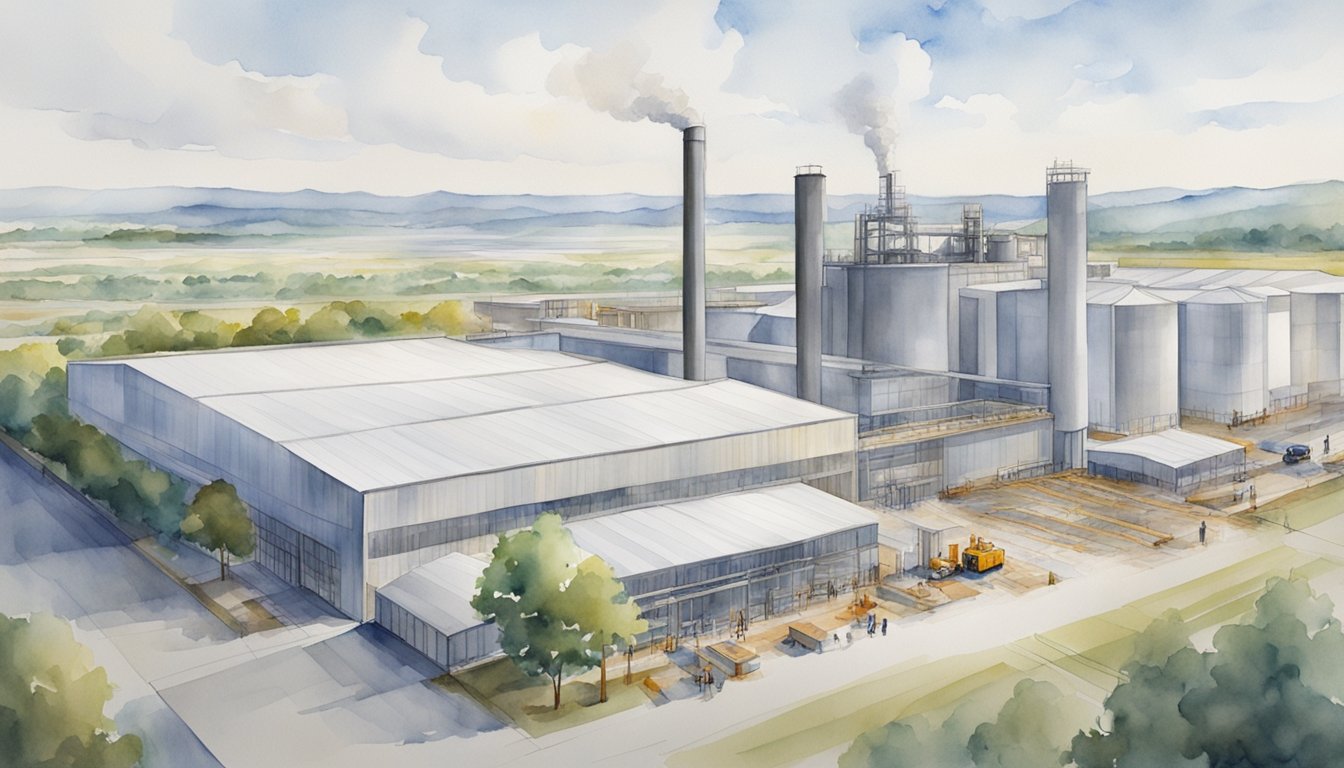
Understanding Capital Expenditures
Capital expenditures (CapEx) are essential investments that significantly impact a company’s long-term growth and operational efficiency. This section explores the definition and types of CapEx, as well as the distinction between CapEx and operating expenses (OpEx).
Definition and Types of Capital Expenditures
Capital expenditures refer to funds used by a company to acquire, upgrade, or maintain physical and intangible assets. These investments are crucial for enhancing a company’s asset base and ensuring future economic benefits.
Types of Capital Expenditures include:
- Facility Expansions: Investments in new buildings or extensions of existing ones.
- New Production Lines: Expenditures for adding new manufacturing capabilities.
- Tasting Room Improvements: Funds allocated for upgrading customer-facing spaces, such as tasting rooms in wineries.
CapEx entries are recorded on the balance sheet and are subject to depreciation or amortization over the useful life of the asset.
Distinction Between Capex and Opex
CapEx and OpEx serve different purposes within an organization’s financial strategy.
Capital Expenditures (CapEx): These are long-term investments in assets like property, equipment, and infrastructure. CapEx is recorded as an asset on the balance sheet and then depreciated over time.
Operating Expenses (OpEx): These are short-term expenses necessary for day-to-day operations, such as salaries, rent, and utilities. OpEx is recorded on the income statement and fully expensed in the period they are incurred.
Understanding the distinction is vital for accurate financial reporting and strategic planning. CapEx impacts future growth, while OpEx relates to immediate operational efficiency.
Recording Capital Expenditures
Recording capital expenditures involves careful documentation and allocation in financial statements to reflect the company’s investments in long-term assets. This process ensures accurate representation of the company’s financial health.
The Role of the Balance Sheet
Capital expenditures are recorded on the balance sheet, which is one of the primary financial statements. These expenditures increase the asset base of the company. They are not expensed immediately; instead, they are capitalized and gradually expensed over the asset’s useful life. This aligns with both the Generally Accepted Accounting Principles (GAAP) and International Financial Reporting Standards (IFRS). Properly recording these expenditures impacts key financial ratios and metrics.
Capitalization of Tangible Assets
Tangible assets like buildings, machinery, and equipment are capitalized when acquired. This means the purchase cost is recorded as an asset rather than an immediate expense. For example, costs for facility expansions or new production lines are added to the Property, Plant, and Equipment (PP&E) account. These assets are then depreciated over their useful lives. Depreciation schedules, such as straight-line or declining balance, are used to systematically allocate the cost over the asset’s lifespan, easing the financial burden over time.
Accounting for Intangible Assets
Intangible assets, which include intellectual property (IP) and other non-physical resources, are also capitalized but follow slightly different rules. Costs related to the development of new technologies or improvements in a tasting room’s ambiance might fall into this category. These assets are amortized over their useful life. Amortization, like depreciation, spreads the cost over several years. Typically, this process must adhere to the specific guidelines outlined by GAAP or IFRS, ensuring consistent and accurate reporting.
Proper recording of capital expenditures provides stakeholders with a clear view of a company’s investment strategies and financial health.
Amortization of Capital Expenditures
Capital expenditures for facility expansions, new production lines, and tasting room improvements are recorded and amortized systematically. This process includes depreciation for tangible assets and amortization for intangible assets, with each asset’s useful life and calculation methods carefully considered.
Depreciation of Tangible Assets
Depreciation involves allocating the cost of tangible assets over their useful life. Businesses commonly use the straight-line method, which spreads the cost evenly across each year, or the declining balance depreciation, which accelerates the expense in the early years.
Example:
| Asset | Purchase Cost | Useful Life | Salvage Value | Annual Depreciation |
|---|---|---|---|---|
| Production Line | $500,000 | 10 years | $50,000 | $45,000 |
Amortization of Intangible Assets
Intangible assets such as patents or trademarks related to the new production lines also require amortization. Unlike tangible assets, amortization reflects the asset’s consumption or expiration. The straight-line method is often applied, where the cost is evenly distributed across the asset’s useful life.
Important Points:
- Intangible assets lack physical substance but provide long-term value.
- Amortization must align with the asset’s expected benefit period.
Calculation Methods and Useful Life
The method chosen for depreciating or amortizing an asset affects the financial statements significantly. Useful life estimates and salvage value are crucial for accuracy.
Key Calculation Elements:
- Depreciation formula: (Purchase Cost – Salvage Value) / Useful Life
- Useful life impacts annual allocation and must be realistically estimated.
- Accurate accumulated depreciation ensures correct asset book value.
By adhering to these principles, capital expenditures are effectively recorded and amortized, maintaining transparency and financial integrity.
Capital Expenditures in Financial Analysis
Capital expenditures (CapEx) such as facility expansions, new production lines, and tasting room improvements have significant implications for a company’s cash flow and long-term financial health. This section discusses their impact on cash flow and investment activities, operational efficiency and growth, and the processes of depreciation and amortization.
Impact on Cash Flow and Investment Activities
Recording capital expenditures directly impacts a company’s cash flow. Large expenditures, including facility expansions and new production lines, are reflected in the cash flow from investing activities. These transactions result in substantial outflows that can decrease net cash flow in the short term.
To manage these outflows, companies must plan their investments strategically. They often rely on a combination of internal funds and external financing. This ensures that while capital investments might reduce immediate cash reserves, they do not jeopardize overall liquidity or operational capacity.
Evaluating Operational Efficiency and Growth
Capital expenditures also play a pivotal role in evaluating a company’s operational efficiency and growth. Investments like new production lines and facility expansions are indicators of anticipated future growth. These expenditures can enhance production capacity, streamline operations, and lead to higher economies of scale.
Operational efficiency improvements are tracked through metrics such as production yield, energy consumption, and unit costs. By regularly analyzing these metrics, companies can ensure that their capital investments are yielding the expected improvements and contributing to sustainable growth.
Depreciation, Amortization, and Earnings
Capital expenditures are not expensed immediately but are capitalized and then amortized or depreciated over their useful life. This process spreads the cost over several years, aligning the expense with the revenue generated from the asset. Depreciation impacts net income as a non-cash expense, affecting financial performance calculations.
Amortization applies to intangible assets, whereas depreciation applies to tangible assets. The accurate recording of these expenses is essential. It ensures that the financial statements reflect true asset values and fair earnings. This careful recording impacts the overall assessment of a company’s profitability and long-term financial health.
Planning for Capital Expenditures
Planning for capital expenditures involves detailed budgeting, strategic allocation of funds, and evaluating long-term investment opportunities. Each aspect ensures that financial resources are optimally utilized to support growth and operational efficiency.
Budgeting for Capex
Budgeting for capital expenditures requires a precise approach. Organizations must estimate the costs associated with facility expansions, new production lines, and tasting room improvements. This involves analyzing historical spending trends, current financial needs, and potential future growth.
Creating a detailed CapEx budget helps in forecasting required funds and timing of expenses.
A structured budget might include:
- Estimated costs for each project
- Scheduled payment milestones
- Expected returns on investment
Such detailed planning ensures that the organization remains financially healthy and can support essential projects without straining its budget.
Strategic Allocation of Funds
Strategically allocating funds for capital projects is critical. Companies must prioritize projects based on their potential for long-term value and competitive advantage. This involves assessing which projects will yield the most substantial returns and align with the company’s strategic goals.
Decision-makers should consider:
- Potential impact on operational efficiency
- Enhancement of production capabilities
- Improvement in customer experience
Allocating funds strategically aids in maximizing the overall benefits of capital investments while maintaining financial stability and supporting long-term growth.
Determining Long-Term Investments
Long-term investments in capital expenditures should focus on achieving durable benefits. This involves a thorough evaluation of how investments in facility expansions, production lines, and tasting rooms will contribute to the company’s future success.
Key considerations include:
- Expected lifespan of the asset
- Anticipated growth in demand
- Potential for scaling operations
By carefully evaluating these factors, companies can ensure that their capital investments provide continuous value and support long-term goals. Investing wisely in durable assets not only enhances current operations but also lays the foundation for future growth and sustainability.
Capital Expenditures in Business Operations
Capital expenditures (CapEx) play a crucial role in business operations, particularly when acquiring or upgrading fixed assets, integrating new technology, and maintaining existing physical assets.
Acquiring and Upgrading Fixed Assets
Businesses often invest in fixed assets like buildings, machinery, and equipment to enhance their operational capacity. Capital expenditures for these assets are usually substantial and are capitalized on the balance sheet rather than expensed immediately.
For example, purchasing a new manufacturing production line or expanding facilities boosts long-term operational efficiency. Upgrading older equipment can also extend its useful life and improve performance. These investments provide long-term economic benefits, justifying their capitalization and subsequent amortization over the asset’s useful life.
Operational Impact of New Technology
Integrating new technology often involves significant CapEx, as companies invest in advanced systems to maintain competitiveness. For instance, an IT firm may purchase new servers, which are capitalized as fixed assets and amortized over several years.
Installing modern automation systems in a production line can dramatically increase operational efficiency. Improved technology reduces manual labor requirements and minimizes errors, leading to cost savings. The long-term benefits of such technological investments underline their importance in business strategy and financial planning.
Maintenance and Repair of Physical Assets
While new acquisitions and technology upgrades are vital, maintaining existing physical assets is also critical. Maintenance CapEx includes spending on repairs and upkeep to ensure assets remain functional. For example, regular maintenance of machinery or building repairs helps avoid unexpected breakdowns that could halt operations.
These expenditures are capitalized if they extend the asset’s life or increase its value, otherwise, they are expensed. Properly maintained assets operate more efficiently, reducing downtime and extending their useful life, which can significantly impact a company’s bottom line. Maintenance CapEx helps in sustaining operational reliability and productivity.
Challenges and Considerations in Capex
Navigating capital expenditures for facility expansions, new production lines, and tasting room improvements involves several critical factors related to cash flow, tax, budgeting, and risk management.
Managing Cash Flow Implications
Capital expenditures can place significant pressure on a company’s cash flow. Effective cash flow management ensures that funds are available when needed without disrupting the business’s day-to-day operations.
Companies must forecast cash inflows and outflows to balance their finances. Large capital spending can lead to periods of cash scarcity.
Staggering payments for long-term projects can mitigate some of this strain. Businesses may also use financing options like loans or leasing rather than direct purchases to maintain liquidity.
Addressing Tax and Budget Constraints
Tax implications are a major consideration when planning CapEx. Different assets have varying depreciation rates, affecting how quickly costs can be written off against taxable income.
Businesses must stay within their budget constraints, requiring detailed planning and prioritization of expenditures. Sudden increases in expenses can jeopardize financial stability.
Tax incentives or credits for capital investments can offset costs, but companies must be aware of the specific regulations and eligibility requirements.
Navigating Capital Expenditure Risks
Investing in new facilities or equipment entails significant risk. Market fluctuations, cost overruns, and delays can impact the project’s viability.
A detailed risk assessment helps identify potential pitfalls. Contingency plans should be in place to address unforeseen issues.
Regular monitoring of project milestones and budgets ensures that projects stay on track. Engaging with reliable contractors and suppliers can minimize risks associated with capital spending.
Timely and transparent communication with stakeholders is crucial for navigating these complexities.
Special Topics in Capital Expenditures
Capital expenditures (CapEx) play a crucial role in a company’s ability to innovate, remain sustainable, and support revenue growth. This section explores how these expenditures are recorded and amortized in various contexts.
Innovation and Sustainability Investments
Investing in innovation and sustainability is essential for businesses looking to maintain competitive advantages and address environmental concerns. Capital expenditures in this area may include new recycling technology, energy-efficient machinery, and eco-friendly facilities.
These investments aim to improve operational efficiency and reduce long-term costs. Accounting for such CapEx involves amortizing expenses over the useful life of the assets, ensuring that immediate costs do not overwhelm the company’s financial statements.
The Evolution of Accounting Standards
Accounting standards for capital expenditures have evolved to provide clearer guidance and ensure consistency in financial reporting. These standards, such as those set by the International Financial Reporting Standards (IFRS) and Generally Accepted Accounting Principles (GAAP), dictate how CapEx should be documented.
They require companies to distinguish between operating expenses and capital expenses properly. Adopting new accounting principles can impact how companies report and manage their financial health, helping stakeholders make more informed decisions.
Capital Expenditures for Facility Expansions and Production Enhancements
Facility expansions and production enhancements are among the most common uses of CapEx. These expenditures often involve constructing new buildings, upgrading machinery, or installing new production lines to boost capacity.
Recording these transactions requires detailed financial oversight. Companies must track the expenditure from initial investment through to subsequent depreciation. This process ensures financial statements reflect the true value and lifecycle costs of the enhanced capabilities. As businesses grow, they must balance CapEx with strategic revenue growth objectives to maintain financial stability.
Frequently Asked Questions
Capital expenditures for facility expansions, new production lines, and tasting room improvements play a critical role in a company’s financial strategy and need precise recording and amortization.
How are expenditures for new product development lines categorized and amortized in financial records?
Expenditures for new product development lines are categorized as capital expenditures. These costs are capitalized and recorded as long-term assets. Amortization schedules are established based on the useful life of the assets, ensuring the costs are spread over the years these assets generate revenue.
What are the accounting entries required to record capital expenditures?
Initially, capital expenditures are debited to an asset account and credited to a cash or payable account. Over time, amortization or depreciation entries reduce the asset’s book value. For example, debit the depreciation expense and credit the accumulated depreciation account to reflect the asset’s usage.
On which financial statements do capital expenditures appear, and how are they reported?
Capital expenditures appear on both the balance sheet and the cash flow statement. On the balance sheet, they are listed as fixed assets or long-term investments. On the cash flow statement, they are included under investing activities, indicating the outflow of cash to acquire or maintain assets.
What criteria determine whether research and development costs can be capitalized and amortized?
Research costs are typically expensed as incurred. However, development costs can be capitalized if they meet specific criteria, such as technical feasibility, intention to complete the asset, ability to use or sell the asset, and reliability of measuring costs. Amortization then spreads these costs over the asset’s useful life.
How do accounting systems reflect capitalized expenditures over time?
Accounting systems use depreciation and amortization schedules to reflect capitalized expenditures. Depreciation reduces the book value of tangible assets, while amortization applies to intangible assets. These schedules ensure that the expense is recognized systematically over the asset’s useful life.
What are some examples of intangible capital expenses, and how should they be treated in the ledger?
Intangible capital expenses include patents, trademarks, and copyrights. These are recorded as intangible assets on the balance sheet. Amortization of intangible assets involves debiting the amortization expense account and crediting the accumulated amortization account, spreading the cost over the asset’s useful life.
Leave a Reply