
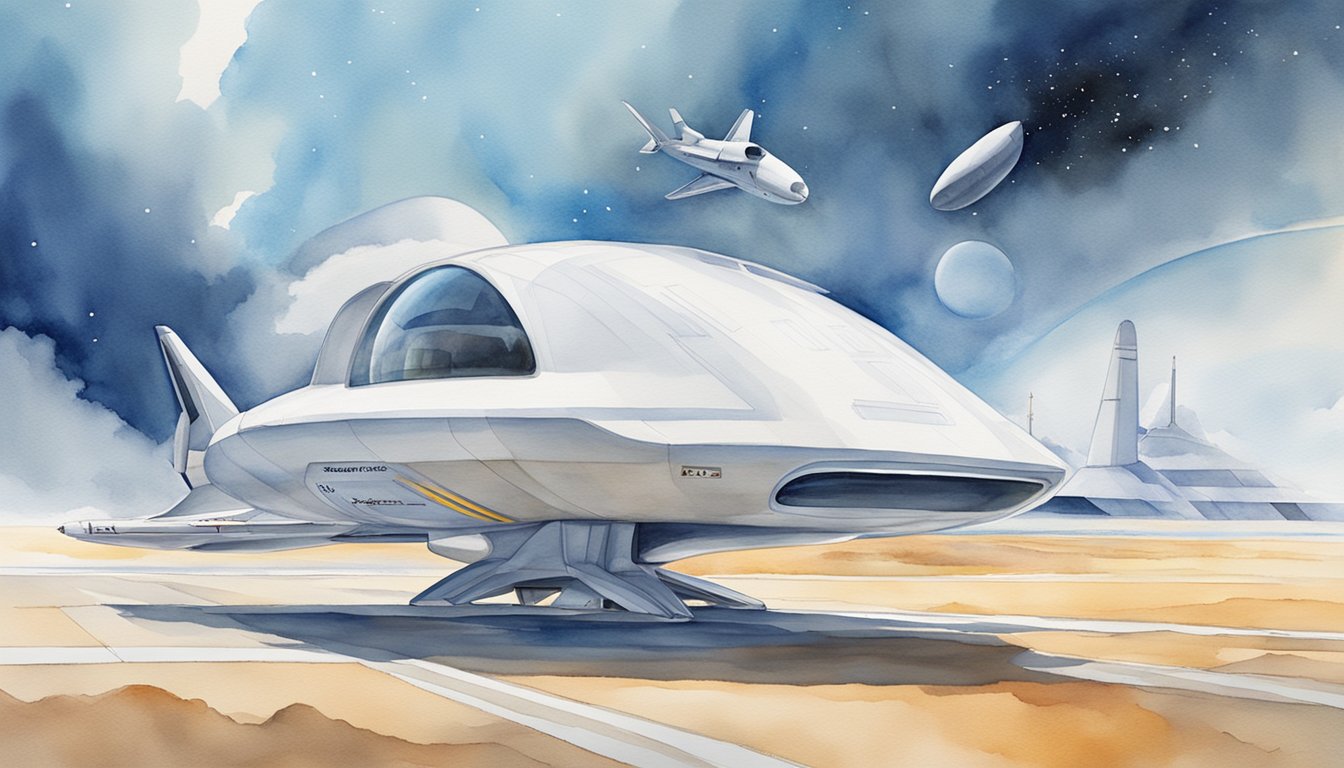
Overview of Space Tourism Industry
Space tourism has rapidly evolved from a distant dream to a burgeoning market, driven by influential figures and companies that have successfully commercialized space travel.
Historical Development and Key Players
The concept of space tourism dates back several decades, with Dennis Tito being the first private individual to fund his own trip to space in 2001. This moment marked the dawn of commercial space travel.
Key players in this industry now include Virgin Galactic, founded by Richard Branson, Blue Origin, established by Jeff Bezos, and SpaceX, led by Elon Musk.
Virgin Galactic focuses on suborbital flights, offering a few minutes of weightlessness. Blue Origin and SpaceX, while also enabling suborbital experiences, are working on more ambitious orbital missions. These companies have not only made space accessible to wealthy tourists but have also driven technological advancements in reusable rockets.
Current Market Size and Growth Trends
The space tourism market, though still in its early stages, has shown significant growth. Virgin Galactic, Blue Origin, and SpaceX have pioneered this field, each conducting successful test flights and even some commercial missions.
Currently, the price for a suborbital flight ticket ranges between $200,000 and $500,000. Despite these high costs, demand is robust, attracting investment and propelling further development.
Estimates suggest that the space tourism market could grow into a multi-billion-dollar industry within the next decade. This growth is supported by advancements in technology, increased consumer interest, and continued investment from leading aerospace companies. As these key players expand their capabilities, the space tourism sector is expected to become a significant part of the broader space economy.
Regulatory Framework and Safety Measures
Space tourism companies offering suborbital flights must navigate stringent regulations and implement comprehensive safety protocols to ensure passenger safety and compliance with legal standards.
Global Spaceflight Regulations
The Federal Aviation Administration (FAA) plays a crucial role in regulating commercial spaceflight in the United States. It ensures that companies meet specific safety standards for vehicle design, operation, and crew training. Various international bodies, such as the European Space Agency (ESA), establish guidelines for space tourism within their jurisdictions.
Policies cover liability issues, risk management, and passenger safety mandates. Companies are obliged to adhere to these regulations, ensuring that all aspects of space tourism from launch to landing are thoroughly scrutinized. These global frameworks are continuously evolving to address the rapid advancements in space travel technology.
Safety Protocols and Training
Safety protocols are paramount in space tourism, where the stakes are exceptionally high. Companies must establish robust safety protocols that include pre-flight checks, emergency response plans, and vehicle maintenance. Training programs for both crew and passengers are essential. Crews undergo rigorous training to handle emergencies, including simulated suborbital missions and troubleshooting.
Passengers receive briefings on potential risks and safety procedures, such as emergency egress and the use of safety equipment. Enhanced medical screening ensures that only those fit for space travel participate. These protocols and mandatory training sessions significantly mitigate the risks associated with suborbital flights.
Commercial Spaceflight Technology
Various advancements in spacecraft design and differing technologies between suborbital and orbital flights greatly influence the burgeoning field of commercial spaceflight. These innovations are pivotal in shaping the future of space tourism.
Advancements in Spacecraft Design
Modern spacecraft design has seen substantial innovation. Companies like SpaceX and Blue Origin have developed reusable rockets, significantly lowering the cost per launch. For instance, SpaceX’s Crew Dragon is designed to transport both astronauts and space tourists to the International Space Station (ISS).
Reusable spacecraft like Blue Origin’s New Shepard carry passengers on suborbital flights, enabling them to experience weightlessness. Virgin Galactic’s SpaceShipTwo offers a similar experience but uses a different design with a spaceplane that launches from a mothership.
Moreover, advancements in materials science contribute to more durable and lightweight spacecraft. Composite materials and advanced alloys enhance performance and safety, crucial for enduring the harsh conditions of space travel. Automated systems and advanced avionics simplify the piloting process, increasing reliability.
Suborbital Vs. Orbital Flight Technologies
Suborbital and orbital flights utilize distinct technologies to achieve their respective missions. Suborbital flights, such as those offered by Blue Origin’s New Shepard or Virgin Galactic’s SpaceShipTwo, provide brief moments of weightlessness without completing an orbit. These missions use BE-3 engines for vertical takeoff and horizontal landings.
Orbital flights, like those facilitated by SpaceX’s Crew Dragon, require more powerful propulsion systems to achieve the necessary speed to stay in orbit. These missions rely on Falcon 9 rockets, which are equipped with multiple stages to deliver payloads to orbit, which is critical for more extended stays and complex missions.
Differences in technology extend to spacecraft design and mission profiles, with orbital flights demanding greater endurance and energy management. This necessitates advanced thermal protection systems and life support mechanisms to ensure passenger safety during longer flights.
Understanding Suborbital Space Tourism
Suborbital space tourism allows passengers to experience short trips to the edge of Earth’s atmosphere, offering both unique views and zero-gravity sensations. Key elements include flight trajectory and the rigorous pre-flight preparations required.
The Suborbital Experience and Flight Trajectory
Suborbital flights launch passengers to the edge of space, typically reaching altitudes between 50 and 100 miles above sea level. These flights do not complete an orbit around Earth. Instead, they follow a parabolic trajectory that provides a brief period of weightlessness and stunning views of the curvature of the Earth.
Vehicles like Blue Origin’s New Shepard rocket are designed to carry tourists on these thrilling journeys. The rocket launches vertically, and after reaching its peak altitude, it descends and lands back on Earth, making the experience both brief and intense.
Pre-flight Preparation and Passenger Expectations
Passengers must undergo extensive training and health checks before embarking on a suborbital flight. This preparation ensures safety and maximizes the enjoyment of the experience. Training often includes simulations of the flight experience, emergency procedures, and instructions on how to handle the sensations of weightlessness.
Passenger expectations play a crucial role in shaping their experience. Companies like Virgin Galactic and Blue Origin ensure that tourists are well-informed about flight procedures, potential risks, and the overall itinerary. This thorough preparation helps passengers feel more comfortable and excited about their upcoming adventure.
Training and Preparation for Space Tourists
Proper training is essential for space tourists to ensure they are physically and mentally prepared for the unique challenges of space travel. Focus areas include both physical and psychological preparation, as well as simulating the conditions of space to acclimate individuals to what they will experience.
Physical and Psychological Preparation
Space tourists undergo rigorous physical training to handle the intense conditions of space travel. Notably, they must be trained to endure high levels of g-force during launch and re-entry. Physical conditioning includes cardiovascular exercises and strength training to improve muscle mass and bone density, which can be affected by prolonged periods of weightlessness.
Psychological preparation is equally critical. Space tourists are subjected to mental conditioning to help them manage the stress and isolation that come with space travel. They are trained in cognitive resilience techniques and may participate in simulations that replicate the confined environments of space capsules.
Simulating the Conditions of Space
To acclimate space tourists to the conditions they will encounter, various simulation exercises are employed. These include zero-gravity flights, often referred to as “vomit comets,” which provide brief periods of weightlessness, allowing individuals to practice moving and conducting activities in a similar environment.
Radiation exposure is another concern. While a single suborbital flight poses minimal risks, trainees are educated on radiation’s potential effects and learn safety protocols.
Training also includes the use of centrifuges to simulate the high g-forces of launch and re-entry. This helps space tourists adapt to the physical stresses they will face, ensuring they can cope with sudden acceleration and deceleration forces.
Space Tourism Launch Operations
Successful space tourism relies on precise planning and execution of rocket launches. This involves meticulous coordination between space tourism companies, ground support teams, and mission control centers.
Planning and Executing Rocket Launches
Planning rocket launches for space tourism involves intricate coordination and timing. Space tourism companies must first establish launch windows that factor in weather conditions and orbital mechanics. Various vehicles like the Crew Dragon and New Shepard require specific logistical support to ensure safety and reliability.
Pre-launch activities include thorough vehicle inspections, crew training, and safety drills. Engineers meticulously check spacecraft systems, ensuring both readiness and compliance with regulatory standards. Safety protocols are a paramount concern, as they dictate the success and safety of each mission.
Real-time monitoring during launches is crucial. Teams track rocket performance and environmental conditions using advanced telemetry systems. Any anomalies must be addressed immediately to mitigate risks and ensure passenger safety.
Roles of Ground Support and Mission Control
Ground support teams play an essential role in the success of space tourism rocket launches. These teams handle technical support, maintain ground infrastructure, and manage pre-launch operations. Their work ensures that all systems function correctly before the launch.
Mission control centers are the nerve centers for space tourism operations. Equipped with sophisticated communication and tracking systems, they coordinate every phase of the mission. They provide real-time data and make critical decisions during the launch, flight, and re-entry stages.
Support roles include engineers, flight directors, and communication specialists who ensure seamless operations. Their expertise helps manage and resolve issues swiftly, ensuring the safety and success of the mission.
Both ground support and mission control collaborate closely to execute flawless launches, ensuring that space tourists experience safe and memorable journeys.
Customer Experience and Onboard Services
Tailoring customer experience and onboard services for space tourism companies is crucial for creating memorable suborbital flights. It’s essential to manage in-flight logistics efficiently and provide a unique weightlessness experience to enhance overall satisfaction.
Managing In-Flight Logistics
Effective management of in-flight logistics ensures a seamless experience for space tourists. Communication plays a critical role here. Flight attendants and crew must be well-trained to handle the unique environment of suborbital flights.
Safety protocols are paramount. Clear instructions should be provided before and during the flight to ensure passenger safety in a microgravity environment.
Comfort is also key. Seats need to be designed to secure passengers during launch and re-entry while allowing mobility during weightlessness periods. Additionally, onboard facilities should be easy to access and use in microgravity conditions, including restrooms and storage spaces.
Creating a Unique Weightlessness Experience
The weightlessness experience is one of the most anticipated aspects of suborbital flights. Creating a unique and enjoyable microgravity experience involves careful planning.
Passengers should be prepped on what to expect. Pre-flight training sessions can help acclimate them to the sensations of weightlessness. These sessions can include short simulations or virtual reality experiences.
Activities during weightlessness should be designed for fun and safety. Passengers could try simple maneuvers or enjoy interactive games tailored for microgravity.
Photography opportunities are also a highlight. Facilitating ways for tourists to capture their experience, whether through onboard cameras or by allowing personal devices, can significantly enhance their memories of the flight.
By focusing on these aspects, space tourism companies can provide a top-notch service that meets the unique demands of suborbital travel.
Economic and Societal Impacts
The rise of space tourism, especially suborbital flights, presents both economic opportunities and environmental concerns. This section explores how space tourism might influence job creation and economic growth, as well as its potential environmental impact.
Influence on Job Creation and Economic Growth
Space tourism companies drive significant economic activity by creating jobs in various sectors. Commercial spaceflight initiatives necessitate highly skilled engineers, technicians, and scientists.
Beyond direct employment, indirect job creation occurs in industries such as hospitality, travel, and local services. Spaceports and related infrastructure projects stimulate local economies through construction and ongoing operations, offering sustained boosts to economic growth.
Space tourism’s financial investments also push advancements in space exploration technologies, fostering innovation that can spill over into other industries. The commercialization of space thus opens new avenues for economic opportunities globally.
Space Tourism and its Environmental Impact
Suborbital flights, while exciting, come with environmental challenges. The rocket launches required for space tourism emit greenhouse gases and other pollutants.
Different propulsion systems have varying levels of environmental impact. Today, aerospace companies are researching sustainable fuel options to mitigate these effects.
Another concern is the potential for increased space debris. As more companies enter the space tourism market, mitigating the creation of debris becomes critical to maintaining a sustainable space environment.
Addressing these environmental concerns is crucial; it requires continuous innovation and strong regulatory frameworks to ensure the long-term sustainability of commercial spaceflight operations.
Insurance and Liability Considerations
Space tourism companies offering suborbital flights face unique risks that require tailored insurance policies. Understanding how to manage these risks and the specific insurance needs of both operators and tourists is crucial.
Risk Management for Space Tourism Operators
Operators in the space tourism sector must undertake extensive risk management to protect their business and passengers. This includes identifying potential hazards such as launch failures and in-flight malfunctions. They should implement comprehensive safety protocols and conduct regular maintenance checks on their spacecraft.
Liability coverage is essential for addressing third-party claims, including injuries or property damage. Establishing clear liability waivers for passengers can mitigate legal risks. Operators should also invest in professional liability insurance to cover potential claims of negligence or errors in their services.
Insurance Policies for Space Tourists
Space tourists require specialized insurance to cover the unique risks associated with suborbital flights. Accidental death and dismemberment (AD&D) policies are critical, providing financial support in case of severe injury or fatality during the flight.
Another important coverage is medical evacuation insurance, ensuring swift medical attention and transport if needed. Furthermore, tourists should consider trip cancellation insurance to protect their investment if the flight is postponed or canceled due to unforeseen circumstances.
These policies must be tailored to address spaceflight-specific risks, ensuring thorough protection for passengers. By understanding and implementing these insurance strategies, both operators and tourists can better prepare for the uncertainties of suborbital travel.
Challenges and Future Prospects of Space Tourism
The space tourism industry is emerging with significant potential and exciting opportunities. However, it faces notable hurdles, particularly in technology and regulation, while also presenting promising future developments in the realm of orbital tourism.
Overcoming Technological and Regulatory Barriers
One critical challenge for space tourism companies is technological innovation. Engineering advanced and safe spacecraft for suborbital and orbital flights requires extensive research and development. Continuous improvements in propulsion systems, life support, and safety protocols are imperative.
Regulatory frameworks also pose significant obstacles. Companies must navigate complex national and international regulations related to space travel. The coordination between private enterprises and governmental agencies is essential for establishing a coherent legal environment. These regulations cover various aspects, including safety standards, liability, and environmental impact.
Projection of Space Tourism Evolution
The future prospects of space tourism show promising growth trends. Demand for unique space travel experiences is increasing, driven by public interest and declining costs of spaceflight. As technology advances, suborbital flights are becoming more accessible to a broader audience.
Enterprise investment is fueling the growth of the space tourism industry. Various private companies are entering the market, each contributing to its expansion. This competition is expected to lower prices and improve service quality. Additionally, orbital tourism holds the potential for new experiences, such as extended stays in space and travel to commercial space stations, opening up new frontiers for human space activities.
Frequently Asked Questions
Space tourism companies offering suborbital flights face unique financial and regulatory challenges. Addressing these questions will help ensure tailored bookkeeping practices for effective management and compliance.
What accounting methods are recommended for tracking the financial performance of suborbital space tourism services?
For tracking financial performance, accrual accounting is generally recommended. This method records revenues and expenses when they are incurred, regardless of when cash transactions occur. It provides a more accurate financial picture, especially important for companies with high upfront costs and long-term revenue streams like space tourism.
How do international financial regulations impact bookkeeping for space tourism operators?
International financial regulations require space tourism companies to comply with multi-jurisdictional rules. These regulations can affect everything from revenue recognition to expense reporting. Companies must be aware of the financial compliance standards in each country where they operate or have clients, necessitating specialized accounting software and expertise to handle regulatory differences.
What are the key financial metrics that space tourism companies should monitor for sustainable growth?
Key financial metrics include operating margins, cash flow, customer acquisition costs, and lifetime value of a customer. Monitoring these metrics helps in assessing profitability and financial health. Additionally, tracking pre-sales and pre-bookings can offer insights into future revenue streams and scalability.
How should space tourism enterprises allocate expenses between research, development, and operational activities?
Clear allocation of expenses is crucial. Research and development (R&D) costs should be separated from ongoing operational expenses. This can be done by setting up specific cost centers within the accounting system to capture R&D expenditures, operational costs, and marketing expenses, allowing for more targeted financial analysis and reporting.
What challenges do space tourism companies face in revenue recognition due to the nature of their services?
Revenue recognition can be complicated due to the long lead times and high upfront payments. Recognizing revenue upon receipt of payment may not align with the service delivery. Companies often use milestone-based revenue recognition to address this, recognizing revenue as specific project benchmarks are achieved.
How can space tourism companies ensure financial compliance given the evolving nature of commercial space regulations?
Ensuring financial compliance requires staying updated with both national and international space regulations. Regular audits and consultations with legal experts in space law can help. Implementing robust financial systems that adapt to changing regulations will also support ongoing compliance and risk management.
Leave a Reply