
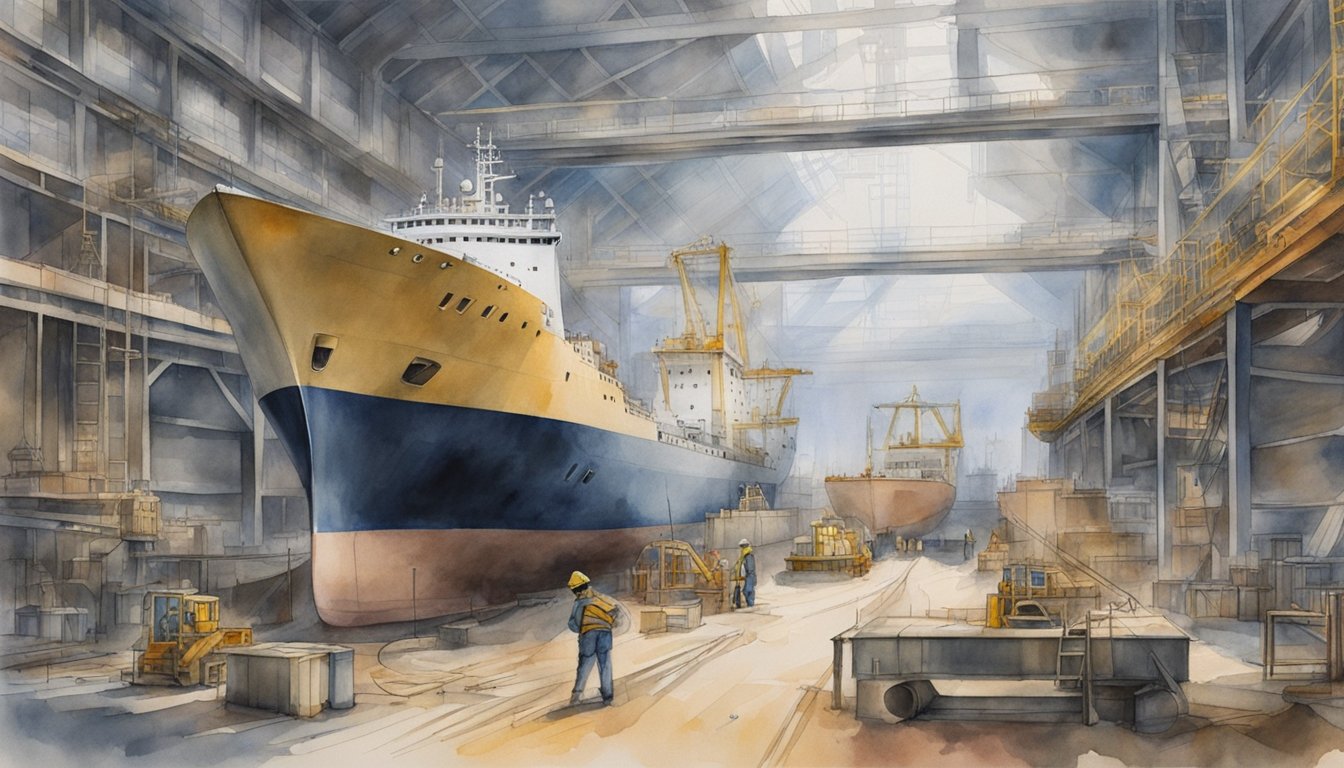
Introduction to Dry Docking
Dry docking refers to the practice in the maritime industry where ships or vessels are taken to a service yard and placed in a dry dock. This maintenance maneuver is crucial for ensuring the safety and seaworthiness of a vessel by enabling comprehensive inspections, cleaning, and repairs that cannot be conducted while the ship is in the water. During this period, underwater components of the hull, including the bottom survey and steelwork, are accessible and can be properly evaluated.
The dry-docking process involves several intricate steps, beginning with the careful planning and coordinating of operations. The ship must be correctly positioned within the dock, and the ballast tanks adjusted to ensure stability. Crew members play a pivotal role throughout the procedure, preparing the ship by securing loose items, disconnecting power, and reducing ballast to facilitate the docking. Safety procedures must be strictly adhered to, in compliance with dry dock legislation.
Maintenance carried out during dry docking not only addresses the immediate repairs but also includes upgrades to systems and equipment aimed at optimizing operational efficiency. This periodical upkeep is mandated by various regulations, including the International Convention for the Safety of Life at Sea (SOLAS) and classification society standards. Adherence to such industry standards is critical to minimize the risk of maritime accidents and ensure safety for seafarers and the marine environment.
For shipowners, accounting for dry docking entails a significant part of the budget. Strategically managing these expenses is necessary to keep the fleet in prime condition without undue financial strain. Each dry docking is a substantial logistical endeavor requiring coordinated effort among various stakeholders in the maritime industry, highlighting the importance of this process in global shipping operations.
Accounting Methods for Dry Docking Expenses
Dry docking is a critical maintenance procedure for vessels, mandated by dry dock legislation and international regulations such as those from the International Maritime Organization (IMO). It ensures the efficiency, performance, and compliance of ships including cargo vessels, container ships, merchant vessels, and tankers with industry standards. The process involves taking a ship out of water to inspect, repair, and maintain its submerged parts. Due to its comprehensive nature, dry docking is a capital-intensive event, and accounting for these expenses is complex and subject to scrutiny.
Component Accounting is commonly applied for the dry docking process. This method recognizes major expenditures, like dry docking, as a component of the vessel’s carrying amount. The costs are then depreciated over the period until the next scheduled dry docking.
For routine repairs and maintenance that occur outside of the main dry docking schedule, the Direct Expense Method is used, where costs are expensed as incurred. These include minor repairs done in or out of a dry dock that do not significantly extend the asset’s life.
Accounting for dry docking also involves planning and budgeting. The initial step is estimating the expenses, which can be derived from shipyard quotations, maintenance provider records, or evaluations by in-house specialists. Industry practices dictate that these estimates should consider past events, current condition, and future needs of the vessel’s systems and procedures.
Shipping companies must adhere to SEC regulations and maritime accounting standards for accurate financial reporting. The specifics of these accounting treatments require a ship-owner and the entity’s accountants to exercise judgment and carefully document and allocate the costs to ensure transparency and proper financial control.
Cost Considerations in Dry Docking
Dry docking is a critical process in maritime operations, requiring meticulous financial planning and cost management. A budget for dry docking anticipates expenses across various aspects such as maintenance, repairs, and upgrades. It often includes fees for the shipyard utilization and is informed by the size and type of the vessel—be it cargo ships, passenger ships, or tankers.
Equipment procurement and steelwork management feature as substantial line items. The nature of repairs can range from simple surface treatments to complex engine overhauls, mandating an encompassing financial allocation. Subcontractors and consultants may be hired for specialized tasks, which also contributes to the cost.
For administrative compliance, classification society fees are accounted for, verifying that the vessel meets regulatory standards. Regular maintenance minimizes the extent of dry dock overhauls, thereby controlling expenditure. The financial plan must accommodate unexpected repairs, necessitating a flexible yet precise budgeting approach.
It is common for shipowners to solicit multiple quotations to find a cost-effective balance between quality and expenditure. Repairs may be mandatory or elective, with the latter often aimed at enhancing a ship’s operational efficiency or lifespan. A predictive approach incorporating the ship’s history and projected needs can yield a more accurate cost forecast.
In summary, effective dry docking cost management blends detailed preparatory work with adept financial foresight, ensuring maritime operations resume smoothly without unforeseen financial burdens.
Maintenance Planning and Procedures
Effective maintenance planning and procedures are at the core of ensuring the longevity and seaworthiness of a vessel. Through strategic scheduling, selecting appropriate facilities, and executing necessary repairs, ship owners can optimize performance and adhere to stringent safety regulations.
Dry Docking Schedule and Interval
Dry Docking Interval:
- Passenger Ships: Often subject to stringent annual checks.
- Cargo Ships: May have longer intervals, depending on usage and age.
Factors Influencing Scheduling:
- Vessel performance data.
- Regulatory compliance.
- Previous maintenance records.
- Anticipated operational demands.
Selection of Dry Dock Facilities
Criteria for Selection:
- Shipyard Capacity: Can it accommodate the vessel’s dimensions?
- Location: Proximity to trading routes.
- Facilities: Availability of necessary equipment and technologies.
- Expertise: Qualified personnel for specialized tasks.
Types of Dry Docks:
- Graving Dock: A large basin that can be sealed and drained.
- Floating Dock: A buoyant platform that can be submerged.
Execution of Repairs and Upgrades
Preparation:
- Planning: Detailed agenda based on thorough inspection.
- Crew Briefing: Clear communication of tasks and safety protocols.
Maintenance Types:
- Routine: Hull cleaning, painting, and anode replacement.
- Corrective: Repairs on identified wear and damages.
System Upgrades:
- Installation of advanced navigation aids.
- Efficiency upgrades on existing ballast or propulsion systems.
Safety Inspections:
- Examination of the hull, rudder, propeller, and other critical components.
- Ensuring compliance with the latest maritime safety regulations.
Regulatory Compliance and Inspections
Regulatory compliance in the maritime sector is a critical aspect that governs the safety and integrity of vessels. Inspections are a fundamental tool to ensure that ships adhere to the highest standards set by international and local regulations.
Compliance with SOLAS Regulations
The International Convention for the Safety of Life at Sea (SOLAS) is the key international treaty that dictates mandatory safety and security standards for ships. Compliance with these regulations is not optional but an obligatory condition for operating cargo and passenger ships on international voyages.
- Safety Equipment: All vessels must maintain a specified standard for safety equipment.
- Navigational Technology: Navigational systems have to meet certain performance standards.
- Ballast Water Management: To comply with environmental regulations, ships must follow SOLAS guidelines for ballast water treatment.
Inspection Frequency:
- Periodic Checks: Routine inspections are conducted to ensure ongoing compliance.
- Special Surveys: Held at intervals, these surveys are more thorough and examine the hull, propellers, and other core systems in detail.
Generally, these regulations are enforced through scheduled inspections and surveys to safeguard life, property, and the marine environment.
Surveys and Classification Societies
Classification societies play a pivotal role in maintaining vessel integrity by conducting surveys and inspections in accordance with industry standards.
Key Functions:
- Certification: Issue certificates that verify a ship’s conformity to specified standards.
- Regular Inspections: Vessels are examined regularly, ranging from daily to annual surveys, depending on the vessel’s age, type, and operational duty.
Areas of Focus:
- Hull and Machinery: The structural soundness and performance of essential machinery are meticulously evaluated.
- Safety Procedures: Inspection of safety procedures ensures the crew’s preparedness in emergency situations.
Classification societies help shipping companies stay in compliance, thereby contributing to a culture of safety and adherence to regulations. They ensure that vessels are seaworthy and meet SOLAS and other regulatory requirements.
Technical and Material Aspects of Dry Docking
Dry docking is a critical process in the maintenance and repair of maritime vessels, involving extensive technical planning and the use of specific materials to ensure vessel safety and regulatory compliance.
Hull and Structure Repairs
Hull Damage Inspection: The condition of the hull is scrutinized for any signs of damage, corrosion, or deformation. Repairs may include:
- Steelwork: Replacement of damaged steel plates or sections.
- Welding: Quality welding is crucial for maintaining hull integrity.
- Riveting: In some older vessels, riveting is still used for repairs.
Hull Cleaning: Before any repairs, thorough cleaning removes marine growth and other debris.
Mechanical Components Maintenance
Propeller and Rudder Inspection: These critical components are examined for:
- Cracks: Even minor cracks can propagate and result in failure.
- Wear: Physical erosion of surfaces can impair performance.
- Alignment: Misalignment can lead to inefficient operation and increased wear.
Maintenance of Deck Equipment:
- Winches and Anchor Chains: Regular inspection and servicing prevent failure due to corrosion or mechanical wear.
- Safety Equipment: Ensures that lifeboats, life rafts, and other safety equipment are fully functional.
Cleaning and Painting Procedures
Environmental Protection: The use of environmentally safe cleaning agents and procedures to remove marine growth without damaging marine ecology.
Paint Selection: Application of anti-fouling and corrosion-resistant paints that are:
- Regulation Compliant: Adhere to international standards for environmental protection.
- Durable: Extend the periods between dry dockings.
Application Process: Painting is carried out systematically to ensure even coverage and optimum thickness, with specific attention to:
- Underwater Hull: A critical area that requires durable and efficient anti-fouling coatings.
- Above Water Hull and Superstructure: Must withstand a variety of weather conditions and temperatures.
Operational Aspects of Dry Docking
Dry docking involves critical operational aspects that ensure the safety and efficiency of vessel maintenance. These procedures encompass a strategic approach to crew preparedness and adherence to safety regulations.
Safety and Emergency Procedures
Dry docking requires stringent safety procedures to protect all personnel involved. A detailed emergency response plan must be in place and easily accessible to crew members, which includes:
- Evacuation routes: Clearly marked and unobstructed paths to safety.
- Fire-fighting equipment: Regularly inspected and properly positioned throughout the dry dock facility.
- Safety gear: Adequate distribution of personal protective equipment (PPE) to the crew.
Regulations set by maritime authorities form the backbone of these safety protocols. Compliance with the Standards of Training, Certification, and Watchkeeping (STCW) for seafarers is mandatory, ensuring that all crew members know how to react in case of an emergency. Coordination between the dry docking team and emergency services is crucial, with roles and responsibilities clearly defined to prevent confusion during a crisis.
Crew Management and Training
The performance of dry docking operations is heavily reliant on the crew’s expertise. Training plays a pivotal role in equipping personnel with the skills required to handle dry docking safely and efficiently. Key elements include:
- Pre-docking training: Courses covering the specifics of the upcoming dry docking operation.
- Performance drills: Regular practice of safety and emergency procedures to ensure readiness.
- Communication: Open lines of communication between all levels of the dry docking team, supported by briefings and debriefings.
Effective crew management ensures that everyone understands their role and responsibilities, with a strong emphasis on teamwork and coordination. It also involves continuous assessment of the crew’s performance and provides feedback for ongoing improvement. The crew’s welfare, including rest and recreation, is also managed to maintain high morale and performance.
Dry Docking Logistics and Infrastructure
Efficient dry docking logistics and infrastructure are vital for the maintenance and performance of vessels, requiring detailed coordination and the use of specialized equipment.
Docking and Undocking Processes
The procedure of dry docking necessitates a precise sequence of actions. Initially, a vessel is guided to the dry dock via tugboats or pilot boats. Once positioned over the dry dock’s supporting blocks, water is pumped out to expose the hull. The infrastructure must support the weight of the vessel and provide access for maintenance. During the undocking phase, the dock is gradually reflooded, ensuring stability and balance before the ship is released back into the water.
Key steps in the process include:
- Positioning of the vessel over the prearranged blocks
- Pumping water out of the dock
- Performing maintenance tasks
- Careful reflooding of dry dock
- Checks for vessel stability and balance
Infrastructure and Equipment Management
Dry docking infrastructure is a complex network that includes the docks, cranes, power supply, and waste management systems. Efficient equipment management is critical for safety and improving performance. Facilities must be appropriately maintained to handle the scale of vessels requiring dry docking services.
Vital components of dry dock infrastructure:
- Docks: structurally sound to support various vessel types
- Cranes and lifting equipment: for moving heavy parts and equipment
- Power supply systems: reliable to ensure uninterrupted operations
- Waste management: for environmental compliance and efficiency
Each element requires regular inspection and upgrades to meet the evolving demands of maritime maintenance. Coordination among the various technical teams is essential to ensure seamless operation and adherence to safety protocols.
Financial Management and Cost Reporting
In the maritime sector, managing the finances and accurately reporting the costs associated with dry docking and vessel maintenance are critical. These processes ensure compliance with regulatory reporting requirements and facilitate informed decision-making.
Budgeting for Dry Docking
Dry docking is a significant maintenance event for cargo ships, typically involving considerable expense. Effective financial management commences with developing a budget that captures all anticipated costs. The budget for dry docking generally includes:
- Dry Docking Fees: Charges for utilizing the dry dock facility.
- Repair Yard Costs: Expenses related to labor, materials, and equipment.
- Agency Costs: Fees for services provided by agents, such as procurement or logistics.
- Classification Surveyors’ Costs: Costs for inspections and certifications required by maritime regulations.
A precise budget ensures that the vessel owner or operator sets aside sufficient funds to complete necessary maintenance without disrupting financial stability. This cost planning is usually done years in advance, as dry docking is a predictable event based on a vessel’s operational schedule.
Reporting and Documentation
Accurate reporting and comprehensive documentation are indispensable for cost reporting and compliance. Vessel maintenance records must align with:
- International Financial Reporting Standards (IFRS): The cost of a dry-docking component is capitalized and depreciated over its useful life until the next scheduled dry docking.
- Financial Reporting: Expenditure on dry docking is either amortized over a period or reported in full in the year it occurs, as per the chosen accounting policy.
These records form the backbone of regulatory reporting and ensure that expenses are transparent and traceable. They are crucial during audits and when communicating financial performance to stakeholders. Well-maintained documentation supports vessel owners and operators in justifying expenses, claiming depreciation, and achieving compliance with the relevant financial accounting standards.
Frequently Asked Questions
Expense classification, international accounting standards, and maintenance reserves are critical in the accurate financial representation of dry docking and vessel maintenance activities.
How are repairs and maintenance costs classified in financial accounting for shipping companies?
In financial accounting for shipping companies, repairs and maintenance costs are typically classified as operating expenses. These costs are recognized in the profit and loss account in the period in which they are incurred. This treatment reflects the ongoing costs of utilizing the vessels for commercial operations.
What is the treatment of maintenance contracts in maritime accounting under IFRS?
Under International Financial Reporting Standards (IFRS), maintenance contracts are generally recognized as either prepayments or accrued expenses, depending on the timing of the service provided and the payment. Companies must determine if the maintenance contract contains a lease, and if so, account for it in accordance with IFRS 16.
When should repairs and maintenance costs be capitalized for vessels under international accounting standards?
Repairs and maintenance costs can be capitalized for vessels under international accounting standards if they provide future economic benefits, such as extending the vessel’s useful life or improving its efficiency. Otherwise, these costs should be expensed as incurred.
How is the accounting for maintenance reserves handled for ships, and what are the main considerations?
The accounting for maintenance reserves for ships involves setting aside funds to cover future maintenance and repairs. The main considerations include estimating the costs based on the vessel’s condition and expected usage, and recognizing the reserve as a liability until the maintenance activity is performed.
What distinguishes between repair and maintenance expenses and capital expenditure in the context of vessel maintenance?
Repair and maintenance expenses are costs incurred in the course of normal operations to keep a vessel in good working order, while capital expenditures result in the addition of new assets or enhancement of existing ones, providing benefits over multiple accounting periods.
How are major repairs and maintenance of ships accounted for, and what guidance does IAS 16 provide?
IAS 16 stipulates that the costs of major repairs and maintenance of ships can be capitalized if they meet the criteria of adding future economic benefits to the asset. These costs are then depreciated over their useful life. Any major overhaul also leads to a reassessment of the asset’s residual value and useful life.
Leave a Reply