
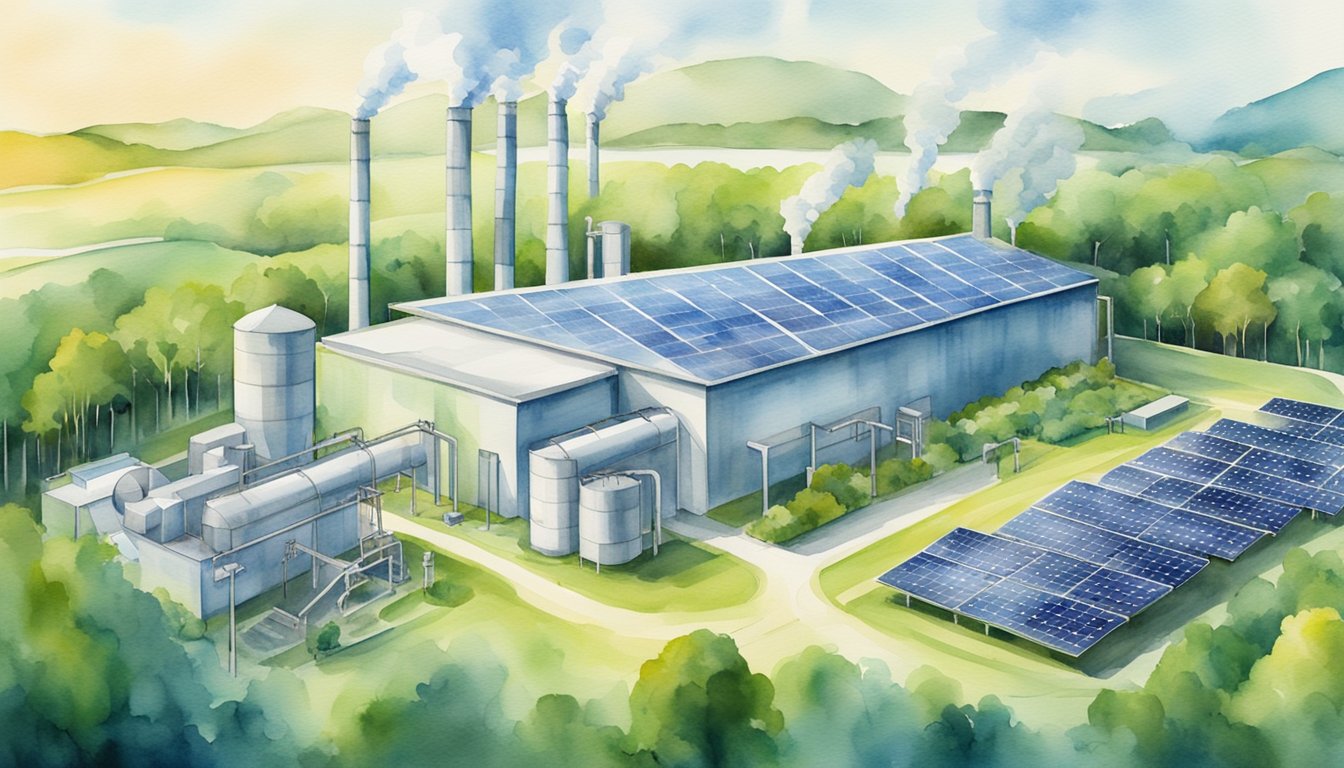
Overview of Government Grants for Sustainable Chemical Manufacturing
Government grants are pivotal in supporting the advancement of sustainable chemical manufacturing. These grants help catalyze innovations and enable the adoption of greener processes within the industry.
Eligibility and Types of Government Grants
Eligibility Criteria
To qualify for government grants aimed at sustainable chemical manufacturing, entities must typically:
- Be engaged in chemical manufacturing or research.
- Propose a project that directly contributes to sustainability in the sector.
- Meet specific agency requirements like the Assistance Listing Number provided by agencies such as the US Environmental Protection Agency (EPA).
Types of grants vary, including:
- Research and Development Grants: These aid in exploring new methods of production that are less harmful to the environment.
- Capital Investment Grants: Intended for the purchase of equipment or technology that reduces waste and pollution.
- Training and Education Grants: Provide funding for upskilling workers to operate new, more sustainable equipment or processes.
Each grant comes with its own set of guidelines and objectives, which applicants are required to adhere to in their proposed projects. For example, the EPA-G2024-STAR-B1 funding opportunity aims at supporting projects that are at the forefront of transitioning into a more sustainable chemical industry. Another example includes the National Science Foundation’s Future Manufacturing Research Grants, which emphasize cross-disciplinary partnerships and convergence research approaches.
Accounting Standards for Government Grants
Accounting for government grants must adhere to key principles and standards to ensure transparency and consistency. The recognition and measurement of these grants can differ significantly between standards.
International Financial Reporting Standards (IFRS)
Under IFRS, specifically IAS 20, government grants are accounted for once there is reasonable assurance that the entity will comply with the conditions attached to them, and the grant will be received. Government grants related to assets are presented either as deferred income or are deducted from the carrying amount of the asset. Grants related to income are deferred and recognized in the profit or loss over the periods necessary to match them with the related costs.
US Generally Accepted Accounting Principles (GAAP)
In contrast, the US GAAP has distinct guidance for governmental grants. According to the Financial Accounting Standards Board (FASB), grants can be accounted for using either a conditional contribution model or an exchange transaction model. The choice depends on the substance of the government grant. If treated as a conditional contribution, recognition is deferred until the conditions are substantially met.
Accounting Standard Codification (ASC) Updates
Under the FASB’s Accounting Standards Codification (ASC), updates on government grants provisions occur periodically. One such update is the Accounting Standards Update (ASU), which companies need to monitor for any changes that could affect the accounting for government grants. These updates may address the recognition of grants at fair value or provide clarifications on existing standards related to government assistance.
Recognition of Government Grants
In sustainable chemical manufacturing, accurately recognizing government grants in financial records is vital. It establishes the impact of these incentives on both the income statement and the balance sheet. The process hinges on fair value assessment, adherence to grant stipulations, income-related considerations, and asset connections.
Recognition at Fair Value
When a sustainable chemical manufacturing company receives a government grant, the recognition at fair value is an essential step. Fair value is the price that would be received to sell an asset or paid to transfer a liability in an orderly transaction between market participants at the measurement date. The grant must be measured reliably, and the fair value reflects the actual financial benefit to the entity.
Recognition Based on Grant Conditions
Recognition of government grants is contingent upon fulfilling specific conditions. These conditions typically mandate certain performance thresholds or the completion of designated activities. Until the entity can demonstrate that it will meet the grant conditions and that the assistance will be received, recognition in the financial statements is deferred. When conditions are satisfied, the grant income is recognized, ensuring alignment with the incurred expenses it intends to offset.
Government Grants Related to Income
Government assistance that aims to subsidize income should be recognized within the profit and loss account only after the company has complied with all related conditions. This ensures that grants intended to support operating activities such as sustainable practices are matched with the periods in which the associated costs are incurred, providing a truthful representation of the company’s financial performance.
Government Grants Related to Assets
Grants related to assets are recognized by either offsetting them against the carrying amount of the assets or as deferred income that is recognized over the life of the asset. By carefully matching the grant to the depreciation of the asset or to the periods benefiting from the asset, manufacturers can accurately reflect the reduced asset costs or additional income over time.
Measurement and Presentation of Grants
When accounting for government grants, entities must consider the precise measurement and appropriate presentation on the financial statements. The carrying amount of the assets and the handling of deferred income are crucial for reflecting the true financial position of the entity.
Carrying Amount and Depreciation
For sustainable chemical manufacturing activities, the carrying amount of assets acquired through government grants should be reduced by the grant amount. These assets are then depreciated over their useful life. The depreciation expense should be recorded in the income statement, while the decreased carrying amount reflects in the balance sheet. If a grant related to a depreciable asset requires the entity to fulfill certain obligations, recognizing the grant as deferred income is appropriate, whereby it is released to profit or loss over the periods that bear the cost of meeting the obligations.
- Asset granted at no cost: Record at nominal amount; charge depreciation to expense over asset’s life.
- Asset purchased with grant funds: Deduct grant from asset’s cost; depreciate net amount over useful life.
Deferred Income and Liability Measurement
When referring to government grants as deferred income, such grants are recognized as a liability on the balance sheet. The recognition aligns with the matching principle, connecting the income from grants with related expenses. The liability is systematically reduced and recognized in the income statement, usually on a straight-line basis, over the period in which the subsidized expenses are incurred.
- Recognition on Balance Sheet: Deferred income grant balance under liabilities.
- Recognition in Income Statement: Systematic allocation over periods matching incurred expenses.
- Upon receipt of grant:
- Debit: Bank/Cash
- Credit: Deferred income (Liability)
- Over grant’s effective periods:
- Debit: Deferred income (Reduce liability)
- Credit: Grant Income (Recognize in income statement)
Disclosure Requirements
The introduction of government grants for sustainable chemical manufacturing must be accurately reflected in financial reports. Important considerations include a detailed disclosure of the funding and a firm adherence to transparency and compliance protocols.
Details to Include in Financial Reports
When documenting government grants in financial reports, entities should precisely enumerate the following details:
- Nature of the Grants: A thorough description of the assistance, including the sustainability practices it aims to support.
- Grant Conditions: Clear listing of the obligations or conditions attached to the subsidy.
- Recognition Basis: Explanation of the accounting policies adopted for recognizing the grants, whether as deferred income or immediately in profit or loss.
- Assistance Received: Exact amounts received and receivable, including the presentation of the impact on the financial statements.
Entities should update these disclosures annually to reflect any changes in the grant conditions or amounts.
Transparency and Compliance
Maintaining transparency in financial reporting requires the meticulous presentation of how the government grants are treated. It is necessary to:
- Disclose any contingencies or unfulfilled conditions that could affect the grant’s recognition.
- Ensure all documentation aligns with local and international accounting standards, such as IAS 20, which regulates the accounting for government grants.
Compliance extends beyond accurate documentation to include a readiness to provide clarification to stakeholders on how the grants enhanced the entity’s sustainability efforts and supported its financial position.
Grant Management and Compliance
When receiving government grants or subsidies, especially for sustainable chemical manufacturing practices, it is imperative to adhere strictly to grant management and compliance regulations. This includes maintaining meticulous records, establishing robust internal controls, and ensuring accurate financial management to meet both federal and organizational standards.
Documentation and Audits
Documentation is the cornerstone of grant management. Grantees should maintain comprehensive records of all grant-related activities, including:
- Detailed expense reports
- Time-sheets for personnel working on the grant
- Correspondence with grant agencies
These documents are critical for audits. Regular internal audits should be conducted to ensure ongoing compliance and preparedness for external audits, which can be expected from grantors to verify the proper use of funds and adherence to grant conditions.
Internal Controls and Budgeting
Robust internal controls are necessary to manage grants effectively. They ensure that funds are used appropriately and help prevent fraud and misuse. Key components of internal control include:
- Clear separation of duties
- Detailed financial procedures and policies
- Regular reviews of control effectiveness
Budgeting should align closely with grant requirements. Organizations must track and forecast expenditures to ensure they do not exceed the grant’s financial boundaries and to allow for timely adjustments when necessary.
Matching Funds and Financial Management
Many grants require matching funds from the recipient, which means that the grantee must allocate a certain amount of their own resources towards the project. Effective financial management practices must track both the receipt and expenditure of these funds precisely.
Financial management is a critical aspect of grant compliance. It should encompass:
- Accurate allocation of costs to the grant
- Proper recording of matching funds
- Timely financial reporting to the grantor
Organizations should ensure that their financial systems can manage and report on these elements to maintain compliance and fiscal responsibility.
Impact of Grants on Business Strategy
Government grants aimed at sustainable chemical manufacturing provide significant incentives for adopting greener practices. They invariably affect a company’s strategic approach to budgeting and growth.
Incentives for Sustainable Practices
Businesses engaging in sustainable chemical manufacturing can capitalize on government grants to reduce the financial burden of transitioning to eco-friendly operations. Capital investments made in green technology are often incentivized through subsidies which offset the initial high costs. These grants serve as a direct benefit to companies, reducing the economic risk and enhancing the viability of investing in sustainable practices.
Leverage and Budget Impact
Grants act as financial leverage for companies, amplifying their ability to implement strategic changes without compromising their budget. By integrating these funds into the financial planning process, businesses can allocate more of their own capital to other areas, strengthening their overall financial health. A grant’s non-repayable nature provides a dual advantage: it supports specific sustainability projects while preserving the company’s cash flow and budget stability.
Tax Considerations
When a company receives government grants or subsidies, particularly for sustainable chemical manufacturing, it faces specific tax considerations. These relate to how the Internal Revenue Service (IRS) treats the subsidies and their reflection in the company’s financial reporting.
IRS Guidelines for Subsidies
The IRS stipulates how companies should treat government subsidies. Nonreimbursable payments from the government to a corporation for constructing facilities are considered capital contributions and are exempt from gross income under Section 118(a). For a sustainable chemical manufacturing company, it means that when they receive a government subsidy to support eco-friendly practices, this contribution is not taxed as income. However, the company must carefully document the use of these funds to ensure compliance with tax regulations.
Profit and Loss Reporting
When reporting profits and losses, sustainable chemical manufacturers must record government subsidies correctly. According to standard accounting practice, these should not be recognized as revenue. Instead, they can be reported as a deferred income or when there is reasonable assurance that the company will comply with the grant conditions and the grant will be received. This ensures that the income statement reflects the actual performance of the company, excluding the distortion of subsidy funds.
The reported profits hence provide a more accurate representation of the financial position to stakeholders, reflecting the company’s operational success without the assistance of government grants.
Special Considerations Due to Current Events
With the evolving economic landscape, entities engaging in sustainable chemical manufacturing must pay close attention to the bookkeeping of government grants and subsidies. The COVID-19 pandemic and the Inflation Reduction Act have introduced specific adjustments and effects that require meticulous reporting and recognition in financial statements.
COVID-19 Pandemic Adjustments
The COVID-19 pandemic has led to unique government assistance programs to support businesses during unprecedented times. Grants related to the pandemic may fall under rare exceptions as set out by financial accounting standards because they are a result of extenuating circumstances. Entities need to determine if such grants should be accounted for as hedge accounting due to their infrequent nature, applying the appropriate exception as mentioned in Paragraph 815-30-40-4 by the Financial Accounting Standards Board (FASB).
- Recognition: Assess whether the grant is directly tied to incurred expenses or future performance obligations.
- Measurement: Determine fair value of the grant at the time of receipt.
- Presentation: Consider whether to present the grant as deferred income or to offset related expenses.
Inflation Reduction Act Effects
The Inflation Reduction Act introduces new financial incentives for sustainable practices, potentially affecting accounting policies. Entities should recognize government grants in their profit or loss systematically over periods that correspond with the expenses the grants are intended to compensate.
- Tax Credits: Understand the impact on the organization’s tax position and how to reflect this in financial statements.
- Cash Grants and Subsidies: Determine appropriate recognition as either income or as a reduction of related capital expenditures.
Businesses must also consider the impact on jobs created or maintained as a result of these grants and subsidies. Employment levels can influence the recognition and measurement of related grant income, especially when conditional on employment criteria.
Frequently Asked Questions
This section covers the most pertinent considerations for the financial management of government grants and subsidies in the context of sustainable chemical manufacturing.
How should government grants related to sustainable practices be treated in financial statements?
In financial statements, government grants received for sustainable chemical manufacturing should initially be recognized either as deferred income or directly in equity, depending on the grant’s nature and stipulations. They are then systematically recognized as income over the periods necessary to match them with the related costs they are intended to compensate.
What are the accounting principles for recording subsidies received for eco-friendly initiatives in the chemical industry?
Subsidies for eco-friendly initiatives in the chemical industry should be acknowledged in accordance with the accrual accounting principle. It necessitates that subsidies are recorded when there is reasonable assurance that the company will comply with the relevant conditions and the subsidies will be received.
How do journal entries differ when documenting received grants versus earned income?
Journal entries for received grants typically include a credit to a deferred income account and a debit to cash or receivables, reflecting the receipt but not immediate recognition as income. In contrast, earned income is immediately recognized with a credit to a revenue account and a debit to cash or receivables.
Can you explain the process for recognizing deferred grant income from environmental subsidies?
Deferred grant income from environmental subsidies is recognized in the profit and loss account over the periods that bear the expenses the grants aim to offset. The recognition aligns with the accrual basis of accounting, matching income with expenses.
What disclosures are required under IAS 20 for government assistance towards sustainability programs in manufacturing?
Under International Accounting Standard (IAS) 20, companies must disclose the nature and extent of government assistance received for sustainability initiatives, including the accounting policy adopted for recognizing such grants, the impact on financial statements, and any unfulfilled conditions or contingencies related to the assistance.
What complications can arise from accounting for government-funded eco-sustainable projects, and how can they be resolved?
Complexities in accounting for government-funded eco-sustainable projects may stem from differentiating between grants related to income and those pertaining to assets, and the various recognition criteria for each. Careful analysis of grant conditions and consistent application of the relevant accounting standards can help resolve such issues.
Leave a Reply