
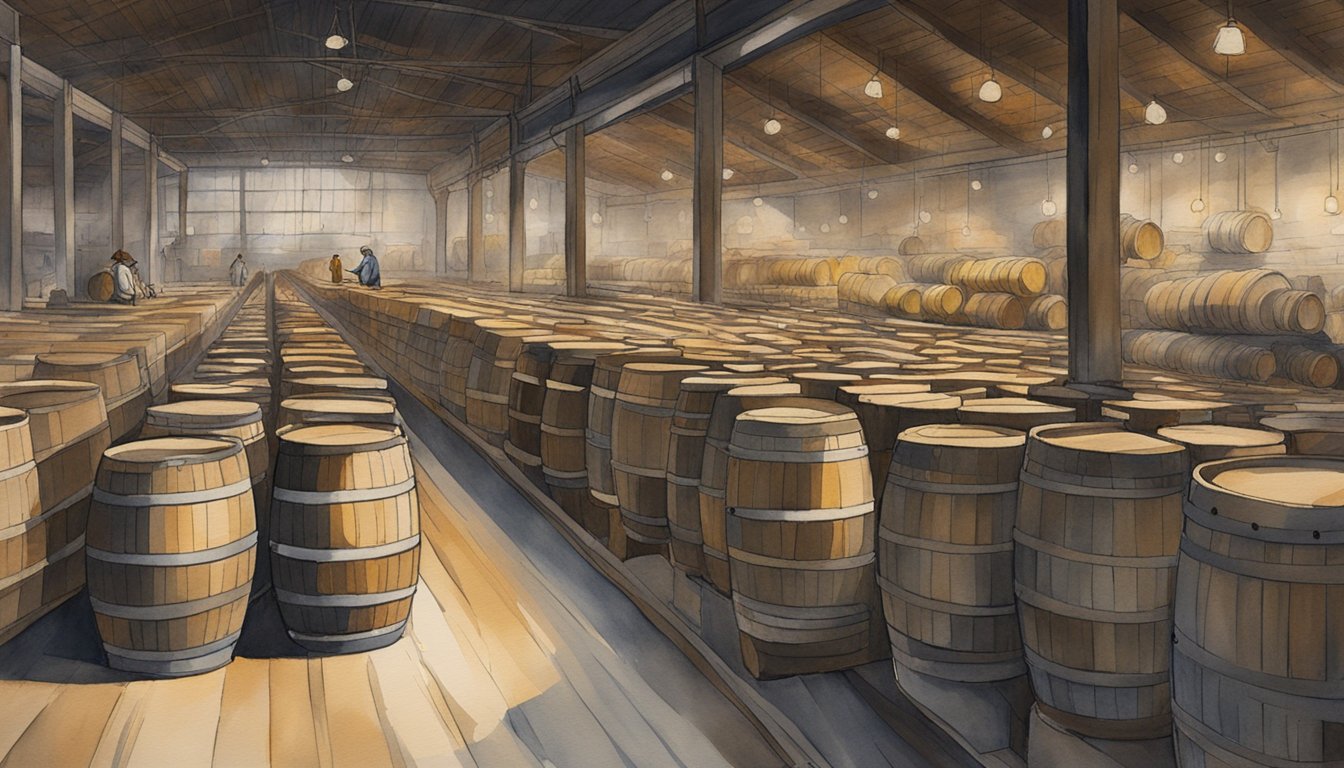
Overview of Aging and Maturation in Alcohol Production
Aging and maturation are pivotal stages in the production of quality alcoholic beverages. This process can significantly influence the flavor, aroma, and overall complexity of beer, spirits, and wine through varying time frames and methods.
Principles of Aging in Breweries, Distilleries, and Wineries
Breweries, distilleries, and wineries employ aging to develop unique sensory profiles in their beverages. Breweries typically age specific beer styles like stouts and barley wines in barrels. Distilleries age spirits such as whiskey, rum, and bourbon for years to create depth and character. Wineries use aging to enhance the complexity of wines, allowing tannins to soften and flavors to mature.
Aging can take place in wooden barrels, typically oak, which imparts distinct flavors, or in stainless steel tanks, which preserve purity. Understanding the chemistry of interaction between the beverage and its aging vessel is crucial for achieving the desired outcome.
The Impact of Barrel Aging on Beer, Spirits, and Wine
Barrel aging plays a crucial role in defining the final characteristics of alcoholic beverages. Beers aged in barrels absorb flavors from the previous contents and the wood itself, leading to unique taste profiles. Whiskeys and other spirits develop from interaction with the wood, acquiring complex layers of flavors like vanilla, caramel, and spice.
In wine production, barrel aging allows micro-oxygenation, softening tannins and enhancing mouthfeel. The type of wood, whether American or French oak, and the degree of toasting inside the barrel, profoundly affect the resulting flavor profile.
Barrel management is essential for ensuring consistent quality and maximizing the benefits of aging. This includes selecting the right barrels and monitoring conditions like humidity and temperature.
Maturation Time Frames for Different Alcohols
Maturation periods vary widely among different types of alcohol. Beers might age in barrels for a few months to a year, depending on the desired flavor complexity. Spirits like whiskey often require several years, with premium variants aging for decades. Rum and bourbon also have extended aging periods, often between 5 to 15 years.
Wines have diverse aging requirements based on grape variety and intended style. Some wines are ready for consumption after a few months, while others benefit from several years in barrels and additional time in bottles. In all cases, the maturation timeline significantly influences the beverage’s quality and market value.
Accounting Practices for Aging Inventory
Accounting for aging inventory in breweries, distilleries, and wineries involves careful valuation, cost allocation for aging and storage, and expense recognition over the aging period. The specifics of these practices ensure that the financial health of the business is accurately represented.
Valuation of Aged Inventory
Valuing aged inventory, such as wine in a winery or distilled spirits in a distillery, requires careful assessment. Inventory is typically valued at the lower of cost or market value. This means if the market value drops below the original cost, adjustments are made to reflect potential losses.
For instance, wineries might use the cost of goods sold (COGS) method, factoring in raw materials, labor, and overheads. In distilleries, the valuation might also include the cost of barrels used for aging spirits. Additional considerations include storage costs and the maintenance of aging facilities.
Cost Allocation for Aging and Storage
Cost allocation for aging inventory is a crucial aspect of bookkeeping. These costs include not only the raw materials but also the storage and maintenance expenses. Breweries, for instance, might incur costs related to maintaining temperature-controlled environments for the aging process.
Distilleries allocate costs for the duration spirits spend in barrels, which involves tracking each batch’s specific aging time. Wineries must account for the holding costs associated with cellaring wine. This includes both the physical infrastructure and labor costs associated with monitoring and rotating stock.
Expense Recognition Over the Aging Period
The recognition of expenses tied to aging inventory occurs over time to match the actual usage and decline in value. For breweries, this might mean expensing ingredients and production costs as beer ages. Distilleries recognize costs as spirits mature in barrels, often incorporating accrual accounting to foresee expenses for potential spoilage.
Wineries follow similar principles, expensing costs progressively as wine undergoes maturation. It’s also essential to track and record inventory turnover rates and consider write-downs for products that do not meet quality standards.
These bookkeeping practices ensure that financial records accurately reflect the business operations and inventory value, facilitating better financial decision-making and compliance with accounting standards.
Managing Storage and Associated Costs
Handling storage and the associated costs in breweries, distilleries, and wineries involves careful facility planning, effective cost management, and precise inventory tracking. These aspects are crucial in maintaining the quality of the products during the aging and maturation processes.
Facility Requirements for Optimal Aging
Proper storage facilities are essential for aging alcohol effectively. Wineries, breweries, and distilleries need controlled environments to maintain temperature and humidity levels that favor maturation. For instance, wine often requires cool, stable climates to age gracefully, while distilled spirits might benefit from slightly different conditions.
Equipment such as climate control systems and insulated storage areas ensures consistent environmental conditions. Selecting appropriate barrels, tanks, and containers also plays a vital role in preventing spoilage and maintaining flavor profiles.
Cost Management of Storage Space
Managing storage costs involves balancing between maintaining ideal conditions and minimizing expenses. Distilleries and wineries often face significant costs associated with climate control, lease or purchase of storage facilities, and security measures to protect high-value products.
Implementing efficient space utilization strategies, like stacking barrels and using space-saving storage racks, can greatly reduce overhead. Additionally, cooperatives or shared storage facilities can offer cost-saving alternatives for smaller operations.
Cost Breakdown:
- Climate Control: Essential for optimal aging, varying between types of beverages.
- Lease/Purchase: Long-term cost implications for storage facilities.
- Security: Protecting valuable inventory from theft or damage.
Inventory Tracking during Maturation
Accurate inventory tracking during maturation is critical for all alcohol production businesses. Wineries, breweries, and distilleries need to keep detailed records of each batch’s location, aging time, and any changes in quality.
Technology plays a pivotal role here. Advanced inventory management systems can automate much of this tracking, providing real-time data and analytics on stock levels and conditions. This helps in making informed decisions about when a product is ready for sale, optimizing production schedules, and reducing waste.
Key Elements:
- Batch Tracking: Monitoring each batch’s progress through the maturation process.
- Real-Time Data: Utilizing software for up-to-date inventory status.
- Quality Checks: Regular inspections to maintain product standards.
Compliance and Regulations
Breweries, distilleries, and wineries must navigate a complex landscape of federal and state regulations that impact their operations, especially concerning the aging and maturation processes. Key considerations include adhering to specific laws on alcohol aging, understanding the tax implications for aged beverages, and maintaining meticulous documentation and record-keeping standards.
Federal and State Regulations on Alcohol Aging
The Alcohol and Tobacco Tax and Trade Bureau (TTB) enforces numerous federal regulations that breweries, distilleries, and wineries must follow. These regulations stipulate requirements for the aging of alcohol, including proper labeling, storage conditions, and duration.
State laws also vary significantly, adding another layer of compliance for businesses operating in multiple states. For example, some states require specific aging periods for products labeled as “straight” whiskey.
Tax Implications for Aged Beverages
Aging alcohol affects its tax status, with extended maturation periods often subject to different tax treatments. The TTB taxes distilled spirits based on proof and volume, with additional considerations for aging, which can elevate the product’s market value and, consequently, its excise tax.
Wineries and breweries face similar financial implications. For wineries, aging processes can influence tax rates due to changes in alcohol content over time. Breweries, especially those producing barrel-aged beers, must account for variations in volume and proof, impacting their overall tax liabilities.
Documentation and Record-Keeping Standards
Accurate documentation and stringent record-keeping are integral to compliance. Federal regulations require detailed logs of production, aging, and storage activities to ensure traceability and compliance with TTB mandates.
Documents must include the type of beverage, aging start and end dates, storage conditions, and any transfers or treatments during the aging process. Compliance with these standards is critical for audits and inspections, helping to avoid penalties and ensure operational integrity.
Enhancing Business through Aging and Maturation
Breweries, distilleries, and wineries leverage aging and maturation processes to enrich their product offerings, create unique marketing opportunities, and implement innovative techniques that set them apart in the industry. These practices not only enhance the flavor profile of beverages but also add significant value to the business operations and consumer perception.
Strategic Benefits of Offering Aged Beverages
Aged beverages command higher prices due to their enhanced flavor profiles and perceived exclusivity. Craft beer, spirits, and wines that undergo extensive aging processes develop complex characteristics that appeal to connoisseurs. This complexity often justifies a premium price, contributing to higher profit margins.
Additionally, offering aged products helps businesses differentiate themselves in a crowded market. Consumers seeking unique taste experiences will gravitate toward beverages with distinctive aging attributes. This differentiation can also lead to increased brand loyalty as customers associate the brand with quality and sophistication.
Marketing Aged Beverages to Consumers
Effective marketing of aged beverages hinges on highlighting their unique qualities and the time investment required in their production. This can be done through storytelling – sharing the journey of the product from barrel to bottle. Highlighting the artisanal approach and the craftsmanship involved resonates well with consumers.
Tasting events and tours of aging facilities are also powerful marketing tools. These experiences allow consumers to appreciate the nuances of aged beverages firsthand, fostering a deeper connection with the brand. Leveraging social media and content marketing to showcase behind-the-scenes looks into the aging process can further engage target audiences.
Innovations in Aging Techniques
Innovations in aging techniques are continually reshaping how breweries, distilleries, and wineries approach maturation. Technologies such as controlled micro-oxidation and the use of new aging vessels like different types of wood barrels can accelerate aging processes or introduce novel flavors. These innovations can reduce time and costs while still producing high-quality aged products.
Some businesses experiment with environmental factors, such as aging products in unique climates or at varying altitudes, to develop distinct characteristics. These inventive approaches not only enhance the end product but also serve as compelling marketing points that attract adventurous consumers eager to try something new and exceptional.
Consumer Engagement and Direct Sales
Engaging consumers and leveraging direct sales channels can significantly boost revenues for breweries, distilleries, and wineries. Tasting rooms and tours serve as vital marketing tools, while direct-to-consumer (DTC) sales have grown to be a critical revenue stream, especially given recent economic challenges.
Tasting Rooms and Tours as Marketing Tools
Tasting rooms and tours provide breweries, distilleries, and wineries with direct interaction with their customers. These experiences allow visitors to learn about products, witness production processes, and sample offerings directly. This can cultivate brand loyalty and increase the likelihood of repeat purchases.
Tours offer an educational component, showcasing the craftsmanship and heritage behind the products. This tangible connection not only enhances customer appreciation but can also drive purchases both on-site and online post-visit.
Tasting rooms often serve as a launchpad for new products. Exclusive tastings of limited-edition or seasonal items incentivize visits and create buzz. Additionally, they provide a controlled environment to gather immediate feedback, which can be pivotal for product development and marketing strategies.
Impact of Direct-to-Consumer Sales on Revenue
The rise of DTC sales has been transformative for many in the alcoholic beverage industry. With traditional markets disrupted by the pandemic, many businesses pivoted to online sales platforms to reach their customers directly. This shift has allowed breweries, distilleries, and wineries to sell without relying solely on third-party retailers.
DTC sales offer higher profit margins as they cut out the middlemen. This revenue model is particularly crucial for small to mid-sized businesses that can capitalize on higher direct sales margins. Platforms like Biermi and Bevv have become essential tools, enabling businesses to establish an online presence swiftly.
Increased customer data through DTC channels also allows for more personalized marketing approaches. By analyzing purchasing behaviors and preferences, businesses can tailor their offerings and promotions, fostering a deeper connection and loyalty among their customer base.
Sustainability in Production and Aging Processes
Sustainability has become integral to the production and aging processes in breweries, distilleries, and wineries. These businesses focus on reducing their environmental impact while maintaining quality.
Water Management:
Breweries and distilleries are particularly water-intensive. Implementing water recycling systems helps reduce water consumption significantly. Craft breweries often use wastewater for brewing to conserve this precious resource.
Energy Efficiency:
Energy use in the aging process is another critical area. Many facilities are adopting energy-efficient systems. This includes using solar panels and investing in energy decarbonization.
Storage Solutions:
Sustainable storage practices enhance both environmental and economic outcomes. Temperature-controlled environments ensure minimal energy usage. Additionally, eco-friendly materials for barrels and containers are increasingly popular.
By-Product Utilization:
Wineries, breweries, and distilleries are finding innovative uses for by-products. This includes turning grape skins and seeds into compost or using spent grains for animal feed. Such practices not only reduce waste but also create additional revenue streams.
Business Operations:
Embracing sustainability in daily operations is essential. Craft beverage producers often lead the way with creative solutions despite budget constraints. These sustainable practices attract eco-conscious consumers and set a benchmark for the industry.
Frequently Asked Questions
Bookkeeping for aging and maturation processes in breweries, distilleries, and wineries requires specific accounting treatments and tax considerations. Additionally, precise inventory costing and production calculation methods are essential.
How is inventory costing managed for products that require aging, such as in wine production?
Inventory costing for aging products involves tracking each batch from production through maturation. Costs accumulate over time, including raw materials, labor, and overhead. Accurate record-keeping ensures the total production cost is allocated correctly over the aging period.
What accounting treatments are used for storage expenditures during the maturation process of spirits?
Storage expenditures are capitalized as part of the product’s cost until the aging process is complete. This includes costs related to warehousing, utilities, and insurance. These capitalized costs are then amortized over the life of the matured product.
How do wineries calculate their cost of production per bottle, factoring in aging processes?
Wineries calculate production costs per bottle by adding raw material expenses, labor, overhead, and aging-related costs. Each of these elements is tracked meticulously through inventory management systems to ensure precise cost allocation, considering the time each batch spends aging.
What tax considerations must a vineyard be aware of for aged inventory?
Vineyards must be aware of tax regulations regarding inventory holding costs, including potential tax benefits for storage expenditures. Different treatments could apply based on whether the costs are considered direct expenses or capitalized and amortized over time.
How do you create an income statement for a winery with a focus on maturation costs?
Creating an income statement involves listing revenues, direct costs of production, and operating expenses. For maturation costs, ensure they are recorded appropriately under cost of goods sold or as operating expenses, based on whether they are capitalized and amortized.
Can you explain the audit procedures for a wine industry business that includes aging inventory?
Auditors review records of inventory purchasing, storage, and aging processes. They ensure accuracy in cost allocation and compliance with financial reporting standards. Physical inventory checks and verification of aging durations are essential parts of the audit procedures.
Leave a Reply