
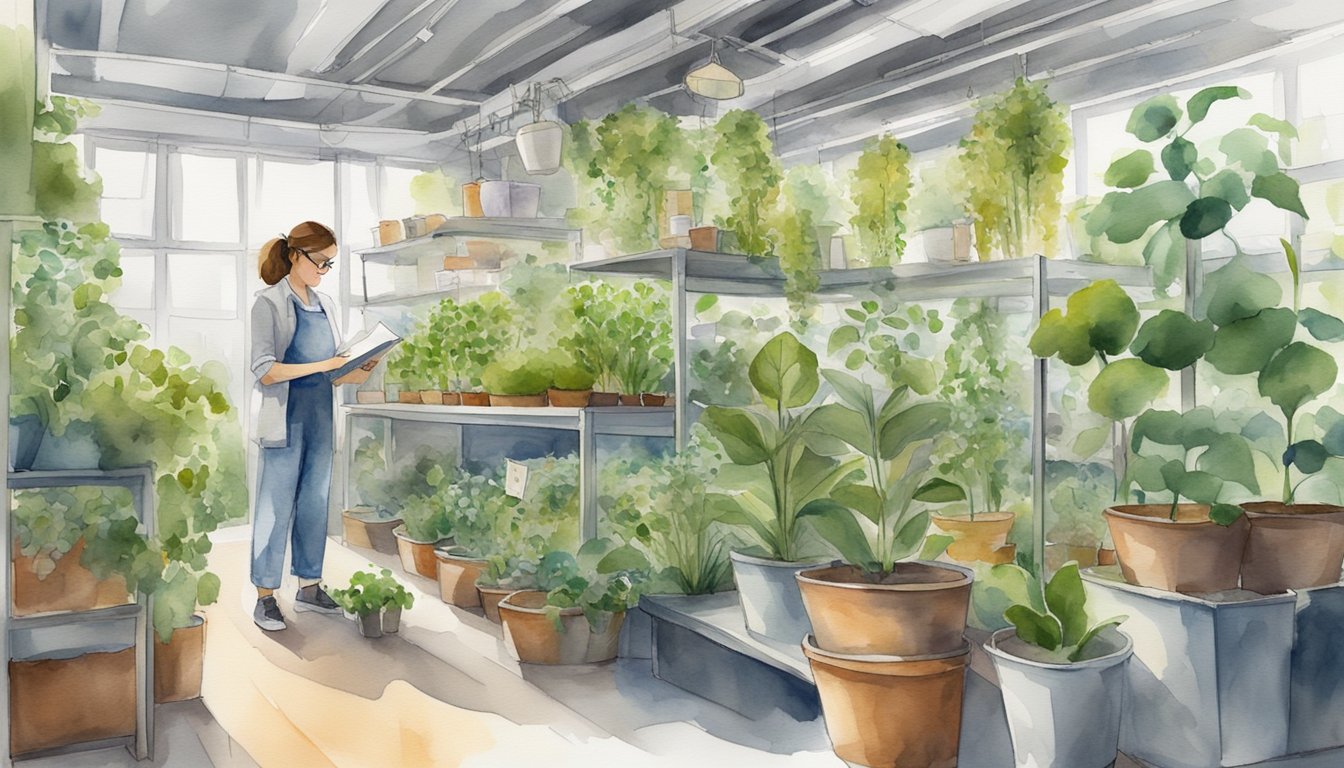
Urban Farming R&D Overview
Urban farming companies invest heavily in research and development (R&D) to enhance sustainability, innovate their methods, and boost food production efficiency. The following sections discuss the pivotal role of R&D and how companies manage funding and budget allocation for these activities.
Importance of R&D in Urban Agriculture
Research and development are crucial for urban farming to thrive. Continuous innovation in growing techniques, such as vertical farming and hydroponics, is essential to maximize yield and reduce costs.
Companies are also focused on developing new crop varieties that are more resilient to urban environments. These efforts help in achieving better food security and offer sustainable alternatives to traditional farming.
Moreover, R&D contributes to the optimization of resource usage, like water and energy, making urban agriculture more environmentally friendly.
Funding and Budget Allocation
Allocating funds for R&D is a strategic priority for urban farming enterprises. Companies often seek investments from venture capitalists and public grants to support their innovative projects.
Budget allocation generally prioritizes technological advancements and partnerships with research institutions. A portion of the budget is directed towards employee training to handle new technologies effectively.
Urban farming firms also allocate funds for pilot projects to test new methods in real-world conditions. This helps in identifying the most effective solutions before scaling up.
Proper funding and budget management ensures that the company can continually improve its techniques and sustain long-term growth.
Costs and Financial Strategies
Urban farming companies need to meticulously plan and account for both direct and indirect costs of research and development (R&D) to optimize growing techniques and develop new crop varieties. Effective financial planning ensures sustainable growth and socioeconomic benefits.
Direct Costs of R&D
The direct costs in urban farming R&D primarily include personnel salaries, lab equipment, and materials like seeds and nutrients. Innovations in hydroponics and vertical farming require significant investment in specialized equipment and technology. Companies must budget for initial setup costs as well as ongoing maintenance and upgrades.
Additionally, trial and error methodologies can be expensive. Frequent pilot studies and experimental crop cycles necessitate continuous financial input—covering lighting systems, temperature controls, and water systems.
Accounting for Indirect Costs
Indirect costs encompass facility expenses, utilities, and administrative support. Urban agriculture settings often involve high real estate costs, further impacted by energy consumption for climate control in indoor farming systems. Companies also need to allocate funds for regulatory compliance and certifications ensuring crop safety and quality standards.
Administrative functions, such as project management and human resources, while not directly tied to R&D, are crucial for efficient operation. These costs, often not immediately visible, form a substantial part of the financial planning.
Financial Planning for R&D
Effective financial planning for R&D in urban farming involves detailed budgeting and forecasting. Companies use financial models to predict costs and ROI from innovations in growing techniques. Securing grants and investor funding is often a strategy to offset high R&D expenses.
To mitigate risks, urban farming firms may engage in public-private partnerships or join research consortia. Diversifying the types of crops and focusing on high-value crops can also provide a financial buffer. This approach helps spread risk and ensures a more stable financial inflow for sustained R&D efforts.
Strategic financial management not only ensures the sustainability of urban farming ventures but also facilitates continuous innovation and growth within the sector.
Optimizing Growing Techniques
To achieve sustainable agriculture and food security, urban farming companies continuously optimize their growing techniques. This effort includes advancements in hydroponics, innovations in vertical farming, and methods to improve crop yield and quality.
Advancements in Hydroponics
Hydroponics, a soil-free growing method, has transformed urban farming. This technique involves growing plants in nutrient-rich water solutions, offering precise control over nutrient delivery and reducing water usage. LED lighting and automated systems help manage light cycles and nutrient levels, improving growth rates and energy efficiency.
One key benefit is the reduction of harmful pesticides, aligning with environmental sustainability goals. By optimizing hydroponic systems, urban farms achieve higher yields and better crop quality, enhancing food security in urban areas.
Innovation in Vertical Farming
Vertical farming maximizes space by stacking layers of crops, allowing for high-density growth in urban environments. These farms use controlled environment agriculture (CEA) to maintain ideal growing conditions. Technologies such as climate control, advanced sensors, and automated harvesting are critical.
This method reduces the land footprint, making it suitable for cities. As a result, vertical farming supports sustainable agriculture by lowering transportation emissions and utilizing renewable energy sources. Innovations continuously improve efficiency and crop resilience.
Improving Crop Yield and Quality
Urban farms focus on breeding and selecting crop varieties suited for controlled environments. Genetic research and biotechnological advances help create plants that thrive indoors, resist pests, and offer superior nutritional value.
Techniques like aeroponics, where roots are misted with nutrient solutions, and aquaponics, integrating fish farming with plant growth, enhance productivity. These innovations ensure reliable, high-quality produce, contributing to urban food security and reducing the environmental impact of traditional farming methods.
Development of New Crop Varieties
Development of new crop varieties in urban farming involves genetic modification, adaptation to unique urban conditions, and fostering biodiversity for crop resilience. These practices are critical for sustainable food systems and food safety amid environmental change.
Genetic Modification and Bioengineering
Urban farming companies utilize genetic modification and bioengineering to develop robust crop varieties. These methods enable the enhancement of desirable traits such as pest resistance, nutrient efficiency, and drought tolerance.
Advanced technologies like CRISPR allow precise genome editing, minimizing unintended consequences. Bioengineers design crops that can thrive in controlled environments such as vertical farms, ensuring consistent yield and reducing reliance on chemical pesticides. This approach contributes significantly to food safety and sustainable food systems.
Adaptation to Urban Environments
Adaptation to urban environments is essential for successful urban farming. Many crops are modified to fit limited spaces and unique climatic conditions found in cities. Techniques such as hydroponics, aeroponics, and aquaponics are employed to optimize growth in non-traditional soil-less media.
These adaptations ensure crops can grow vertically or horizontally in confined spaces, maximizing productivity. Urban farming also reduces transportation distances, thereby lowering carbon footprints and supporting environmental sustainability.
Biodiversity and Crop Resilience
Maintaining biodiversity is crucial for developing resilient crop varieties. Urban farming companies focus on creating a diverse crop portfolio to mitigate risks associated with disease outbreaks and environmental changes.
By cultivating a range of species, they enhance ecosystem stability and crop resilience. This diversity is vital for sustainable food systems, ensuring a stable food supply even under adverse conditions. Techniques include intercropping and polyculture, which bolster soil health and promote beneficial insect populations.
Sustainable Practices and Environmental Impact
Urban farming companies are increasingly adopting sustainable practices to minimize their environmental impact. These practices focus on reducing greenhouse gas emissions, optimizing water use, managing waste, and improving land use and ecosystem services.
Reducing Greenhouse Gas Emissions
Urban farming companies employ various strategies to reduce greenhouse gas emissions. For instance, indoor vertical farms use energy-efficient LED lighting and advanced climate control systems, which significantly lower energy requirements compared to traditional agricultural practices.
Additionally, some urban farms utilize renewable energy sources such as solar panels to power their operations. By incorporating these sustainable energy solutions, they reduce reliance on fossil fuels, which are major contributors to greenhouse gas emissions.
Water Use and Waste Management
Efficient water use is critical in urban farming. Hydroponic and aquaponic systems are widely used to optimize water consumption. These systems recycle water, significantly reducing the overall water footprint of urban farms. Furthermore, urban farmers often collect rainwater for irrigation purposes, reducing the need for potable water.
Waste management solutions are also integral. Composting organic waste to create nutrient-rich soil amendments helps to reduce waste sent to landfills and minimizes environmental pollution. Companies also implement zero-waste policies by repurposing plant residues and using biodegradable materials.
Land Use and Ecosystem Services
Urban farming maximizes the efficient use of limited urban land. Rooftop gardens and vertical farming systems are particularly effective in densely populated areas, contributing to green spaces without encroaching on land needed for other urban activities.
These practices enhance ecosystem services by increasing biodiversity and improving air quality. Plants in urban farms can reduce urban heat island effects, offer habitats for pollinators, and enhance aesthetic values that contribute to the wellbeing of urban occupants. By integrating food production within city landscapes, urban farms also reduce the distance food travels from farm to table, mitigating carbon emissions associated with transportation.
Community and Socioeconomic Benefits
Urban agriculture offers various advantages, ranging from improving food security to boosting local economies. The following subsections explore how these benefits manifest in urban settings.
Enhancing Food Security in Cities
Urban farming helps ensure that fresh produce is available closer to where people live, mitigating the food system’s dependency on long supply chains. This proximity reduces transportation costs and carbon emissions.
Community gardens in urban areas offer access to nutritious foods, thereby reducing food deserts. Many of these initiatives engage low-income families, offering them affordable produce options. Urban farms can serve as educational hubs, teaching residents how to grow and prepare their own food, thereby promoting self-sufficiency.
Community Gardening and Civic Engagement
Community gardens provide spaces for residents to collaborate and interact, fostering stronger social bonds. These areas become focal points for civic engagement, where residents participate in decision-making processes related to their neighborhood’s food system.
Volunteer opportunities in urban agriculture projects enable community members to contribute to local food production. These activities promote a sense of ownership and responsibility, leading to heightened community development.
Impact on Property Values and Local Economy
Urban agriculture can positively affect property values in surrounding areas. Well-maintained community gardens often make neighborhoods more attractive places to live, potentially leading to increased property values.
Local economies benefit from urban agriculture through job creation. Urban farms can create positions in various roles, from gardeners to administrative staff, contributing to the socioeconomic fabric. Additionally, local markets selling produce grown within the community circulate money within the neighborhood, fostering financial growth.
Integration of Technology and Data Analytics
Urban farming companies are increasingly relying on advanced technology and data analytics to optimize growing techniques and develop new crop varieties. This integration helps in making data-driven decisions and streamlining food production processes.
Leveraging Data for Farming Decisions
Data analytics plays a critical role in modern urban agriculture. By processing data from various sources such as sensors, drones, and satellites, companies can monitor crop health, soil conditions, and weather patterns in real-time. This data enables precise application of water, fertilizers, and pesticides, optimizing resource usage and improving crop yields.
Predictive analytics can forecast potential issues in crop growth, allowing farmers to take preventative measures. Machine learning algorithms help analyze historical data to identify the best practices for specific environments and crops, tailoring farming techniques to local conditions. This use of data leads to more efficient and sustainable urban farming practices.
Role of Companies like Google in Urban Farming
Tech giants like Google are heavily involved in the advancement of urban agriculture through their technological innovations. Google’s powerful data analytics and AI capabilities contribute significantly to solving complex agricultural problems. Their infrastructure supports large-scale data collection and processing, facilitating sophisticated analyses that small-scale farmers may not have the resources to conduct independently.
Google’s investments in zero-acreage farming projects, such as vertical farming initiatives, demonstrate their commitment to sustainable food production. By leveraging their cloud computing services, urban farming companies can manage vast amounts of data, enabling real-time decision-making and fostering innovation in crop production techniques.
Companies like Google provide the tools and platforms that drive the growth of urban agriculture, helping in the development of new crop varieties and efficient farming practices.
Urban Farming and Wildlife
Urban farming can significantly impact urban biodiversity, particularly the lives of critical pollinators like bees, and the integration of livestock within city environments introduces unique challenges and benefits.
Impact on Urban Biodiversity and Bees
Urban farming contributes positively to urban biodiversity by creating green spaces that serve as habitats for various species. Bees, essential for pollination, benefit from the diverse array of flowering plants in urban gardens.
Certain urban farms cultivate bee-friendly plants, which helps support bee populations that are declining in many parts of the world. Moreover, practices in urban farming often avoid harmful pesticides, ensuring a safer environment for bees and other pollinators.
Important Points:
- Increased green spaces.
- Support for bee populations.
- Avoidance of harmful pesticides.
Coexistence of Livestock in Urban Farms
Introducing livestock into urban farms can provide several advantages, such as natural fertilizer from animal waste and increased soil fertility. Chickens, goats, and even bees can be found in urban farm settings, each contributing to the agricultural ecosystem in unique ways.
They may also face challenges in terms of space, noise, and odor. Proper management practices are essential to address these issues and ensure that livestock are kept humanely and efficiently. Integrating livestock requires careful planning and adherence to city regulations to maintain harmony between urban life and agricultural practices.
Key Considerations:
- Natural fertilization.
- Enhanced soil fertility.
- Challenges: Space, noise, odor.
Frequently Asked Questions
Urban farming companies face unique challenges when accounting for costs associated with research and development (R&D). They employ various strategies to finance these activities, manage expenditures, and assess the economic impact effectively.
What strategies do urban farming companies use to finance their research and development activities?
Urban farming companies often rely on a mix of funding sources to finance R&D. These can include venture capital investments, government grants, and partnerships with universities or research institutions. Additionally, some companies may reinvest profits from their primary operations into R&D projects.
In urban agriculture, how are the expenditures for developing new agricultural technologies recorded and managed?
Expenditures for developing new agricultural technologies are typically recorded as R&D expenses. These costs can include materials, labor, and overhead directly associated with the development efforts. Proper accounting methods ensure these expenses are tracked accurately and align with financial reporting standards.
How do urban farming initiatives evaluate the cost-effectiveness of investing in new cultivation techniques?
Urban farming initiatives evaluate cost-effectiveness by conducting pilot projects and field trials. They analyze metrics such as yield improvement, resource efficiency, and labor savings. Financial assessments often compare the upfront R&D investment against long-term benefits to determine the viability of adopting new techniques.
Can you explain the accounting methods used by urban farming businesses for capitalizing on the creation of proprietary crop varieties?
Urban farming businesses capitalize on proprietary crop varieties by recording the development costs as intangible assets. These costs include expenditures for genetic research, breeding, and testing. Once a crop variety is commercially viable, businesses amortize these costs over its useful life.
What fiscal approaches do urban farming enterprises adopt to handle the risks associated with R&D investments?
To manage R&D risks, urban farming enterprises often diversify their investment portfolio. They may allocate R&D funds across multiple projects to spread risk or collaborate with external partners to share costs. Additionally, they implement robust project management practices to monitor progress and adjust spending as needed.
How is the economic impact of research and development in urban agriculture quantified by urban farming entities?
The economic impact of R&D in urban agriculture is quantified through cost-benefit analysis. Urban farming entities assess metrics such as increased crop yields, reduced resource usage, and enhanced market competitiveness. These analyses help determine the value added by R&D activities to the overall business outcomes.
Leave a Reply