
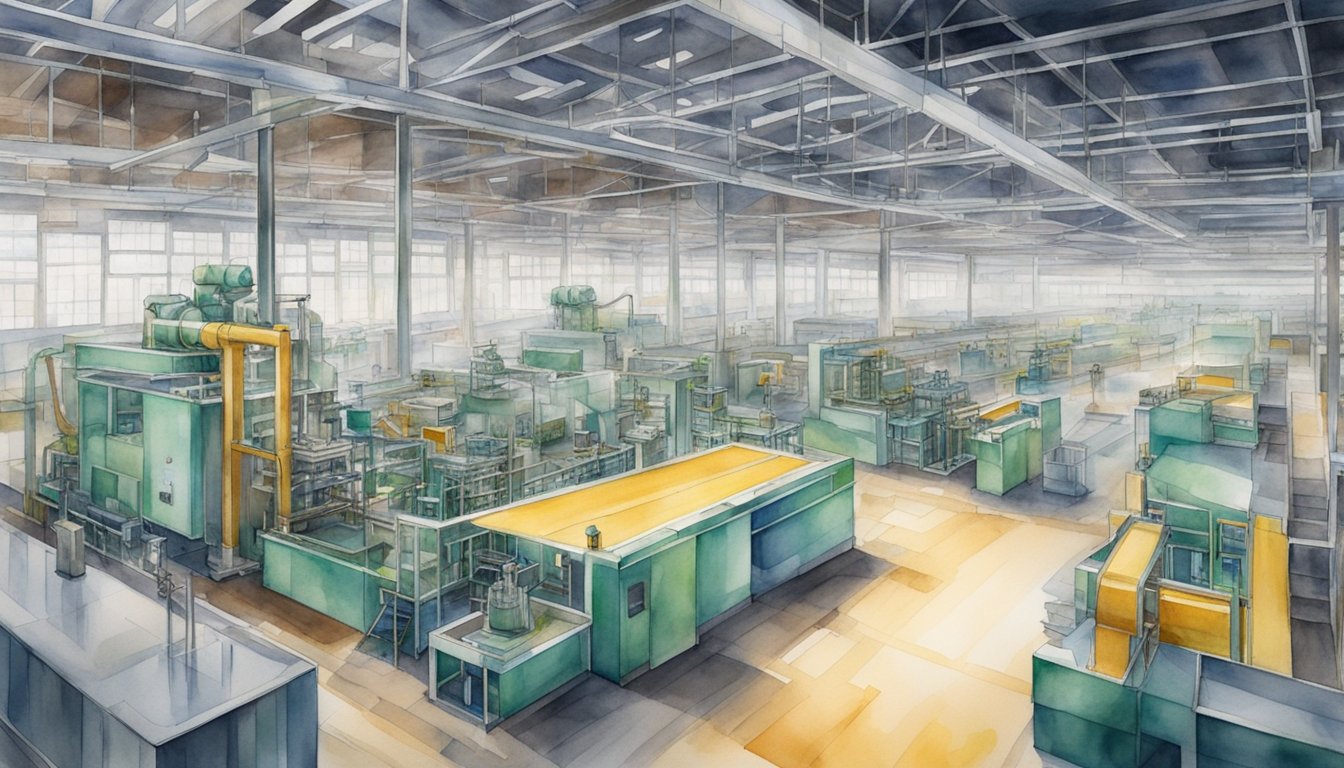
Overview of Capital Expenditures
Capital expenditures (CapEx) are critical for a company’s growth and sustainability. They involve significant investments in assets such as technology, facilities, and equipment, which provide long-term benefits.
Definition and Importance
Capital expenditures refer to funds allocated for acquiring, upgrading, or maintaining physical and intangible assets. These investments support a company’s expansion and operational efficiency. CapEx differs from operating expenses (OpEx) as it focuses on long-term asset enhancement rather than day-to-day costs. Companies invest in CapEx to maintain their competitive edge, improve production capabilities, and ensure compliance with regulatory standards.
Recording Capital Expenditures on the Balance Sheet
When a company makes a capital expenditure, the cost is recorded on the balance sheet under fixed assets. This includes property, plants, buildings, and equipment. CapEx is initially capitalized, meaning it’s added as an asset rather than expensed immediately. This capitalization process ensures the cost is amortized over the asset’s useful life. The balance sheet reflects the asset’s value, diminishing annually through depreciation, which spreads the cost over the asset’s lifespan. Depreciation reduces taxable income and aligns the financial statements with the asset’s wear and tear.
Types of Capital Expenditures
Capital expenditures can be categorized based on the type of asset. Property and land acquisitions include buying real estate for business operations. Technological investments cover costs for new production technologies and systems that enhance efficiency. Facility upgrades encompass expenditures like modernizing factories and increasing production line capabilities. Sustainable manufacturing processes are CapEx allocated towards eco-friendly practices and renewable energy sources, helping companies meet environmental goals. Each category contributes uniquely to a company’s strategic objectives and long-term financial health.
In summary, CapEx plays a crucial role in securing the infrastructure necessary for growth, optimizing processes, and achieving sustainability goals. These investments are strategically planned, recorded meticulously on financial statements, and categorized based on their specific nature.
Accounting for Tangible and Intangible Assets
Accounting for tangible and intangible assets requires precise methods to record, capitalize, and allocate these investments over time. Understanding the differences in treatment, amortization, and depreciation ensures accurate and compliant financial reporting.
Differences and Treatment
Tangible assets, such as property, plant, and equipment (PP&E), are physical items that businesses use in operations, like machinery and buildings. Intangible assets, including patents and software, lack physical substance but provide future economic benefits.
Tangible Assets:
- Recorded on the balance sheet at acquisition cost.
- Include depreciable assets like machinery and buildings.
- Follow GAAP or IFRS guidelines for capitalization and depreciation.
- Recognized at acquisition cost if they result from a purchase.
- Indefinite-lived intangibles (e.g., trademarks) are not amortized.
- Finite-lived intangibles (e.g., patents) are amortized over their useful life.
Amortization of Intangible Assets
Amortization is the process of systematically reducing the book value of a finite-lived intangible asset over its useful life. This periodic cost allocation matches the asset’s expense with the revenue it generates.
Key Points:
- Specific to finite-lived intangible assets such as patents and copyrights.
- The amortization period is determined based on the asset’s useful life.
- Recorded as an expense on the income statement, reducing the asset’s book value on the balance sheet.
Example: A patent purchased for $100,000 with a useful life of 10 years would be amortized at $10,000 annually.
Depreciation of Tangible Assets
Depreciation entails allocating the cost of tangible assets over their useful life. This reflects the wear and tear, usage, or obsolescence of assets such as machinery and buildings.
Key Methods:
- Straight-Line Depreciation: Allocates an equal expense each year.
- Declining Balance Method: Accelerates expense recognition in the earlier years.
Steps:
- Determine the depreciable base (cost minus residual value).
- Select an appropriate depreciation method.
- Calculate and record depreciation expense annually.
Example: A $50,000 machine with a residual value of $5,000 and a 5-year useful life would have an annual depreciation of $9,000 using straight-line depreciation.
These methods ensure that financial statements comply with accounting standards and accurately reflect asset values.
Assessing the Impact of CapEx on Financial Health
Capital expenditures (CapEx) can significantly affect a company’s financial health, influencing various aspects such as operational efficiency, revenue, net income, cash flow statements, and overall financial reporting.
CapEx and Its Relation to Operational Efficiency
Investments in new production technologies, sustainable manufacturing processes, and facility upgrades often lead to improved operational efficiency. Enhanced machinery and automated systems reduce production costs and operating expenses.
By incorporating energy-efficient technologies, companies can lower their utility costs, achieving long-term savings. Investments in sustainability may also aid in compliance with environmental regulations, reducing the risk of fines and improving the company’s public image.
Influence on Revenue and Net Income
CapEx can have a profound impact on a company’s revenue generation and net income. While the initial expenditure might reduce free cash flow, the resulting enhancements often lead to increased production capacity and quality.
This can translate into higher revenue. Long-term financial benefits, like increased sales and cost savings, ultimately boost net income. However, improper management can lead to a cash crunch or an increased reliance on borrowings to cover the costs.
Investments and Cash Flow Statements
Capital expenditures are recorded in the cash flow statement under “cash flows from investing activities.” Unlike operating expenses, which impact the income statement immediately, CapEx influences long-term financial health.
Large CapEx can deplete free cash flow momentarily, affecting liquidity. However, prudent investments can generate returns over time, improving the company’s financial positioning and enabling future growth. Accurate financial reporting requires CapEx to be properly tracked and amortized, reflecting their long-term value and impacts on cash reserves.
Sustainable Manufacturing and Environmental Considerations
Sustainable manufacturing involves integrating eco-friendly practices to minimize environmental impacts and enhance operational efficiency. This section explores investments in sustainable technologies and the effect of these investments on company balance sheets.
Investing in Sustainable Technologies
Companies increasingly allocate capital expenditures to adopt green technologies. These include renewable energy systems like solar and wind power, and energy-efficient machinery. Upgrading production lines with advanced processing technologies can lower a factory’s carbon footprint by reducing emissions and energy consumption.
Implementing these changes often requires a significant initial outlay. Nonetheless, many organizations see a reduction in operating costs over time due to lower utility bills and potential tax incentives. Investments in recycling and waste management systems also help in achieving net-zero emissions targets.
Impact of Sustainability on Balance Sheets
Adopting sustainability can significantly affect a company’s balance sheet. Capital expenditures for sustainable technologies are recorded as assets. These assets are depreciated over their useful life, following accounting standards.
The impact of such investments is multifaceted. While there is an immediate increase in capital outlays, long-term benefits include reduced operational costs and potential revenue from green certifications. Companies further benefit from stronger market positioning as regulatory bodies and consumers increasingly favor environmentally conscious businesses. Reduced carbon footprints can also lead to fewer compliance costs and potential subsidies.
Capital expenditures dedicated to sustainable manufacturing practices enhance both financial performance and environmental responsibility, making them integral to modern business strategy.
CapEx for Growth and Innovation Strategies
Capital expenditures (CapEx) are crucial for driving growth and fostering innovation within an organization. This involves allocating funds for new technologies, facility upgrades, research, and development activities.
Funding New Technologies and Facilities
Investing in new production technologies and facility upgrades is vital for staying competitive. These investments can include purchasing advanced machinery, upgrading IT infrastructure, or constructing new production plants. A company typically funds these CapEx projects through a combination of retained earnings, debt financing, and equity issuance.
Recording these expenditures in the accounting system involves classifying them as long-term assets. They are capitalized, meaning the cost is spread over the useful life of the asset through depreciation. Straight-line depreciation and accelerated depreciation methods are common practices, depending on the nature and expected lifespan of the assets. The goal is to match the cost of the asset with the revenue it generates over time.
Investments in Research and Development
Research and development (R&D) are pivotal components of a company’s innovation strategy. Funding R&D activities helps develop new products, improve existing ones, and implement sustainable manufacturing processes. These activities may range from conceptualizing new products to conducting rigorous testing and prototyping.
In accounting terms, R&D expenses are typically treated differently from other capital expenditures. While some costs associated with tangible assets used in R&D can be capitalized, most R&D expenses are often expensed as incurred. This approach reflects the uncertain nature and long timeline of R&D investments. Detailed tracking and appropriate classification of these expenditures are essential for accurate financial reporting and insightful analysis.
Balancing immediate R&D costs with potential long-term benefits is key to sustaining innovation and meeting customer needs.
Impacts of Regulatory Standards on Reporting CapEx
Regulatory standards such as GAAP and IFRS significantly influence how businesses report capital expenditures (CapEx). These standards promote accuracy and transparency, ensuring that investors can make informed decisions based on financial statements.
GAAP and IFRS Requirements
The Generally Accepted Accounting Principles (GAAP) and International Financial Reporting Standards (IFRS) are pivotal in defining CapEx reporting protocols. GAAP, primarily used in the United States, mandates that CapEx be recorded when expenditures occur and capitalized over the asset’s useful life.
IFRS, followed internationally, also requires capitalization but with different criteria for recognition and valuation. These standards ensure consistency and comparability in financial reports, allowing stakeholders to accurately assess a company’s investment in long-term assets.
Financial Statements and Investor Transparency
Financial statements must clearly reflect CapEx to maintain investor trust. Detailed reporting includes disclosing the nature of expenditures, the timing, and how they influence future cash flows. Transparency in CapEx reporting aids investors in evaluating a company’s growth potential and financial health.
Detailed disclosure in financial statements aligns with regulatory standards, showcasing a company’s commitment to transparent financial reporting. This provides a clear picture of ongoing investments in production technologies, sustainable processes, and facility upgrades, ensuring that stakeholders have all necessary information to evaluate business strategies effectively.
Technological Investments and Asset Lifecycle
Capital expenditures for technological investments play a crucial role in modern businesses, impacting long-term asset management and operational efficiency. Focus areas include software and digital infrastructure upgrades, as well as investments in decarbonization and renewable energy sources.
Software and Digital Infrastructure
Investments in software and digital infrastructure are vital for maintaining competitive edges and operational efficiency. When new software or technology infrastructure is acquired, the costs are capitalized and recorded as assets. This includes enterprise software, cloud computing resources, and digital twins.
These assets are amortized over their useful lives, typically three to five years, based on the asset’s expected economic benefit period. During this period, businesses periodically perform impairment testing to ensure the assets’ book values do not exceed their recoverable amounts. Regular updates and maintenance costs for digital infrastructure, short of significant upgrades, are often treated as operating expenses and not capitalized.
Decarbonization and Renewable Energy Investments
Commitments to decarbonize operations and invest in renewable energy sources signify long-term sustainability and regulatory compliance. Expenditures in this category include deploying solar panels, wind turbines, and upgrading manufacturing processes to reduce carbon footprints.
These investments are capitalized and incorporated into the company’s asset base, reflecting both the physical assets (e.g., solar panels) and the intangible benefits (e.g., carbon credits). Amortization methods for these assets are chosen based on expected lifespans, often ranging from 10 to 25 years. The financial impacts of these investments are closely monitored, with accounting treatments ensuring that any subsidies or incentives are accurately recorded to reflect true investment costs.
Frequently Asked Questions
Capital expenditures (CapEx) play a crucial role in manufacturing by funding new technologies, sustainable processes, and facility upgrades. The sections below address key questions related to their accounting and differentiation from operating expenses.
What is the process for accounting for capital expenditures in a manufacturing setting?
In manufacturing, capital expenditures are first recorded as assets on the balance sheet. Over time, their cost is spread out through depreciation. This aligns the expense with the asset’s useful life, ensuring accurate reflection in financial statements.
How do you differentiate between capital and operating expenditures in sustainable manufacturing?
Capital expenditures are long-term investments in physical assets like machinery and equipment. Operating expenditures cover daily operational costs, such as utilities and maintenance. In sustainable manufacturing, CapEx might include investments in energy-efficient machinery, while OpEx includes costs like maintenance expenses.
Can you outline the method for amortizing facility upgrades within financial statements?
For facility upgrades, amortization involves spreading the cost of improvements over the asset’s useful life. This process uses a systematic approach, typically through straight-line depreciation, to ensure the expense is matched with the benefit period, enhancing financial statement accuracy.
What constitutes a capital expenditure versus an expense in the context of new production technology?
Capital expenditures include purchases of new production technologies that provide long-term benefits. These are capitalized as assets. In contrast, expenses refer to costs that are incurred immediately for short-term benefits, like training staff on new equipment.
In accounting, how is the cost of major equipment accounted for over its useful life?
Major equipment costs are capitalized and then depreciated over the asset’s useful life. Depreciation methods, such as straight-line or declining balance, are applied to allocate the equipment’s cost systematically, reflecting its wear and tear over time.
Under which conditions are expenditures on new manufacturing technologies capitalized?
Expenditures on new manufacturing technologies are capitalized when they provide future economic benefits beyond the current period. These investments must enhance the production process or improve efficiency to be recorded as long-term assets on the balance sheet.
Leave a Reply