
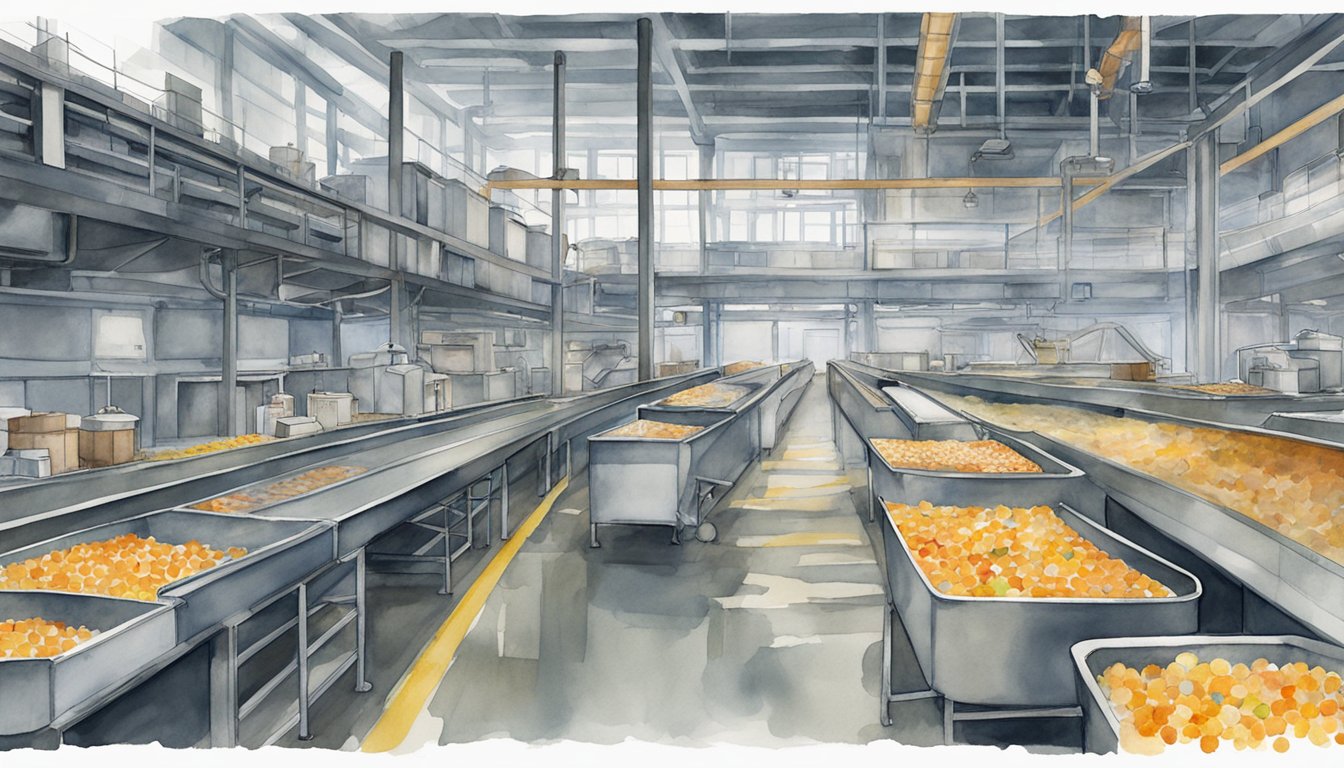
Understanding Spoilage in Food Manufacturing
Spoilage in food manufacturing can significantly impact the business’s efficiency and financial stability. Distinguishing between normal and abnormal spoilage helps companies manage and mitigate these losses effectively.
Defining Normal and Abnormal Spoilage
Normal spoilage refers to the expected degradation or loss of goods during the manufacturing process. This spoilage is usually accounted for during production planning as it is considered an unavoidable part of operations. For example, a bakery might expect some percentage of dough to be lost during mixing or baking.
Abnormal spoilage, on the other hand, occurs due to unexpected or avoidable circumstances. This might include spoilage from machinery malfunctions, improper storage conditions, or human error. Abnormal spoilage indicates areas where improvements can be made to save costs and improve efficiency.
Identifying and categorizing spoilage correctly assists companies in pinpointing issues within the manufacturing process, enabling targeted solutions and better resource allocation.
Impact of Spoilage on Food Manufacturing
The financial impact of spoilage in food manufacturing is substantial. Normal spoilage is often factored into the cost of goods sold, but excessive abnormal spoilage can eat into profits significantly. This affects pricing strategies, profit margins, and overall financial health.
Effective management of spoilage involves continuous monitoring and improvement of processes. By reducing food spoilage, companies can lower operational costs and enhance product quality. Implementing strategies like improved inventory management and advanced quality control systems plays a crucial role in minimizing abnormal spoilage events.
Moreover, addressing spoilage efficiently can improve sustainability practices by reducing overall waste, aligning with broader environmental goals, and improving the company’s reputation.
Accounting for Inventory Spoilage
Inventory spoilage in food manufacturing impacts both the balance sheet and income statement. Companies must accurately record and manage these adjustments to properly reflect their financial health.
Journal Entry Procedures for Spoilage
When inventory spoilage occurs, companies must remove the spoiled goods from the balance sheet and record them as an expense. This process involves debiting the Cost of Goods Sold (COGS) and crediting the Inventory account. This transfer highlights the financial loss due to spoilage.
Here is an example of a journal entry for inventory spoilage:
| Account | Debit | Credit |
|---|---|---|
| Cost of Goods Sold (COGS) | $X,XXX | |
| Inventory | $X,XXX |
This entry ensures that both the expense and reduction in inventory are accounted for accurately, reflecting the financial impact of spoilage.
Spoilage and the Cost of Goods Sold
Spoilage directly affects the Cost of Goods Sold on the income statement. When spoilage is recorded, COGS increases, which in turn reduces the gross profit.
This adjustment provides a more realistic view of production costs. Accurately tracking spoilage helps companies adjust pricing strategies or improve inventory management. For example, tracking trends in spoilage can identify periods or conditions that lead to higher waste, allowing companies to take preventive measures.
Overall, proper accounting for spoilage ensures that financial statements accurately reflect the costs and losses associated with waste in the food manufacturing process.
Inventory Management Strategies
Effective inventory management is crucial in the food manufacturing industry. Implementing the First-In, First-Out (FIFO) method and leveraging technology can greatly reduce waste and spoilage.
First-In, First-Out Method
The First-In, First-Out (FIFO) method is essential for managing perishable goods. This approach ensures the oldest stock is used first, minimizing the risk of spoilage. Organizing inventory with clearly marked dates and accessible layouts helps maintain an efficient flow.
FIFO is especially important for items with short shelf lives. By consistently applying FIFO principles, companies can track inventory more accurately and reduce losses due to expired products.
Leveraging Technology in Inventory Tracking
Implementing technology in inventory management enhances accuracy and efficiency. Inventory management software, like QuickBooks Online, offers real-time updates and detailed tracking. Features such as RFID tags and barcode scanners automate data entry, reducing human error.
Software solutions help monitor waste levels and predict future needs. An advanced inventory system can alert managers when stock is nearing expiration, helping to address potential spoilage proactively. By harnessing technology, food manufacturers can optimize their inventory processes and cut down on waste.
Bookkeeping Practices for Byproducts and Waste
Effective bookkeeping practices for managing byproducts and waste in food manufacturing involve specific attention to accurately valuing byproducts and implementing strategies to track and minimize waste.
Accounting for Byproducts
Byproducts in the food manufacturing process can vary significantly in value and usability. Valuing byproducts accurately is crucial.
Byproducts might be classified as either marketable or non-marketable. Marketable byproducts, such as animal feed from food scraps, should be assigned a measurable value and recorded in the financial statements. Non-marketable byproducts, possibly deemed waste, might not be included in the balance sheet but should still be tracked for cost analysis.
Consistency in recording these byproducts helps in maintaining accurate financial records. By using standardized valuation methods, businesses can ensure they are reporting their byproducts’ value correctly and can use historical data for forecasting future production costs.
Tracking and Minimizing Waste
Waste tracking is essential to understand leakages in the production process. Implementing waste management systems is vital for capturing data on spoilage and waste levels. Systems can include software or manual recording methods.
Correct recording of waste allows for better inventory management and helps identify problem areas where waste is excessive. Regular audits of waste reports help ensure accuracy and inform process improvements.
Minimizing waste often involves training staff, improving storage conditions, and updating production processes. By regularly reviewing waste data, companies can find patterns and implement corrective actions to reduce overall waste production. This not only helps in maintaining sustainability but also directly improves profitability through cost savings.
Incorporating Technology and Analytics
By integrating modern technology and sophisticated analytics, food manufacturing companies can efficiently manage spoilage, waste, and byproducts. These tools provide detailed insight into financial records and help businesses adopt a data-driven approach to improve inventory turnover and reduce losses.
Using Accounting Software for Efficiency
Implementing accounting software such as QuickBooks enhances the efficiency of bookkeeping in food manufacturing. This software automates the tracking of spoilage and waste, facilitating accurate financial records.
Key advantages include:
Automated Tracking:
- Reduces manual entry errors
- Provides real-time updates
Detailed Reporting:
- Categorizes byproducts and waste
- Generates comprehensive cost analysis
Inventory Turnover Optimization:
- Tracks inventory in real-time
- Identifies slow-moving items to minimize spoilage
By utilizing these tools, companies can streamline their bookkeeping processes and maintain more accurate and up-to-date financial records.
Predictive Analytics in Reducing Spoilage
Predictive analytics play a significant role in minimizing spoilage in the food manufacturing sector. These technologies analyze historical data to forecast potential waste and spoilage trends, enabling proactive management of resources.
Important aspects include:
Forecasting Models:
- Predicts future spoilage based on past data
- Optimizes production schedules
Resource Allocation:
- Ensures optimal use of raw materials
- Reduces overproduction
Data-Driven Decisions:
- Facilitates informed decision-making
- Improves cost efficiency
These analytics tools help companies reduce waste, enhance inventory turnover, and maintain sustainable manufacturing processes by utilizing a data-driven approach. By leveraging predictive analytics, businesses can anticipate potential issues and take corrective measures before spoilage occurs.
Financial Reporting and Analysis
Accurately tracking spoilage, waste, and byproducts in financial reports ensures that food manufacturing companies can identify and address inefficiencies. This allows for better financial decision-making and operational improvements. Below are key aspects of how companies integrate these costs into financial statements and analyze them.
Preparing Financial Statements with Spoilage Costs
Incorporating spoilage costs into financial statements primarily affects the income statement and balance sheet. Spoilage costs are often recorded as expenses, directly impacting net profits.
To track spoilage, companies use double-entry accounting:
- Debit the spoilage expense account.
- Credit the inventory account for the corresponding amount.
This adjustment reduces the reported inventory value and increases the recorded expenses. By accurately reflecting spoilage costs, companies can better manage their margins and understand the impact on overall financial performance.
Analyzing Reports to Identify Trends
Analyzing financial reports helps companies identify trends and evaluate the effectiveness of their processes. Reports such as trend analysis and variance reports can reveal patterns in spoilage and waste.
Key metrics include:
- Spoilage rate: percentage of inventory spoiled vs. total inventory.
- Financial losses: total cost attributed to spoilage over time.
By regularly monitoring these metrics, management can implement strategies to minimize waste, improving the margin. This information is crucial for making data-driven decisions to enhance operational efficiency and reduce unnecessary expenses.
Using tables and graphs in reports can provide clear visualizations, making it easier to track trends and communicate findings to stakeholders.
Operational Procedures and Training
Effective management of spoilage, waste, and byproducts in food manufacturing requires robust quality control measures and comprehensive staff training programs. Establishing these procedures ensures both efficient inventory management and minimal financial losses.
Implementing Quality Control Measures
Quality control measures are central to minimizing spoilage and waste. Companies should establish standardized inspection routines to monitor the condition of perishable goods. Utilizing temperature-controlled storage and tracking expiration dates with inventory management software can help prevent spoilage.
Regular audits of storage facilities ensure that all food items are stored under optimal conditions. Employing first-in, first-out (FIFO) and first-expired, first-out (FEFO) methods ensures that older inventory is used before newer stock, reducing the likelihood of waste. Frequent training on these systems ensures that all staff are proficient in maintaining quality standards.
Training Staff for Optimal Inventory Management
Training programs must be thorough, regularly updated, and accessible to all employees. Proper staff training includes identifying signs of spoilage and understanding proper storage procedures.
Conducting workshops and seminars on inventory management techniques, such as FIFO and FEFO methods, reinforces best practices. Use of role-specific checklists and manuals helps staff adhere to established protocols.
Regular performance reviews and feedback sessions ensure continuous improvement and adherence to standards. Investing in ongoing education and utilizing digital tools for real-time inventory tracking can significantly enhance a company’s ability to manage waste and spoilage effectively.
Legal and Ethical Considerations
Legal and ethical considerations in bookkeeping for spoilage, waste, and byproducts in the food manufacturing process are crucial to maintaining compliance and fostering community trust. This involves adherence to regulations and commitment to sustainability.
Regulatory Compliance for Food Manufacturers
Food manufacturers must adhere to strict regulations at local, state, and federal levels. They should accurately document spoilage and waste to ensure compliance with tax and environmental laws.
Suppliers need clear guidelines on acceptable levels of byproducts. Regulations often mandate traceability from production to disposal, helping ensure that contaminated waste doesn’t enter the supply chain. Companies must maintain detailed records to pass audits and avoid legal penalties.
Sustainability and Social Responsibility
Sustainability practices involve reducing waste and finding innovative uses for byproducts. Many companies engage in initiatives to convert byproducts into energy or reusable materials, demonstrating a commitment to environmental responsibility.
Reflecting social responsibility, companies may partner with local community organizations to repurpose food waste. This can enhance the company’s ethical stance and build stronger relationships with customers. Transparent reporting on waste management practices can also bolster consumer trust and brand integrity.
Supply Chain Collaboration and Communication
Effective supply chain collaboration and communication are key for managing spoilage, waste, and byproducts in the food manufacturing process. Proper collaboration with suppliers and distributors, and enhanced communication with retailers, can help in optimizing logistics and reducing spoilage.
Working With Suppliers and Distributors
Collaboration with suppliers and distributors is crucial. For companies to handle spoilage effectively, they must foster transparent relationships. This often involves sharing real-time data on inventory levels, transportation schedules, and production forecasts.
Processors can work with suppliers to adopt just-in-time (JIT) inventory strategies. This reduces the time that perishable goods spend in storage, minimizing spoilage. Distributors can also play a role by adopting advanced tracking technologies to monitor the condition of goods in transit, ensuring they are delivered before they spoil.
Frequent, open communication channels help address and resolve issues swiftly, preventing minor mishaps from escalating into major losses. By aligning schedules and capabilities, these partnerships can enhance the efficiency and reliability of the supply chain.
Enhancing Communication with Retailers
Retailers are a critical link in the supply chain, as they are the point of contact with the end consumer. Enhancing communication with retailers ensures that supply meets demand, reducing the risk of overstocking or understocking.
Using collaborative planning, forecasting, and replenishment (CPFR) systems helps processors and retailers to synchronize their operations. By sharing sales data and demand forecasts, both parties can adjust their plans accordingly. This coordination results in lower waste levels and fresher products reaching consumers.
Retailers can provide feedback on product quality and shelf life, which processors can use to refine production techniques and schedules. Building a robust feedback loop helps in continuously improving the supply chain’s effectiveness in managing perishable goods.
Practical Case Examples
Examining real-world scenarios can provide insights into effective bookkeeping methods for managing spoilage, waste, and byproducts in the food manufacturing process. Practical examples demonstrate strategies to maintain inventory levels and minimize financial losses.
Case Study: A Fruit Importer’s Inventory Strategy
A fruit importer handles various perishable goods, including fruits and vegetables, which have short expiration dates and require strict refrigeration levels to maintain freshness.
To manage spoilage, the importer performs daily inspections to segregate items approaching expiration. They record these items in a spoilage expense account, ensuring that financial records accurately reflect inventory losses.
By closely monitoring refrigeration levels, the importer prolongs the life of perishable items. This strategy reduces waste and supports better inventory management. Furthermore, the importer negotiates contracts with suppliers to allow for returns or exchanges of spoiled goods, minimizing financial impact.
Such practical measures help the company maintain a balance between operational efficiency and quality control, ultimately benefiting their bottom line.
Frequently Asked Questions
Companies need to accurately account for spoilage, waste, and byproducts in food manufacturing to minimize costs and improve efficiency. This section addresses common questions and best practices on this topic.
How do you record spoilage in accounting?
Spoilage is recorded as a loss in the accounting records. It can be logged under specific account codes designated for spoilage. Regular tracking helps in identifying patterns and implementing strategies to reduce future losses.
What is the accounting treatment for normal spoilage?
Normal spoilage is considered a part of the production process and is usually included in the cost of goods sold (COGS). It is allocated to the cost of the good units produced. This way, the cost of normal spoilage is absorbed into the overall cost of production.
How is spoilage reflected in cost accounting?
In cost accounting, spoilage is either classified as normal or abnormal. Normal spoilage costs are allocated to the cost of units produced, while abnormal spoilage costs are treated as a separate expense. This distinction helps in analyzing production efficiency and controlling unnecessary waste.
What is the journal entry for abnormal spoilage?
Abnormal spoilage is treated as a period cost and recorded as a loss. The journal entry usually debits a loss account such as “Loss from Abnormal Spoilage” and credits the appropriate inventory or work-in-process account. This treatment ensures that abnormal spoilage impacts the income statement rather than product costs.
How can companies reduce waste in food production?
Companies can reduce waste by implementing better inventory management practices, utilizing more efficient production techniques, and regularly training staff on food handling and storage. Regular audits and adopting technology can also help in identifying and mitigating potential areas of waste.
What methods are available for tracking food waste in accounting software like QuickBooks?
QuickBooks and other accounting software offer features for tracking food waste through inventory modules. These modules can log spoilage incidents, generate reports, and integrate with other systems to provide real-time data. Customizable fields and analytical tools within the software help in detailed waste tracking and management.
Leave a Reply